All Features

William A. Levinson
The Automotive Industry Action Group’s (AIAG’s) and German Association of the Automotive Industry’s (VDA’s) new Failure Mode and Effects Analysis Handbook (AIAG, 2019) offers significant advances over FMEA as practiced 15 or 20 years ago.1 The publication is definitely worth buying because the new…

As usual with Quality Digest’s diverse audience, this year’s top stories covered a wide range of topics applicable to quality professionals. From hardware to software, from standards to risk management, from China trade to FDA regulations. It’s always fun to see what readers gravitate to, and this…
Donald J. Wheeler
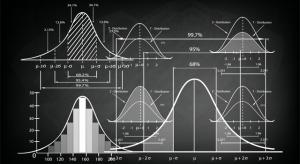
In the past two months we have looked at how three-sigma limits work with skewed data. This column finds the power functions for the probability limits of phase two charts with skewed probability models, and compares the trade-offs made by three-sigma limits with the trade-offs made by the…

Jody Muelaner
In a general sense, capability is the ability to do something. Within manufacturing, capability is given a much more specific definition. It is an expression of the accuracy of a process or equipment, in proportion to the required accuracy.
This can be applied to production processes, in which…

Rohit Mathur
Whatever the process or type of data collected, all data display variation. This is also true in software development. Any measure or parameter of interest to our business will vary from time period to time period, e.g., number of incidents per week or month, time taken in resolving incidents,…

Scott A. Hindle
In everyday language, “in control” and “under control” are synonymous with “in specification.” Requirements have been met. Things are OK. No trouble.
“Out of control,” on the other hand, is synonymous with “out of specification.” Requirements have not been met. Things are not OK. Trouble.
Using…

Brian Lagas
‘Why are our changeovers taking so long?”
If you’ve asked this question on the shop floor, more than likely you were met with blank stares by your employees. Open-ended questions like this are overwhelming, so employees try to find quick answers that don’t really address the problem. They don’t…

Chad Kymal, Gregory F. Gruska
During the early 1980s, GM, Ford, and Chrysler established the Automotive Industry Action Group (AIAG), a not-for-profit organization with the mission “To improve its members’ competitiveness through a cooperative effort of North American vehicle manufacturers and their suppliers.” In the late…

Ryan E. Day
Current business conversation often focuses on data and big data. Data are the raw information from which statistics are created and provide an interpretation and summary of data. Statistics make it possible to analyze real-world business problems and measure key performance indicators that enable…

Nicola Olivetti
According to a report by PwC, industrial sectors worldwide plan to invest $900 billion in Industry 4.0 each year. Despite these growing technology investments, only a few technologies are significantly mature to drive measurable quality impacts. Digital visual management (DVM) is one of them, being…

Doug Devereaux
Artificial intelligence (AI) is widely acknowledged as a crucial aspect of what is broadly referred to as Industry 4.0. Although no one knows yet how AI will be incorporated into the next phase of the Industrial Revolution, most agree that it will allow greater connectivity between people, machines…

Scott A. Hindle
‘Process Capability: What It Is and How It Helps,” parts one, two, three, and four, discussed Alan’s development in the field of process capability1 He’d learned about the mistakes that can be made and how to avoid them in practice to become better at his job. Alan had since passed on his learning…

Dirk Dusharme
We tied up last year in a neat little bow, talking about how stories define ourselves and our work; waste is waste, no matter your political leanings; and putting numbers from the news in context.
“The Gift of Being Small” This article by Quality Digest’s Taran March wonderfully illustrates how we…

Anthony Chirico
Everybody wants to design and conduct a great experiment! To find enlightenment by the discovery of the big red X and perhaps a few smaller pink x’s along the way. Thoughtful selection of the best experiment factors, the right levels, the most efficient design, the best plan for randomization, and…

Scott A. Hindle
Walter Shewhart, father of statistical process control and creator of the control chart, put a premium on the time order sequence of data. Since many statistics and graphs are unaffected by this, you might wonder what the fuss is about. Read on to see why.
Figure 1 shows a series of measurements…

Eric Stoop
The frequently referenced learning pyramid asserts than an average student retains 75 percent of information learned through practice, compared to just 5 percent of what he hears in a lecture. Although experts may dispute the relevance of these figures when applied to modern society, all of us can…

Minitab LLC
Process validation is vital to the success of companies that manufacture pharmaceutical drugs, vaccines, test kits, and a variety of other biological products for people and animals. According to FDA guidelines, process validation is “the collection and evaluation of data, from the process design…
Anthony Chirico
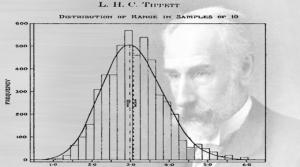
Perhaps the reader recognizes d2 as slang for “designated driver,” but quality professionals will recognize it as a control chart constant used to estimate short-term variation of a process. The basic formula shown below is widely used in control charting for estimating the short-term variation…

Dirk Dusharme
In this episode we look at a history of quality, how you serve your customer in the housing industry, and what makes a good review.
“Young couples ‘trapped in car dependency’”
Building entry-level housing along highways may give couples the chance to buy a home, but at what cost to them and the…
Gary Bell
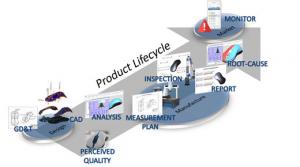
It is all too common in the industry: A part design is created and sent out for production only to hit repeated snags as questions arise about datums, locators, symbols, and values. Even simple misunderstandings, such as where the geometric dimensioning and tolerancing (GD&T) lines terminate,…

Anthony Chirico
In my first article, the merits and cautions of AS9138 c=0 sampling plans were discussed and a simple formula was provided to determine the required sample size to detect nonconforming units. In the second article, the process control properties of MIL-STD-105 c>0 sampling plans were…

Anthony Chirico
In my previous article, I discussed the merits and cautions of the “acceptance number” equal zero (c=0) sampling plans contained within AS9138. A simple formula was provided to determine appropriate sample size, and it was illustrated that twice the inspection does not provide twice the consumer…

Anthony Chirico
Aerospace standard AS9138—“Quality management systems statistical product acceptance requirements” was issued this year (2018), a few years after its accompanying guidance materials in section 3.7 of the International Aerospace Quality Group’s (IAQG) Supply Chain Management Handbook. The new…

Dirk Dusharme
In this all-manufacturing episode, we look at the STEM pipeline into manufacturing, supplier development, how to make sense of manufacturing data and, no, manufacturing is not dead.
“Strengthening the STEM Workforce Pipeline Through Outreach”
NIST does more than just research and come up with…

Donald J. Wheeler
Parts One and Two of this series illustrated four problems with using a model-building approach when data snooping. This column will present an alternative approach for data snooping that is of proven utility. This approach is completely empirical and works with all types of data.
The model-…