All Features

Ryan E. Day
‘In God we trust; all others bring data.” “Follow the data.” “Let the data talk.” Nice clichés, but there’s one problem... data can’t talk. In fact, data don’t say a darn thing. Data are bits of raw information. If you want to reduce product variation, improve your manufacturing processes, and…

Glenn S. Wolfgang
Flow quality management (Flow QM) is a logistical alternative to handling product in lots for the purpose of assessing and mitigating defects. It features a streamlined, automated acceptance sampling methodology, is built on empirical metrics, and facilitates timely, meaningful performance…
Stephen Salata
It’s an open secret that many automotive and aerospace manufacturers have unacceptably high defects and costs. And where defects are on the rise, quality costs aren’t far behind.
Even one defect could mean recalling an entire batch, a problem that can cost thousands of dollars per minute if it…

Scott A. Hindle
I recently got hold of the set of data shown in figure 1. What can be done to analyze and make sense of these 65 data values is the theme of this article. Read on to see what is exceptional about these data, not only statistically speaking.
Figure 1: Example data set.
A good start?
While…

Dr T Burns
Quality is related to processes. A process is “a series of actions or steps taken in order to achieve a particular end.” It doesn’t matter whether the process is the handling of invoices, customers in a bank, the manufacture or assembly of parts, insurance claims, the sick passing through a…

Cheryl Pammer
Confidence intervals show the range of values we can be fairly, well, confident, that our true value lies in, and they are very important to any quality practitioner. I could be 95-percent confident the volume of a can of soup will be 390–410 ml. I could be 99-percent confident that less than 2…

Rip Stauffer
A lot of people in my classes struggle with conditional probability. Don’t feel alone, though. A lot of people get this (and simple probability, for that matter) wrong. If you read Innumeracy by John Allen Paulos (Hill and Wang, 1989), or The Power of Logical Thinking by Marilyn vos Savant (St.…

Mike Richman
There are many subjects that we cover regularly here at Quality Digest. Chief among these are standards (ISO 9001 or IATF 16949, for example) methodologies (such as lean, Baldrige, or Six Sigma), and test and measurement systems (like laser trackers or micrometers). One topic, however, is…

Dirk Dusharme
In our May 11, 2018, episode of QDL, we looked at overproducing ideas, bad quotas (aren’t they all), and how anger can help identify core values.
“Questioning Quotas”
When are quotas bad? Most of the time. But here’s a good example.
“How to Find Your Company’s Core Values”
Oddly enough, your…

Willie L. Carter
Becoming a process-focused organization requires a sustained effort, and for most industrial and service organizations that is a difficult task. Failure to improve the performance of your processes leads to a failure to improve the organization and results in improperly managing the business.
All…

Mike Richman
QDL always strives to bring you a look at the people and stories making the news in the world of quality. We succeeded admirably on the “people” side of things this week and threw in a fun story about the physics of the basketball to boot. Let’s take a closer look:
“Clarity First Book Review and…

Jason Furness
In a previous article I wrote about the reasons why so many lean manufacturing, Six Sigma, and other improvement programs fail. In this article I’m going to expand on reason No. 1: the Academy Award Syndrome.
Academy Award Syndrome
The Academy Award Syndrome is where a program or project is…

Mike Richman
During the Nov. 3, 2017, episode of QDL, we (figuratively) traveled the globe to bring you quality information. Let’s take a closer look:
“‘Made in Japan’ Falls from Grace Amid Scandals, Systematic Flaws in Manufacturing Industry” Kobe Steel is the latest Japanese manufacturer to admit to…

Scott A. Hindle, Donald J. Wheeler
In theory, a production process is always predictable. In practice, however, predictable operation is an achievement that has to be sustained, which is easier said than done. Predictable operation means that the process is doing the best that it can currently do—that it is operating with maximum…

Matthew Barsalou
Quality tools can serve many purposes in problem solving. They may be used to assist in decision making, selecting quality improvement projects, and in performing root cause analysis. They provide useful structure to brainstorming sessions, for communicating information, and for sharing ideas with…
John Flaig
Story update 9/26/2017: The words "distribution of" were inadvertently left out of the last sentence of the second paragraph.
Some practitioners think that if data from a process have a “bell-shaped” histogram, then the system is experiencing only common cause variation (i.e., random variation).…

Mike Richman
QDL from Fri., Sept. 15, 2017, demonstrated that everywhere you look, you’ll find the positive effect of better quality. Here’s what we chatted about:
““U.S. Business Sectors Gain or Hold Steady in Public Esteem”
According to a recent Gallup survey, U.S. citizens’ outlook on a number of industries…

Dr T Burns
I had humble, that is, poor, beginnings. I didn’t even know the taste of real ice cream until later in life. One of the first impacts I felt of the luxury that technology brings was the diode my father bought for me to replace the cat’s whisker on my crystal radio. My high school was lovingly…

Dirk Dusharme
Our August 11, 2017, episode of QDL looked at the role of technology in after-market service, stairs that help you up, Fidget Cubes, and more.
“Climbing Stairs Just Got Easier With Energy-Recycling Steps”
These stairs actually help you go up.
“The Curious Case of the Fidget Cube”
How a product…
Ken Levine, Satish Nargundkar
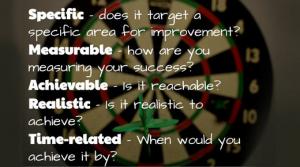
Completing the define phase of a lean Six Sigma (LSS) project is a critical part of any project, although it’s often underestimated in practice. The define phase of the define, measure, analyze, improve, control (DMAIC) process typically includes three elements. The first is selecting a specific,…

Mike Richman
The June 30, 2017, episode of QDL offered a wrinkle in time, of sorts: not only orbiting debris and medieval medicine, but moments in the here and now such as our interview with Keith Bevan of the Coordinate Metrology Society and the UK’s National Physical Laboratory, and an on-the-go version of…

Douglas C. Fair
Plant-floor quality issues tend to focus on a company’s technical resources. When products fall out of spec, alarms sound and all hands are immediately on deck to fix things. Despite large technology investments to monitor and adjust production processes, manufacturers are still bedeviled by…

Steve Daum
I have daily conversations with manufacturer plant managers, quality managers, engineers, supervisors, and plant production workers about challenges when using statistical process control (SPC). Of the mistakes I witness in the application of SPC, I’d like to share the five most prevalent; they…

Matthew Barsalou
I
n part one of this two-part series, I described the need for empiricism in root cause analysis (RCA). Now, I’ll explain how to achieve empiricism when performing a RCA by combining the scientific method and graphical explorations of data.
The statistician John Tukey believed data should be…

Matthew Barsalou
There are many reasons for performing a root cause analysis (RCA). These reasons include determining the cause of a failure in a product or a process as well for determining the root cause of the current level of performance when a product or process has been selected for improvement.
There are…