All Features

Etienne Nichols
Most early-stage medical device companies never decide to skip a quality management system (QMS). They just never decide to buy one. The founding team opens a shared drive, builds a spreadsheet for design inputs and outputs, starts a document register in another tab, and agrees to sort out the real…

William A. Levinson
Leadership responsibility is included in ISO 9001:2026, Clause 5.1.1, to promote quality culture and ethical behavior. A strong argument could be made for adding safety as well.
Ethics has a very wide range of applications, including the need to avoid conflicts of interest (like recommending a…

Santoshi Muriki
As food companies stand up digital traceability platforms to meet FSMA 204 requirements—now due by July 2028 after the compliance date extension—a quieter problem is showing up behind the deadline itself.
Most of these platforms are being deployed alongside existing quality management systems (QMS…

Neeta Verma
ISO 9001:2026, the sixth edition of the quality management systems standard, was published on Sept. 16, 2026, replacing ISO 9001:2015. ISO lists the new edition as Edition 6, 2026-09. ISO/TC 176 confirmed that the Final Draft International Standard (FDIS) was approved ahead of publication.
However…

Kendall Kunz
On March 3, 2026, the U.S. Food and Drug Administration (FDA) issued a warning letter to Tentamus India Private Limited. The inspection it describes started the way most do, with one difference. At the initiation of the inspection, the agency’s investigator observed the firm attempting to remove…

Candace Orbaugh
At first glance, the next version of RC14001, the management standard for the chemical industry, looks like a simplification. In practice, it gives organizations more flexibility but also more responsibility. The revised standard no longer hands organizations a predefined list of stakeholder groups…

Sachin Bhandari
On April 2, 2026, the U.S. Food and Drug Administration issued a warning letter to Purolea Cosmetics Lab, reference 722591-04022026. By now, most of you have heard the story. The company had used AI agents to write drug product specifications, procedures, and master production records. No qualified…

Laura Lindsay
Consider an AI tool that delivers consistently accurate results and demonstrates impressive capabilities. If the people who are expected to rely on it can’t understand how decisions are reached or challenge outcomes that appear wrong, why would they trust it with an important decision? Would an…

Sam Somerville
Trust is the foundation of business and commerce. Every transaction, partnership, and working relationship depends, to some degree, on confidence that others will deliver on their commitments.
In business, we often focus on customer trust that products and services will meet their needs and…

Rick Heilshorn
Manufacturing has a people problem, but not in the way we usually talk about it.
We talk about the skilled-labor shortage. We talk about retirements. We talk about doing more with fewer people. Usually those are treated as separate problems.
They aren’t. Rather, they are compounding.
Deloitte and…

Josh Peterson
Quality management system software helps life sciences organizations manage documents, training, quality events, change controls, audits, and other regulated processes in one controlled environment.
Most electronic quality management systems (eQMS) offer some version of these core capabilities.…

Etienne Nichols
Ask a premarket team where corrective and preventive action (CAPA) sits on the priority list, and it usually lands below design controls, risk management, and the submission itself. The reasoning is easy to follow. Nothing has shipped, so there are no complaints to investigate, no returned product…

Marc Schaeffers
With the publication of the new VDA AIAG SPC Manual in July 2026, one of the most significant changes to statistical process control (SPC) in decades has been introduced. While much attention has been given to the new process capability indices, an equally important change is the introduction of a…

Grant Ramaley
Medical device companies selling into multiple countries don’t answer to one global regulator. They navigate a patchwork of national requirements that two organizations are trying to align in very different ways.
The International Medical Device Regulators Forum (IMDRF) and the Global…

Neeta Verma
Product compliance is moving beyond certificates and restricted-substance checks. PFAS restrictions, digital product passports, artificial intelligence, supply-chain transparency, and sustainability increasingly require manufacturers to connect regulatory knowledge with reliable product, material,…

Pascal Terrien
In the electrotechnology sector, we know one thing for certain: Trust can’t be imposed; it must be built. Standardization enables us to build it every day. As the world grapples with climate, digital, and societal challenges, manufacturers, electricity producers, grid operators, conformity…

Stephanie Ojeda
The recent multistate outbreak of cyclosporiasis is a powerful reminder that food quality involves more than appearance, consistency, and shelf life. It requires an integrated approach to food safety, supplier control, traceability, risk management, and continuous improvement.
By mid-July 2026,…
Steve Romig
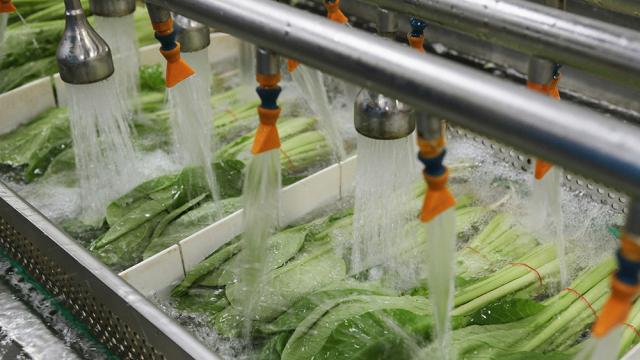
Quality teams throughout the food manufacturing industry face increasingly difficult obstacles and risks while keeping our food safe. A team can discover a positive Listeria result on a slicer component inside a ready-to-eat production zone after earlier environmental monitoring signals in the area…

Roderick Munro
As this article is being written, the (final draft) FDIS ISO 9001:2026 global vote has concluded, and we should soon see the new published requirements.
If published as drafted, which is widely expected, one of the most significant changes is an increased emphasis on demonstrating the…

Rob Moorey
The healthcare technology management (HTM) industry is facing a looming labor shortage and must attract enough skilled professionals to meet future demand. The industry is grappling with an aging workforce, a shrinking traditional talent pool, and increasingly complex medical equipment. Healthcare…

Vick Vaishnavi
The complexity of today’s manufacturing operations and ever-evolving digital disruptions, including the biggest of all, artificial intelligence (AI), require standards that set the pace and keep organizations around the world aligned with what quality looks like.
ISO 9001 has been the…

Megan Wallin-Kerth
Speaking with experts who love their jobs usually makes you aware of two things simultaneously: 1) how much you don’t know, and 2) how much you’d like to know. My conversations with Prashant Darisi and Vick Vaishnavi were no exception. I walked away with an appreciation for the decades of expertise…

Craig Cochran
With ISO 9001:2026 just around the corner, the topic of internal auditing is likely on the minds of many quality professionals.
This is the perfect time to reexamine your resources and strategies for internal auditing. The single biggest success factor of your audit program is who you select to…
Sai Ranjith
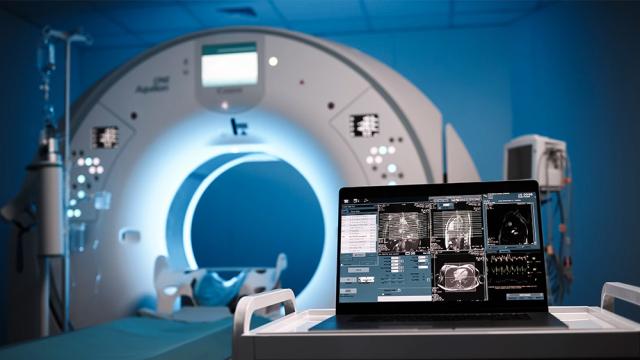
The U.S. Food and Drug Administration scrutiny of AI and machine learning in medical devices is intensifying. Yet most companies still apply failure mode and effects analysis (FMEA) methods designed for deterministic hardware failures. AI failures are probabilistic, context-dependent, and often…
Govind Ramu
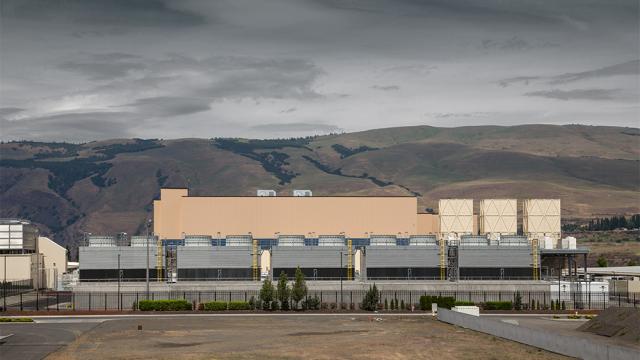
Artificial intelligence (AI) workloads are reshaping the scale, speed, and risk profile of data center construction. As AI adoption accelerates, operators need more physical infrastructure, faster deployment cycles, and greater confidence that critical systems will perform as intended after handoff…