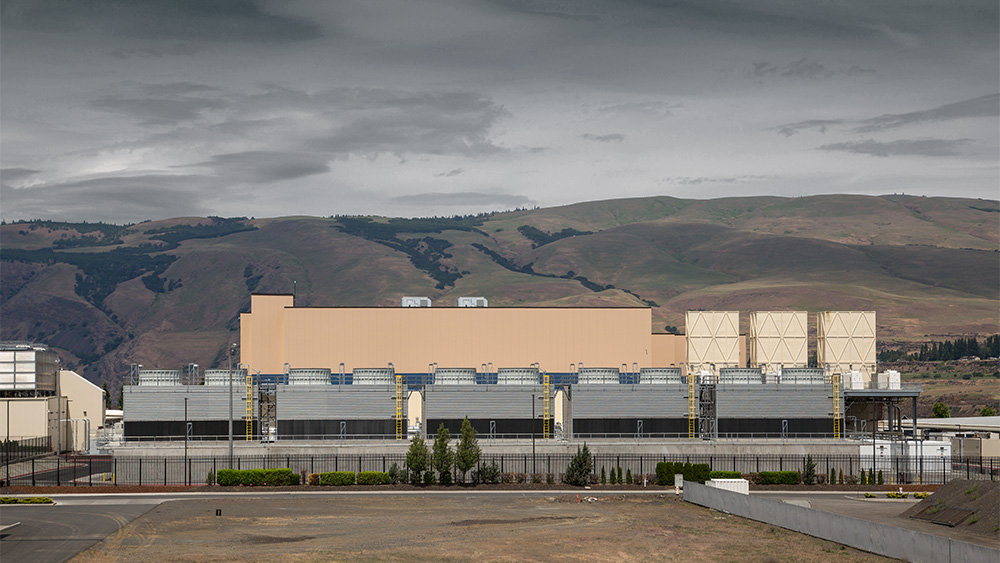
Artificial intelligence (AI) workloads are reshaping the scale, speed, and risk profile of data center construction. As AI adoption accelerates, operators need more physical infrastructure, faster deployment cycles, and greater confidence that critical systems will perform as intended after handoff to operations.
|
ADVERTISEMENT |
For suppliers, this creates a challenging operating environment. Capacity must increase quickly, yet quality can’t lag behind volume. Existing production environments must remove bottlenecks, protect delivery schedules, and improve efficiency. New facilities and expanded production lines also need to ramp up without introducing additional variations. The quality challenge is clear: Increase capacity without increasing defects.
Why ISO 9001 is necessary, but not enough
ISO 9001 provides organizations with a common framework for documenting processes, controlling operations, managing corrective actions, and driving continual improvement. Many suppliers in the data-center infrastructure ecosystem already hold ISO 9001 certification, which remains a valuable foundation for quality management.
Yet ISO 9001 is intentionally broad. Because it applies to so many industries, the standard can’t fully address the risks emerging in AI-driven data center infrastructure. Examples include supply chain capacity, product qualification, field reliability, documentation control, subtier visibility, and commissioning practices.
Other industries have addressed similar gaps. Automotive, aerospace, and telecommunications each developed industry-specific quality standards that build on ISO 9001 while accounting for sector-specific complexity. Data center infrastructure now needs a purpose-built quality management system that reflects how these facilities are designed, supplied, installed, commissioned, and operated.
The supplier burden: Fragmented requirements and repeated audits
Many infrastructure suppliers must respond to quality requirements that vary by customer. Hyperscalers, data center operators, and general contractors often define their own criteria for supplier qualification, performance monitoring, and periodic audits. Although these expectations share the same core intent, each customer might introduce different terminology, evidence requests, and audit processes.
This variety of expectations creates real operational cost. A supplier may need to host six to 12 audits a year, and in some cases far more. Each audit requires preparation, execution, follow-up, corrective action tracking, and internal coordination, drawing time from teams already working to support rapid capacity expansion.
Beyond audit fatigue, customer-specific criteria can push suppliers toward separate quality systems for each customer instead of one robust, unified quality management system (QMS). This creates administrative complexity and weakens process standardization across the business. For an industry trying to scale faster without increasing quality risk, this model is difficult to maintain.
A common data-center infrastructure quality standard provides suppliers and customers with a more consistent framework. It doesn’t eliminate customer oversight, yet it can help clarify audit criteria and reduce redundant audits. Minimizing duplicated effort allows suppliers to focus more resources on process maturity, defect prevention, and capacity improvement. That focus becomes especially important at the handoffs between design, production, logistics, commissioning, and operations.
Where quality breaks down at scale
Many quality risks in AI data-center infrastructure appear at process boundaries. Design changes, documentation updates, inspection criteria, supplier inputs, and field feedback must move across multiple functions. Those functions span engineering, manufacturing, testing, commissioning, operations, and maintenance.
These risks become more difficult to control as output increases. Manual work, informal acceptance criteria, logistics damage, tacit workforce knowledge, and limited subtier visibility can all produce defects that escape into commissioning or field operation. As volume increases, the QMS must identify and control recurring failure points earlier in the life cycle. The following examples highlight where these risks typically occur.

Common process and supply chain failure points that can affect AI data-center infrastructure quality.
DCE 9000 and the case for a purpose-built QMS
The emerging DCE 9000 standard addresses these gaps, with a focus on the operational technology and infrastructure equipment that support data center availability. Rather than replacing ISO 9001, it adds supplementary requirements for data center infrastructure suppliers. Importantly, DCE 9000 does not prescribe every technical detail. The standard focuses on the systems that suppliers use to define requirements, control processes, manage change, prevent defects, and maintain performance at scale.
This system-level focus guides a development process that draws on three major inputs. The first is the ISO 9001 structure, particularly the sections covering organizational context, leadership, planning, support, operations, performance evaluation, and improvement. The second input is developed from our historical performance data. This includes audit findings, supplier problem reports, commissioning issues, field reliability data, postmortem lessons learned, availability reports, and supplier performance measurements. These data sources help identify recurring failure modes and root causes a stronger QMS could prevent.
The third input is future-state maturity. The industry is preparing for higher-volume scenarios in which workmanship issues, documentation gaps, logistics damage, and change-control weaknesses could multiply. A scalable QMS needs to prevent defects at the source rather than rely on downstream detection.
Metrics, certification, and closed-loop improvement
A prevention-focused quality standard also requires consistent measurement. Data center operators and other customers might measure supplier performance using different definitions, formulas, and counting rules. Without common metrics, suppliers and customers struggle to compare performance throughout the ecosystem or determine whether quality is improving over time.
DCE 9000 is expected to include guidance for measuring supplier performance in quality, reliability, and responsiveness. Candidate metrics include customer-facing measures such as installation defects, deviations, factory acceptance testing issues, and field-reported defects normalized by megawatt. Additional metrics might include problem report responsiveness, early-life failures, and on-time installation. Each metric needs an operational definition, calculation method, assumptions, and clear counting rules.
Standardized measurement helps create a supply chain baseline. After suppliers adopt the standard, the industry can evaluate whether performance improves, where risks remain, and how DCE 9000 needs to evolve. A closed-loop approach reflects a central quality principle: Standards should improve as the industry learns.
Certification also helps reduce redundancy. If third-party registration bodies certify suppliers to a recognized standard, customers can gain confidence in supplier quality systems without conducting duplicative audits for the same foundational requirements. This approach frees supplier resources for prevention, improvement, and capacity growth.
Scaling innovation requires disciplined quality systems
Many organizations worry that standards slow innovation. For AI data centers, the greater risk is that new designs, components, architectures, or processes are difficult to operationalize without disciplined quality systems.
New technologies must move from engineering concept to repeatable production, installation, commissioning, and field support. Successful transitions depend on documentation, change control, objective acceptance criteria, and measurable performance.
These controls become more important as AI infrastructure pushes data center supply chains toward faster deployment, greater complexity, and higher reliability expectations. Suppliers need to expand capacity while reducing defects, controlling technical debt, and improving field performance. Operators need greater assurance that critical infrastructure can reliably support high‑density AI workloads while minimizing avoidable failure risks.
Quality at the source gives the industry a way to scale with greater control. Clarifying supplier expectations, reducing redundant audits, strengthening process maturity, and standardizing performance measurement all support that goal. Together, these practices help data center stakeholders expand AI infrastructure without allowing quality risk to escalate with scale, speed, and volume.

Add new comment