All Features

Jared Evans
Implementing 6S, the lean strategy for reducing waste and optimizing efficiency in a manufacturing environment, is more than just creating work protocols that people must follow. Because that’s the thing about people: If they don’t know the “why,” they are less likely to buy in to any initiative,…
Kevin Meyer
For the past several years, I’ve been fascinated by how we think—and how that affects us, our leadership, and the organizations we’re a part of. A couple years ago I wrote about the beginner’s mind and the various forms of bias, particularly confirmation bias. During the past couple months, I’ve…

Hélène Horent
Founded in 1947, in Veles, Macedonia, BRAKO produces parts and components used in medical devices, road sweeper trucks, airport ground equipment, forklift accessories, metal-welded constructions, small hydro plants, telecommunications shelters, and antenna towers.
The company also makes various…

Ryan E. Day
As manufacturing finds its way through the 21st century, there’s a groundswell change emerging. Organizations are jockeying for competitive position as they endeavor to describe this phenomenon. Industry 4.0, the fourth industrial revolution, and the industrial internet of things (IIoT) are a few…

Ryan E. Day
‘In God we trust; all others bring data.” “Follow the data.” “Let the data talk.” Nice clichés, but there’s one problem... data can’t talk. In fact, data don’t say a darn thing. Data are bits of raw information. If you want to reduce product variation, improve your manufacturing processes, and…
Glenn S. Wolfgang
Flow quality management (Flow QM) is a logistical alternative to handling product in lots for the purpose of assessing and mitigating defects. It features a streamlined, automated acceptance sampling methodology, is built on empirical metrics, and facilitates timely, meaningful performance…

Steven Brand
While manufacturers have traditionally been hesitant to invest in their operations due to cost, a recent National Association of Manufacturers (NAM) survey of more than 500 manufacturers reveals that 65 percent plan to increase capital spending during the coming years. Where is the money going to…

William A. Levinson
Quality and manufacturing practitioners are most familiar with the effect of variation on product quality, and this is still the focus of the quality management and Six Sigma bodies of knowledge. Other forms of variation are, however, equally important—in terms of their ability to cause what…

Jeffrey Phillips
Ihave been thinking a lot lately about innovation and how we may have emphasized one component at the expense of another. Here I’m talking about something that should appear obvious—the focus of innovation in building new things. We are constantly reminded that innovation is about building new…

Gwendolyn Galsworth
The world of work shares a single basic transaction, used millions of times a day: translating vital information into human behavior. But operationalizing this formula is not that simple. Workplace information can change quickly and often—schedules, customer requirements, engineering specifications…

Bruce Hamilton
Who remembers VisiCalc, often referred to as the first killer app? In 1978, this spreadsheet software ushered in the personal computing boom. Although it only ran on Apple’s priciest computer (the one with massive 32K RAM), its ability to calculate and recalculate arrays had much to do with the…

Jane Stull
As companies seek to gain efficiencies in the workplace, provide choice for employees, and attract and retain talent, strategies involving agile working and free-address have gained traction. When our Gensler La Crosse office relocated last year, we leveraged the opportunity to support an agile…
Thomas R. Cutler
Although automation has been successful in replacing repetitive, simple tasks, the human workforce still plays a critical role in manufacturing. Even the most sophisticated and automated manufacturing operations rely on human operators to configure, run, and properly maintain production equipment…

Aiman Sakr
Does your organization benefit from lessons learned? Does it learn from previous quality issues? A vast amount of learning takes place every day in every manufacturing facility. Do global manufacturing companies share experiences gained from resolving quality issues between overseas plants? And…

Jim Benson
I love to cook. When I make good food and share it with others, they will take a bite and look as excited to eat it as I was to create it. They might not understand the subtleties that went into it, but they understand the product. Satisfied eater, satisfied chef.
When we do something and are…
Stephen Salata
It’s an open secret that many automotive and aerospace manufacturers have unacceptably high defects and costs. And where defects are on the rise, quality costs aren’t far behind.
Even one defect could mean recalling an entire batch, a problem that can cost thousands of dollars per minute if it…
Taran March @ Quality Digest
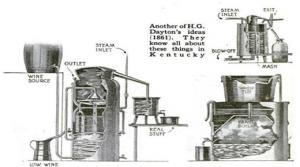
We are here, and it is now. Further than that, all human knowledge is moonshine. —H. L. Mencken
I ran across the term “moonshine shop” while reading about a kaizen blitz at Ontario-based communications firm Cogeco. “Brad, [Cogeco’s] maintenance leader, coordinates all projects relating to modifying…
Harish Jose
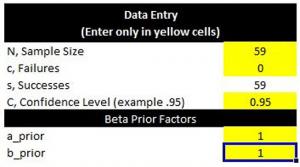
I have written about sample size calculations many times before. One of the most common questions a statistician is asked is, “How many samples do I need—is a sample size of 30 appropriate?” The appropriate answer to such a question is always, “It depends!”
In today’s column, I have attached a…

Scott A. Hindle
I recently got hold of the set of data shown in figure 1. What can be done to analyze and make sense of these 65 data values is the theme of this article. Read on to see what is exceptional about these data, not only statistically speaking.
Figure 1: Example data set.
A good start?
While…
Russell Fedun
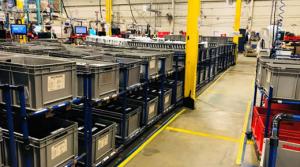
Cogeco’s technical distribution center in Burlington, Ontario, is one of Canada’s drop-off points for internet modem and cable device repair. In 2011, the company’s management carried out a kaizen blitz to improve the efficiency of its device repair process. The process was indeed challenging but…

Ryan E. Day
Business partnerships are nothing new. Partnerships that result in leaner manufacturing processes, more consistent quality, and lower manufacturing costs—that is worth talking about.
With global competition so fierce, manufacturers must always be keen to spot areas of muda (waste). Even seemingly…

Dr T Burns
Quality is related to processes. A process is “a series of actions or steps taken in order to achieve a particular end.” It doesn’t matter whether the process is the handling of invoices, customers in a bank, the manufacture or assembly of parts, insurance claims, the sick passing through a…

Jim Benson
Let’s take a second to emphasize who is important in the following quotes, all by W. Edwards Deming: “If you can’t describe what you are doing as a process, you don’t know what you are doing.” “A bad system will beat a good person every time.” “Drive fear from the workplace.”
Well, by golly, it’s…

Cheryl Pammer
Confidence intervals show the range of values we can be fairly, well, confident, that our true value lies in, and they are very important to any quality practitioner. I could be 95-percent confident the volume of a can of soup will be 390–410 ml. I could be 99-percent confident that less than 2…

Rip Stauffer
A lot of people in my classes struggle with conditional probability. Don’t feel alone, though. A lot of people get this (and simple probability, for that matter) wrong. If you read Innumeracy by John Allen Paulos (Hill and Wang, 1989), or The Power of Logical Thinking by Marilyn vos Savant (St.…