All Features

Gleb Tsipursky
On a Tuesday morning, a support agent in Dublin closes a tricky ticket while an engineer in Bengaluru ships a fix, and a sales manager in my hometown of Columbus, Ohio, joins a customer call spanning four time zones. None of them set foot in the same building, yet the work clicks.
New findings in…

Katie Gilbert
William Overman began his Ph.D. program at Stanford Graduate School of Business at an auspicious moment—just two months before ChatGPT publicly launched in November 2022, exploding widely held understandings of what machines can do.
Even as Overman began enlisting AI for his research, he grew wary…

Steve DeWitt
A problem shows up, and the fix usually arrives five minutes later.
“We need more training.”
“We need a better system.”
“We need another person.”
“We need a new checklist.”
Sometimes one of those answers is exactly right. Too often it’s not. The organization has named a solution before even…

Mike Figliuolo
People pitch ideas all the time. Most of those pitches never get heard. Why? Because they don’t consider the audience.
I get ideas pitched to me all the time. My inbox is flooded by emails from PR professionals asking me to carry guest blog posts, do book reviews, share their infographics, and…

William A. Levinson
Leadership responsibility is included in ISO 9001:2026, Clause 5.1.1, to promote quality culture and ethical behavior. A strong argument could be made for adding safety as well.
Ethics has a very wide range of applications, including the need to avoid conflicts of interest (like recommending a…

Megan Wallin-Kerth, Greg Hutchins
Given that AI has been this century’s biggest disruptor for nearly every industry in the world, it has been met with justifiable levels of angst, anger, questioning, and skepticism. It’s as if our world has essentially been turned into a version of Jurassic Park, where, instead of dinosaurs, we…

Silke von Gemmingen
Highly reflective metallic surfaces are among the most challenging inspection targets in machine vision. Reflections obscure details; defects often become visible only from certain angles, and the quality of manual visual inspections fluctuates throughout the workday.
The Austrian company Danube…

Harish Jose
In my earlier writing, I’ve leaned on Ludwig Wittgenstein’s ladder. This is the closing move of his Tractatus Logico-Philosophicus, where once you have climbed through the propositions you discard them because they have “served their purpose.” I’ve used this language game often enough that I want…

Bill Fisher, Ryan Galluzzo
As AI matures, enterprises and customers are rapidly deploying agents seeking to unlock the next level of automation and productivity. Agentic AI shows potential to handle a multitude of use cases, from buying personal items on Amazon to customer service applications to enterprise security and…

Mike Figliuolo
Projects go off the rails all the time. Some statistics I’ve seen say only one in eight projects can truly be declared successful.
Why are we so horrible at executing projects, especially when we have all these “tried and true” project management methodologies?
There are seven deadly killers of…
CANEA
Establishing a long-term improvement effort is one of the best investments an organization can make. This is because almost all industries and businesses today are in, or facing, a major digital transformation where business models, services, and working methods are rapidly changing. To succeed in…

Cornelia C. Walther
When OpenAI introduced ChatGPT on Nov. 30, 2022, it arrived as a research preview: a conversational system that could answer follow-up questions, draft fluent text, and give millions of people their first direct experience of generative AI. The early mood was experimental. People tested it, teased…

Mike Figliuolo
Board meetings are a total pain. They can also be some of the most powerful get-togethers for your company. The difference lies in how you approach the meeting itself.
Before you say, “I never present to the board,” and stop reading, allow me to expand the definition of a board meeting. A board…

Lexi Sharkov
They may seem simple, but standard operating procedures (SOPs) are surprisingly tricky. On the surface, they describe how a specific process is carried out at your organization. Pretty straightforward, right?
In reality, there are a lot of requirements for writing a good SOP, and auditors have a…

Stephanie Ojeda
A quality team’s supplier toolbox is deep. Supplier questionnaires, PPAP, supplier scorecards, incoming inspection, audits, corrective action—the list goes on.
In my years of experience as a quality leader, the challenge I see is matching each one to the right stage in the supplier process and the…

Gleb Tsipursky
A new Financial Times analysis reports that U.S. technology companies have cut nearly 140,000 jobs in 2026 while pouring record sums into artificial intelligence infrastructure. The obvious story is that AI is replacing workers. The more important story is that executives are using AI to justify…

Sachin Bhandari
On April 2, 2026, the U.S. Food and Drug Administration issued a warning letter to Purolea Cosmetics Lab, reference 722591-04022026. By now, most of you have heard the story. The company had used AI agents to write drug product specifications, procedures, and master production records. No qualified…
Kedar Kanade
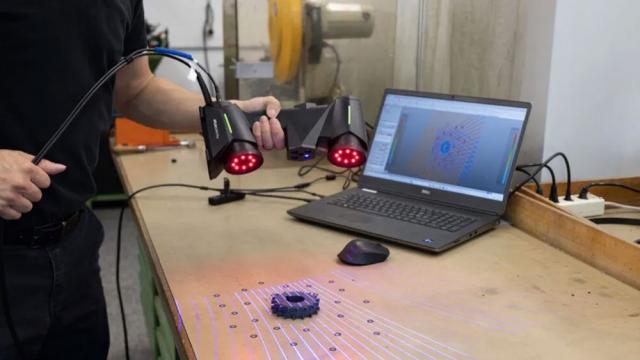
For decades, reverse engineering was a tool reserved for large manufacturers. Aerospace manufacturers leaned on it to keep aging fleets in service when computer-aided design (CAD) data were missing. Defense contractors relied on it to re-create components that had long outlived their original…

Laura Lindsay
Consider an AI tool that delivers consistently accurate results and demonstrates impressive capabilities. If the people who are expected to rely on it can’t understand how decisions are reached or challenge outcomes that appear wrong, why would they trust it with an important decision? Would an…

Mani Chandra Raparla
Walk any well-run plant and you’ll find statistical process control doing quiet, faithful work: control charts on the critical dimensions; capability studies before a line change; gage R&R before anyone trusts a measurement; out-of-control signals investigated; root causes found; corrective…

Rick Heilshorn
Manufacturing has a people problem, but not in the way we usually talk about it.
We talk about the skilled-labor shortage. We talk about retirements. We talk about doing more with fewer people. Usually those are treated as separate problems.
They aren’t. Rather, they are compounding.
Deloitte and…

Akhilesh Gulati
The real test of a quality system isn’t what happens when everything works. It’s what happens when something doesn’t.
Recently, two of my cameras failed. They were newer versions of models whose older predecessors still worked, so I contacted the manufacturer to report the problem.
I expected a…

Brant Engelhart
Poor quality rarely announces itself as a single, contained problem. In manufacturing environments, it may first appear as a rejected batch, a scrapped component, an unexpected line stoppage, or a customer complaint that requires investigation. These visible failures matter, and most manufacturers…
Keith Stouffer, Michael Galler
Recent cyberattacks highlight the growing threat to operational technology (OT) used in critical infrastructure. Whether you work for an infrastructure owner/operator or are a consumer of an infrastructure service, recent events have made it clear that cybersecurity is an important factor in…

Josh Peterson
Quality management system software helps life sciences organizations manage documents, training, quality events, change controls, audits, and other regulated processes in one controlled environment.
Most electronic quality management systems (eQMS) offer some version of these core capabilities.…