
Metrology
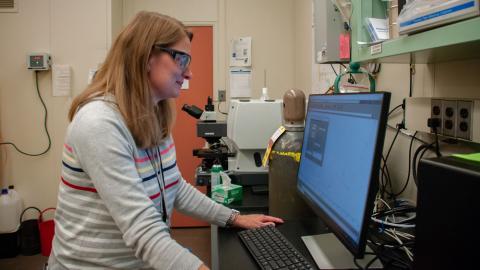
Painter Bob Ross taught us that “happy accidents” can make beautiful art. Happy accidents also happen in science when experiments take research in unexpected directions. One dramatic example is Sir Alexander Fleming’s accidental discovery of penicillin.
Not all unexpected…
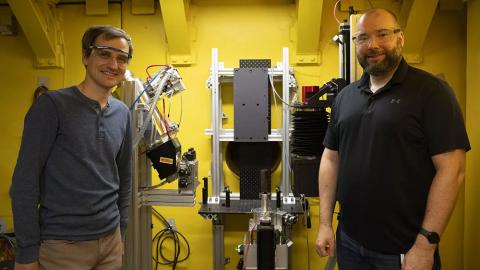
Four years ago, National Institute of Standards and Technology (NIST) researcher Cyrus Daugherty developed an algorithm to virtually unroll the tightly wrapped layers of a cylindrical lithium-ion battery. Daugherty’s software transformed X-ray images of the battery, taken at different angles,…
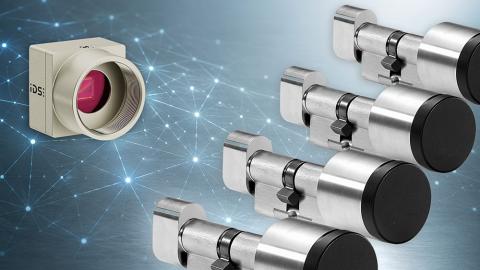
Highly reflective metallic surfaces are among the most challenging inspection targets in machine vision. Reflections obscure details; defects often become visible only from certain angles, and the quality of manual visual inspections fluctuates throughout the workday.
The Austrian…
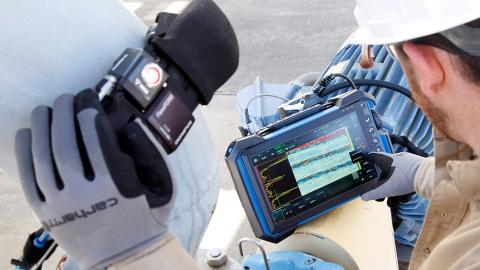
A measurement isn’t only a number. It’s a number obtained by an instrument in a physical state.
That distinction becomes critical when the instrument moves, bends, conforms to a surface, or relies on software to correct its own geometry. A rigid gauge can often treat its working…
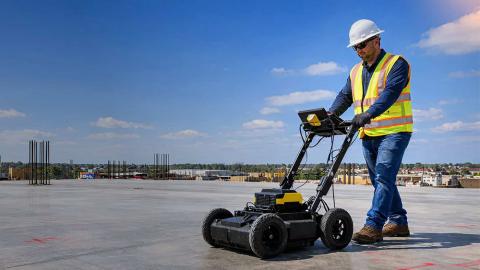
Finding something underground is one thing. Giving a project team information they can actually use is another.
A technician might pick up a signal with an electromagnetic locator. A ground-penetrating radar scan might show an anomaly running through a proposed work area. An old…
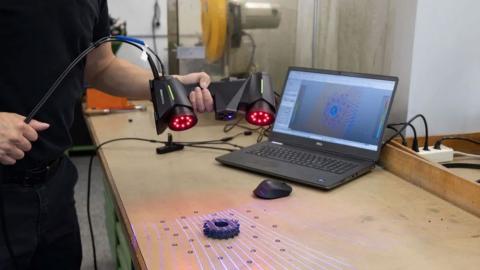
For decades, reverse engineering was a tool reserved for large manufacturers. Aerospace manufacturers leaned on it to keep aging fleets in service when computer-aided design (CAD) data were missing. Defense contractors relied on it to re-create components that had long outlived their original…
Featured Video