All Features

Konstantin Saifoulline
It’s one of the most dangerous sentences you can hear on a factory floor: “The drawing is updated, and we’re good to go.”
It sounds like the finish line. We fixed it! Nothing else to do here.
I’ve watched this play out countless times in different hardware teams. A part caused a headache on the…

Silke von Gemmingen
Highly reflective metallic surfaces are among the most challenging inspection targets in machine vision. Reflections obscure details; defects often become visible only from certain angles, and the quality of manual visual inspections fluctuates throughout the workday.
The Austrian company Danube…

Oliver Trabert
Manufacturing in the U.S. is seeing its fastest growth in more than four years, driven in large part by rising demand for AI infrastructure. That expansion is arriving alongside severe supply shortages and higher input costs.
Manufacturers look to AI to increase capacity and operate more…

Candace Orbaugh
At first glance, the next version of RC14001, the management standard for the chemical industry, looks like a simplification. In practice, it gives organizations more flexibility but also more responsibility. The revised standard no longer hands organizations a predefined list of stakeholder groups…

Lexi Sharkov
They may seem simple, but standard operating procedures (SOPs) are surprisingly tricky. On the surface, they describe how a specific process is carried out at your organization. Pretty straightforward, right?
In reality, there are a lot of requirements for writing a good SOP, and auditors have a…
Kedar Kanade
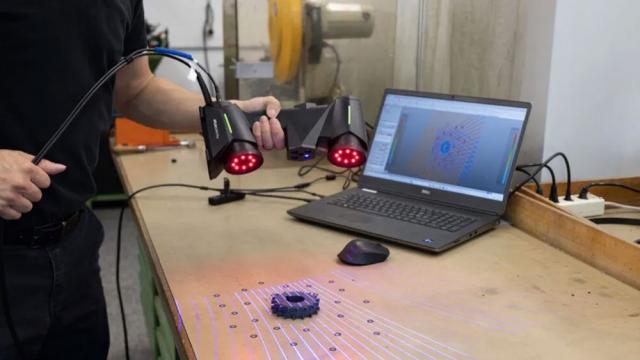
For decades, reverse engineering was a tool reserved for large manufacturers. Aerospace manufacturers leaned on it to keep aging fleets in service when computer-aided design (CAD) data were missing. Defense contractors relied on it to re-create components that had long outlived their original…

Neeta Verma
Extreme heat, drought, wildfires, floods, record-low rivers, and rising energy demand have defined much of the summer of 2026. But for businesses, the important story isn’t simply that weather records are being broken. It’s where those physical changes enter the operating system of a company.
A…

Neeta Verma
The European Commission’s latest Joint Actions on Compliance of Products (JACOP) project offers a useful starting point for understanding why products can still fail environmental compliance checks even when manufacturers have established compliance programs.
Published in June 2026, the JACOP…

Keith Stouffer, Michael Galler
Recent cyberattacks highlight the growing threat to operational technology (OT) used in critical infrastructure. Whether you work for an infrastructure owner/operator or are a consumer of an infrastructure service, recent events have made it clear that cybersecurity is an important factor in…
FARO CREAFORM
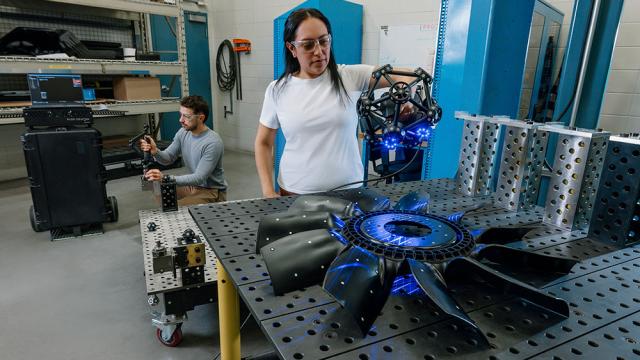
Quality control processes are never about single-inspection scenarios—and yet most inspection systems are. Inspection requirements constantly shift between part dimensions, hard-to-reach areas, quick validations, and precise feature measurements, creating daily challenges for QC professionals.
As…

Kevin Turpin
A sound that’s slightly off before a bearing fails. A smell that shows up before a chemical reaction runs hot. A texture that feels wrong before any instrument confirms it. Frontline workers pick up on signals like these constantly and, most of the time, nothing in the plant is built to capture…
James Glover
At a typical manufacturer, the cost of poor quality runs to 15–20% of sales. Shellye Archambeau, a Quality Digest contributor, once put a face on that number: A $250 million company added up its repair, rework, scrap, warranty, and write-off costs, and found they equaled 20% of sales. That’s one…

Boning Xu
A foundry can produce an impressive inspection package and still leave its customer with an unanswered question: Which records actually supported the decision to ship this part?
An alloy chemistry report might identify a melt. An X-ray image could show one internal area. A coordinate measuring…

Marc Schaeffers
With the publication of the new VDA AIAG SPC Manual in July 2026, one of the most significant changes to statistical process control (SPC) in decades has been introduced. While much attention has been given to the new process capability indices, an equally important change is the introduction of a…

Michael Masser
There’s a number that stopped me in my tracks recently. U.S. manufacturers spent about $32 billion training and upskilling their people—a 22% jump from 2019—and the average worker now logs close to five more training hours a year than they did back then, climbing from 42.9 hours to 47.6 (…

Adam Zewe
Engineers often use vision-language models to produce new designs, such as for airplane or automobile components. To simulate how those components will perform in realistic situations, they’ll use tried-and-true computer-aided design (CAD) software to generate 3D models of those designs that they…
Wilhelm Klein
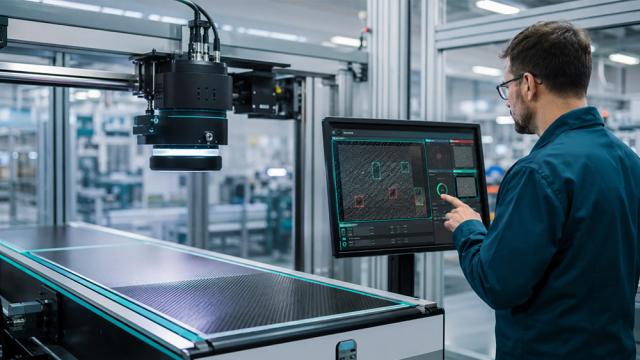
Quality inspection has always depended on people who know what they are looking at. That remains true as automated visual inspection becomes faster and more widely deployed. The strongest systems don’t try to remove expert judgment completely. They capture it, structure it, and apply it…

Steve Romig
Quality teams throughout the food manufacturing industry face increasingly difficult obstacles and risks while keeping our food safe. A team can discover a positive Listeria result on a slicer component inside a ready-to-eat production zone after earlier environmental monitoring signals in the area…
George Schuetz
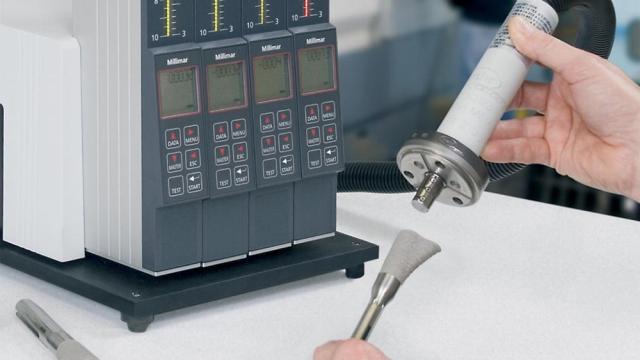
I’ve written many times about how air gauging allows you to measure many jobs faster, more conveniently, and more accurately than other gauging methods.
For measuring all hole conditions, air gauging is unsurpassed for speed and accuracy. When checking any dimensional characteristic, air gauging…

Yuan Wang
Most manufacturing engineers have experienced some version of the same problem: A production process successfully completes validation. The production part approval process (PPAP) is approved. Yield is stable, customer requirements are being met, and everyone assumes the process is under control.…

Adam Grabowski
Imagine running a race where every second counts and your competition is constantly breathing down your neck. That’s the magic (or madness) of cycle time. It’s the secret ingredient that transforms a sluggish assembly line into a well-oiled machine churning out products faster than you can say “…

Alexandra Vazquez
Operations leaders usually have more maintenance data than they can use.
They probably have access to dozens of dashboards, automated emails, and spreadsheets. But when an important asset fails, the “why” sticks around.
Effective maintenance reporting should act as a filter, not a firehose. It…
Brian Gutierrez
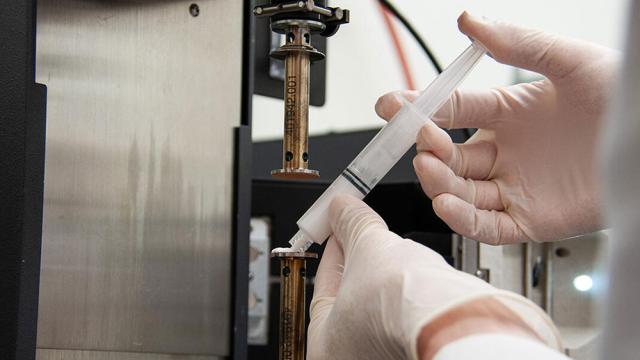
3D printing has matured from a speculative sci-fi fantasy into a practical tool. Plastic is the most commonly used material for 3D printing, but research at the National Institute of Standards and Technology (NIST) is helping expand 3D printing into a new area—ceramics. Small details matter when it…
Darren Goh
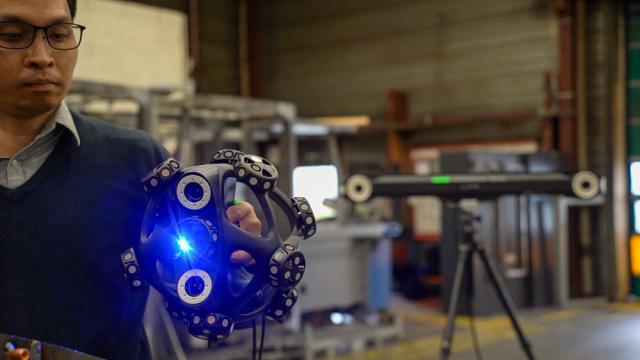
Ask anyone who’s bought a handheld 3D scanner with optical tracking system in the last few years about what sold them, and you’ll hear about speed. More points per second. Larger scanning areas. Faster data capture.
Those improvements matter. But when you look at the entire inspection process,…

Dan Leiva
The vision system scanned the part and logged a pass. The SPC chart stayed inside its control limits. The line kept moving.
Three weeks later, the customer complaint arrived. The defect had been there the whole time, sitting just inside the algorithm’s confidence threshold, close enough to spec…