{domain:"www.qualitydigest.com",server:"169.47.211.87"} Skip to main content

        
User account menu
Main navigation
  • Topics
    • Customer Care
    • FDA Compliance
    • Healthcare
    • Innovation
    • Lean
    • Management
    • Metrology
    • Operations
    • Risk Management
    • Roadshow
    • Six Sigma
    • Standards
    • Statistics
    • Supply Chain
    • Sustainability
    • Training
  • Videos/Webinars
    • All videos
    • Product Demos
    • Webinars
  • Advertise
    • Advertise
    • Submit B2B Press Release
    • Write for us
  • Metrology Hub
  • Training
  • Subscribe
  • Log in
Mobile Menu
  • Home
  • Topics
    • 3D Metrology-CMSC
    • Customer Care
    • FDA Compliance
    • Healthcare
    • Innovation
    • Lean
    • Management
    • Metrology
    • Operations
    • Risk Management
    • Roadshow
    • Six Sigma
    • Standards
    • Statistics
    • Supply Chain
    • Sustainability
    • Training
  • Login / Subscribe
  • More...
    • All Features
    • All News
    • All Videos
    • Training

3 Tips for Making Your Staff Meetings Not Suck

A few small changes can add value and save time for everyone

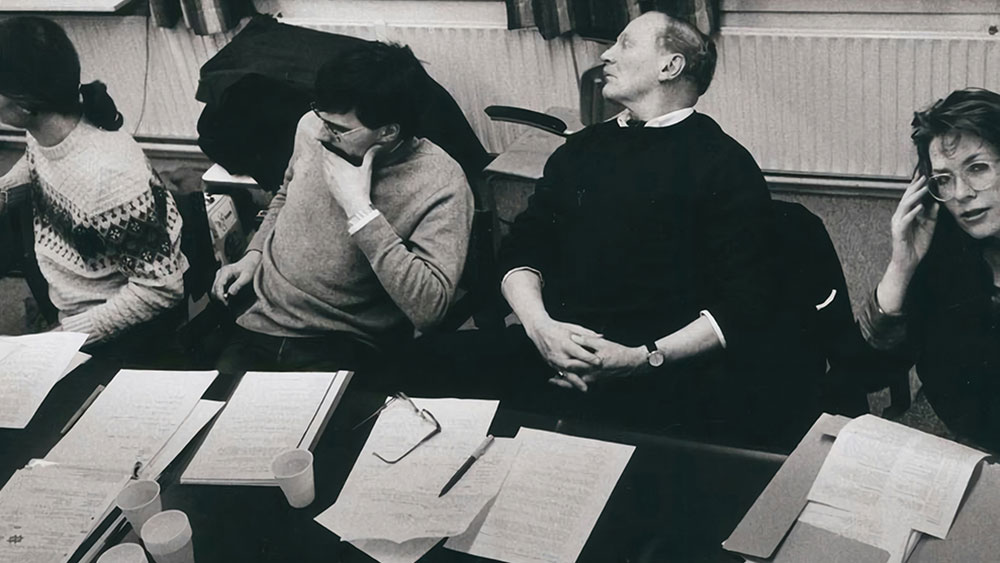
Europeana / Unsplash

Mike Figliuolo
Bio
Mon, 12/08/2025 - 12:02
  • Comment
  • RSS

Social Sharing block

  • Print
Body

Staff meetings can be incredibly productive. Or unproductive—and more often the latter. If your staff meetings are terrible, it’s your fault because you’re not structuring them well.

ADVERTISEMENT

One of the most surreal business experiences I’ve ever had relates to a staff meeting. I’d joined a new team, and my boss’s assistant sent me all the calendar invites for the division’s recurring meetings. One invite in particular grabbed my attention. When I saw it, I immediately called her.

“Hey, I think you made a mistake on the staff meeting invite you sent me. You set it for 8 a.m. to 10 p.m. I think you meant 10 a.m.”

“No,” she said. “The invite is correct.”

“Um, what? A 14-hour staff meeting? Every month?”

“Yes. You guys start at 8 a.m. and run until about 5. Then everyone goes home, changes, and meets for dinner at 6, and you guys meet until 10.”

“All right. Setting aside the 8 to 5 part, it’s just a dinner afterward, right?”

“No, you guys work during the meal.”

My head exploded. I had no idea how this was possible. When I went to my first meeting, I understood. We went around the table, and every person briefed a status update on every project they were working on. Folks with dashboards walked through every metric they monitored (even the ones that were “green” and were fully within variance expectations). For items requiring a decision, people walked through the entire history of the project dating back to the Holy Roman Empire.

I was the last person to give a briefing before we were supposed to head out to get ready for dinner. I had an hour allocated to my stuff.

“So what do you have going on, Mike?” I was asked.

I replied, “Everything is green except Project Flurgenburger. That one is one week behind on implementation. We’re adding a few consultant hours to get us back on track, and we should be green again within two weeks. I don’t have any current decisions that require input from the group, so I’m good to go. That’s all I’ve got.”

Everyone looked at me like I was from Mars.

“Aren’t you going to walk us through all the other projects you’re working on and touch on all the dashboard metrics?” I was asked.

“I already did,” I replied. “Everything is green. You folks know all the projects my team’s working on and all the metrics we measure, right?”

Everyone nodded in the affirmative.

“OK. Then I’m done. I’m not going to burn everyone’s time going over things that are on track. I’d rather give everyone back some time to work on all the things on their plates.”

Dinner was awkwardly quiet. Folks knew the boss wasn’t pleased with my shenanigans, but they also realized they had been wasting huge chunks of their lives updating each other on stuff that could have been covered with an “everything is green” summary.

The next month everyone rebelled. All the updates were focused on variances and decisions. We finished by noon. When there were requests to rehash history or go into metrics that were on track, everyone pushed back and said, “That’s not necessary—we’ve already covered that,” or, “Things are green, so we can move on.” When there was a decision that required input, people teed up the issue and specified what kind of input they were seeking. We actually made three or four decisions during that meeting that normally took months to get resolved.

Although your staff meeting hell might not span 14 hours, I’m betting it can be just as painful. Here are three ways to end the torment, reclaim your life, and get stuff done.

1. Manage by exception

If it’s green, don’t talk about it beyond that. If one person needs a deeper understanding of the metric or project, meet privately outside of the meeting instead of wasting everyone else’s time. Because while they’re sitting there bored out of their minds as you explain stuff they already know, they’re thinking about creative ways to murder you (or at least maim you severely).

2. Focus on the decision at hand

You don’t need to rehash all the background on an issue during the staff meeting. Send out a preread to get folks grounded. Spend that valuable time in the meeting discussing pros and cons of the recommendation, and push toward making a decision. Save the history lesson for individuals who need it.

3. Stop having staff meetings

Seriously. Recurring meetings are an invitation to wasting time. See if you can convince folks to hold meetings by exception. If a metric is out of line or you need to make a decision, convene a meeting. Recurring meetings can lead to lazy behaviors. If you do have to set a recurring time just because calendars are crowded, at least be open to canceling the meeting if there are no variances or decisions.

If you’re more disciplined about how you manage staff meetings, and you focus on exceptions and decisions, you can get a lot of time back and get more stuff done. And isn’t that the point?

How have you made your staff meetings more effective? Share your tips in the comments below.

Published Sept. 3, 2025, in The thoughtLEADERS Brief on LinkedIn.

Add new comment

The content of this field is kept private and will not be shown publicly.
About text formats
Image CAPTCHA
Enter the characters shown in the image.

© 2025 Quality Digest. Copyright on content held by Quality Digest or by individual authors. Contact Quality Digest for reprint information.
“Quality Digest" is a trademark owned by Quality Circle Institute Inc.

footer
  • Home
  • Print QD: 1995-2008
  • Print QD: 2008-2009
  • Videos
  • Privacy Policy
  • Write for us
footer second menu
  • Subscribe to Quality Digest
  • About Us