{domain:"www.qualitydigest.com",server:"169.47.211.87"} Skip to main content

        
User account menu
Main navigation
  • Topics
    • Customer Care
    • Regulated Industries
    • Research & Tech
    • Quality Improvement Tools
    • People Management
    • Metrology
    • Manufacturing
    • Roadshow
    • QMS & Standards
    • Statistical Methods
    • Resource Management
  • Videos/Webinars
    • All videos
    • Product Demos
    • Webinars
  • Advertise
    • Advertise
    • Submit B2B Press Release
    • Write for us
  • Metrology Hub
  • Training
  • Subscribe
  • Log in
Mobile Menu
  • Home
  • Topics
    • Customer Care
    • Regulated Industries
    • Research & Tech
    • Quality Improvement Tools
    • People Management
    • Metrology
    • Manufacturing
    • Roadshow
    • QMS & Standards
    • Statistical Methods
    • Supply Chain
    • Resource Management
  • Login / Subscribe
  • More...
    • All Features
    • All News
    • All Videos
    • Training

What Is Data Masking?

Types, techniques, and best practices

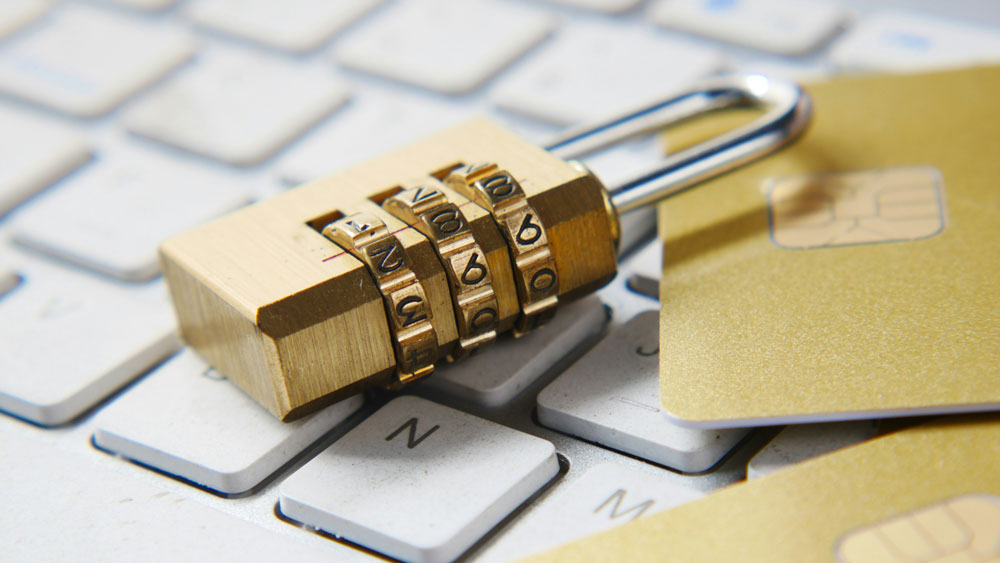
Towfiqu barbhuiya / Unsplash

ISO
Bio
Tue, 02/17/2026 - 12:03
  • Comment
  • RSS

Social Sharing block

  • Print
Body

Data are the backbone of our digital world. From healthcare to finance, and from government agencies to private businesses, organizations everywhere rely on vast amounts of data to function effectively.

ADVERTISEMENT

It’s not just businesses that generate data. We all leave digital trails through our professional, financial, and personal activities—trails that, if not properly protected, can be intercepted, manipulated, or used without our consent.

This makes data security a critical concern for any organization handling personally identifiable information (PII). Nowhere is this more crucial than in software development and testing. For example, take a healthcare organization rolling out a new patient management system. Developers need real data—names, social security numbers, medical histories—to ensure everything runs smoothly. But without proper protection, data are wide open to risk. To maintain data security, the organization must use methods to shield this information from prying eyes.

The financial effects of a data breach can be immense, often reaching millions of dollars. So, investing in robust information security is a critical priority.

One such defense mechanism is data masking, a set of privacy-enhancing techniques that replace PII with realistic yet anonymized “masks” that protect personal data from unauthorized access. These techniques have gained significant traction as an effective way of safeguarding data while maintaining their usability for testing, development, or analytics.

So what is data masking? Here, we break down the concept of this data protection method: its types, techniques, and challenges, and how it can help organizations meet their data security and compliance needs.

What is data masking?

Data masking, or data obfuscation as it’s sometimes called, is a method of transforming datasets to make it harder to link information to the individuals it relates to. Essentially, data masking creates a functional substitute for PII, allowing it to be used in scenarios where real data aren’t required, such as during software testing or user training.

The main goal is to ensure that the data produced remain usable—and appear authentic—while preventing unauthorized access or misuse of the information. So even if the masked data are intercepted or accessed without authorization, they can’t be used to harm or identify the individuals or entities associated with it.

Data masking vs. encryption: What’s the difference?

Data masking and encryption are two distinct data security techniques designed to protect sensitive information. Encryption involves converting data into a coded format that only authorized users can decrypt, making it a powerful safeguard for data in transit (during transmission) or at rest (when stored on servers or devices). Even if intercepted, encrypted data remain unreadable without the correct decryption key, ensuring a high level of data security against unauthorized access.

In contrast, data masking is primarily used to secure data in use. Unlike encryption, data obfuscation is usually irreversible, making it ideal for scenarios where sensitive information needs to be obscured. When considering data masking vs. encryption, the former is especially suitable for nonsecure environments, such as those used for software development or testing.

Why is data masking important?

As we advance further into the digital age, cyberthreats are becoming more frequent and sophisticated, posing serious risks to organizations and individuals alike. In this evolving landscape, information security isn’t just about data security—it’s about maintaining trust.

To support this, stringent data protection regulations like the European Union’s General Data Protection Regulation (GDPR) have been established. Although data masking in GDPR isn’t mandatory, the regulation requires organizations to implement robust security measures to protect personal information and promptly report breaches. A key principle of GDPR is data minimization, which ensures that only essential data are processed. Data masking aligns with this by limiting access to PII, especially in nonproduction environments such as testing and development.

Beyond regulatory compliance, data masking strengthens data security by adding an extra layer of protection. So even when masked data fall into the wrong hands, their altered state makes it almost impossible for unauthorized users to extract meaningful information. In other words, it ensures that PII remains secure, even in the event of a breach.

Data masking types and their applications

Data masking exists in various forms, each tailored to address specific needs and scenarios. The four primary types are:

Static data masking: This method involves replacing personal information in a database with realistic but difficult-to-identify data. Once masked, the data remain permanently altered, making it ideal for development or testing environments where real data aren’t required.

Dynamic data masking: This advanced technique enhances data security by masking data in real time, adding an extra layer of protection. Unlike static data masking, dynamic data masking doesn’t permanently alter the original data; instead, it selectively obscures sensitive information during specific operations or for certain users.

On-the-fly data masking: As the name implies, this approach masks data at the point of extraction from the source, ensuring they remain protected during transit or while being transferred between systems.

Reversible data masking: This data-masking type allows masked data to be restored to their original form when needed, offering flexibility in situations where data recovery is required. Of course, it also carries inherent risks because it creates the potential for unauthorized restoration and thus requires careful management.

The data masking type you choose depends on your organization’s specific requirements, data sensitivity, and security risks. For example, a healthcare organization testing a new patient management system would benefit from static data masking, which permanently replaces PII with realistic yet difficult-to-identify data. This protects patient privacy while allowing developers to work with accurate datasets. Each masking technique presents unique advantages and challenges, and the option you choose will vary based on the desired balance between data security, flexibility, and usability.

8 important data-masking techniques

There are numerous techniques for implementing data masking, each with specific benefits and applications. In data masking, de-identification tools and techniques play a crucial role in safeguarding data security by removing or altering PII in datasets, ensuring that individuals can’t be easily identified.

Common de-identification techniques include:

Statistical tools: Methods like data aggregation and sampling prevent identification by using statistical summaries rather than individual data points. Data sampling helps protect sensitive information by analyzing only a representative subset of the dataset, reducing exposure while still allowing meaningful insights. Meanwhile, aggregation generalizes data by combining related attributes, making it harder for attackers to infer specific details about individuals.

Cryptographic tools: Encryption protects sensitive data by substituting real data with encrypted values. Various encryption types exist, including deterministic (produces the same output for the same input), order-preserving (maintains the original data’s sort order), format-preserving (keeps the original data format), and homomorphic (allows computations on encrypted data without decryption).

Suppression: This technique involves removing or hiding specific pieces of data that are too sensitive or risk identifying the person. It includes masking certain attributes across all records, suppressing specific values within attributes or removing entire records from the dataset.

Pseudonymization: Replacing a person’s identifiers with indirect identifiers created specifically for that entity (e.g., replacing a person’s name with a unique code) maintains data utility while protecting privacy. This process allows reversible mapping to the original data, typically via a secure key or look-up table.

Note: Pseudonymization alone doesn’t fully protect a person’s identity; it must be combined with other de-identification techniques to keep the data safe.

Anatomization: This method breaks data into two separate tables—one with identifiers (like names or quasi-identifiers) and another with key attributes (such as medical data or preferences). Both tables are connected by an equivalence class, allowing data to be analyzed without exposing individual identities. By setting different access levels for each table, anatomization minimizes the risk of re-identification while preserving the data’s usefulness.

Generalization: This de-identification technique reduces the granularity of data (e.g., replacing exact ages with age ranges) to obscure unique identifiers. It preserves data accuracy at the record level and is useful for identifying patterns in traceable data, such as in fraud detection or healthcare outcome assessments.

Randomization: Introducing random noise or modifying data to obscure its original form makes it harder to link back to an individual while preserving statistical relevance. Although it obscures original data, it doesn’t preserve record-level accuracy but maintains statistical relevance for analysis.

Synthetic data: This approach generates entirely artificial datasets that resemble real-world data but don’t contain any actual personal information. While useful for analysis, testing, and machine learning, synthetic data must be carefully modeled to avoid unintentionally revealing patterns linked to real individuals.

Choosing the right data-masking techniques isn’t just about security, but also striking the perfect balance between privacy and usability. The effectiveness of these techniques can vary depending on the context and the specific data involved. Therefore, it’s crucial to assess the suitability of each method in relation to the data’s nature, sensitivity, and intended use.

Data masking and data compliance

Standards play a crucial role in helping organizations strengthen their data masking techniques and meet regulatory requirements. International standards such as ISO/IEC 27559 are game-changers in the world of data security. Building on ISO/IEC 20889, which lays out de-identification terminology and techniques, ISO/IEC 27559 offers a clear framework for implementing de-identification practices.

Meanwhile, ISO/IEC 27701 focuses on privacy management, while ISO/IEC 27001 and ISO/IEC 27002 provide a comprehensive framework for information security management and help organizations better protect their sensitive information. All together, these standards contribute to maintaining effective security and privacy practices.

ISO/IEC 27559:2022: Privacy-enhancing data de-identification framework

ISO/IEC 20889:2018: Privacy-enhancing data de-identification terminology and classification of techniques

ISO/IEC 27001:2022: Information security management systems

ISO/IEC 27002:2022: “Information security, cybersecurity, and privacy protection—Information security controls”

The future of data masking: Smarter, stronger, safer

Data masking is a vital tool for organizations looking to secure personal information and meet data security regulations. With a range of data-masking techniques available, we have more control than ever over how or where we obscure sensitive data. However, choosing the right data-masking type and techniques remains a key decision in ensuring effective protection.

As technology advances, data masking is evolving alongside other data-driven technologies, paving the way for more automated and intelligent data security. Future solutions may leverage AI-driven data masking, allowing algorithms to analyze datasets, detect formats, and apply the most effective data-masking type, reducing the need for manual intervention.

These developments also bring new challenges, from adapting to changing regulations to maintaining data security in complex networks. To stay ahead, organizations must invest in innovative data-masking solutions and continually respond to emerging threats. Ultimately, the future of data masking will depend on a steadfast commitment to protecting personal information, advancing technology and, above all, upholding strong security standards.

Published by ISO.

Add new comment

The content of this field is kept private and will not be shown publicly.
About text formats
Image CAPTCHA
Enter the characters shown in the image.

© 2026 Quality Digest. Copyright on content held by Quality Digest or by individual authors. Contact Quality Digest for reprint information.
“Quality Digest" is a trademark owned by Quality Circle Institute Inc.

footer
  • Home
  • Print QD: 1995-2008
  • Print QD: 2008-2009
  • Videos
  • Privacy Policy
  • Write for us
footer second menu
  • Subscribe to Quality Digest
  • About Us