All Features
Megan King
Painter Bob Ross taught us that “happy accidents” can make beautiful art. Happy accidents also happen in science when experiments take research in unexpected directions. One dramatic example is Sir Alexander Fleming’s accidental discovery of penicillin.
Not all unexpected scientific developments…
Ron Cowen
Four years ago, National Institute of Standards and Technology (NIST) researcher Cyrus Daugherty developed an algorithm to virtually unroll the tightly wrapped layers of a cylindrical lithium-ion battery. Daugherty’s software transformed X-ray images of the battery, taken at different angles, into…

Adam Zewe
Self-driving cars are often controlled by deep learning models that sometimes fail in unexpected situations. For instance, the car might inexplicably brake and block the path of an oncoming emergency vehicle. A human driver or passenger may need to react rapidly to prevent a collision.
To help…
Henry Nonnemaker
When doctors need to deliver precise doses of medicine on a strict schedule, they often administer it intravenously. Intravenous drug delivery methods need to carefully control the flow of medicine into a patient. Knowing the medicine’s flow rate—or the volume of fluid flowing into the patient each…

Adam Zewe
Researchers at MIT have overcome a major challenge holding back the real-world deployment of microwave quantum technologies for advanced signal processing and secure communications.
The team developed a scalable platform that generates pairs of highly correlated radio frequency waves without bulky…

Kevin Turpin
A sound that’s slightly off before a bearing fails. A smell that shows up before a chemical reaction runs hot. A texture that feels wrong before any instrument confirms it. Frontline workers pick up on signals like these constantly and, most of the time, nothing in the plant is built to capture…

Dave Gilson
When President Donald Trump announced a wave of tariffs in early 2025, he launched a war of words. Threats and counterthreats flew across the Atlantic and Pacific in a swirl of escalation, retaliation, and reprieve. Economists were hard-pressed to get a clear picture of what was happening beyond…
Michael Masser
There’s a number that stopped me in my tracks recently. U.S. manufacturers spent about $32 billion training and upskilling their people—a 22% jump from 2019—and the average worker now logs close to five more training hours a year than they did back then, climbing from 42.9 hours to 47.6 (…
Adam Zewe
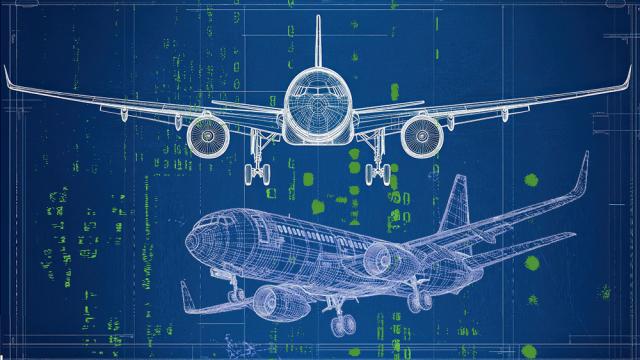
Engineers often use vision-language models to produce new designs, such as for airplane or automobile components. To simulate how those components will perform in realistic situations, they’ll use tried-and-true computer-aided design (CAD) software to generate 3D models of those designs that they…
Wilhelm Klein
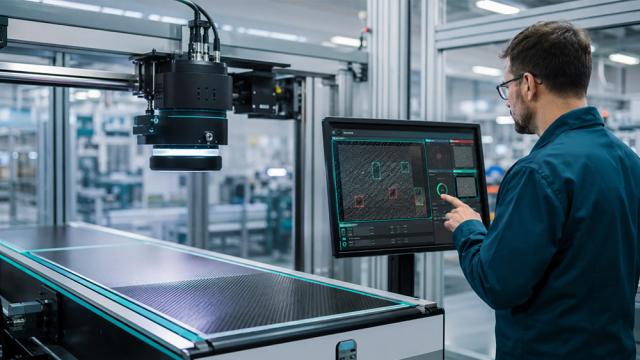
Quality inspection has always depended on people who know what they are looking at. That remains true as automated visual inspection becomes faster and more widely deployed. The strongest systems don’t try to remove expert judgment completely. They capture it, structure it, and apply it…
NIST
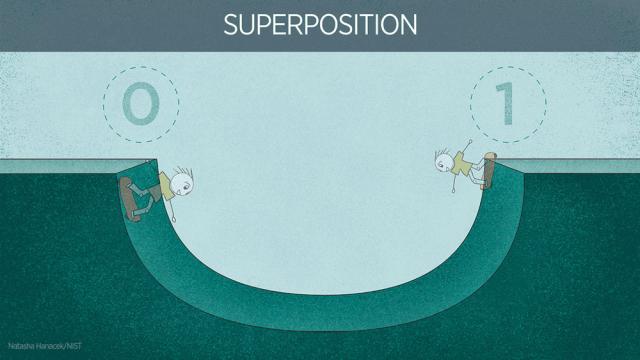
From our bank accounts to smartphones, all our sensitive data and devices are protected with a technology known as cryptography. Present-day cryptography essentially uses a very challenging set of math problems that are nearly impossible for current computers to solve. These math problems act as a…
Brian Gutierrez
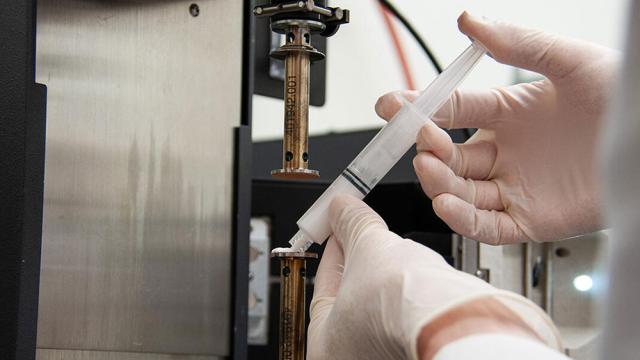
3D printing has matured from a speculative sci-fi fantasy into a practical tool. Plastic is the most commonly used material for 3D printing, but research at the National Institute of Standards and Technology (NIST) is helping expand 3D printing into a new area—ceramics. Small details matter when it…

Dan Leiva
The vision system scanned the part and logged a pass. The SPC chart stayed inside its control limits. The line kept moving.
Three weeks later, the customer complaint arrived. The defect had been there the whole time, sitting just inside the algorithm’s confidence threshold, close enough to spec…

Aimee Levitt
The premise of AI large language models (LLMs) is that any problem can be solved by vacuuming up as much information as possible, running it through probability models, and performing complex calculations to make predictions and come up with the optimal solution.
Another premise behind LLMs is…
Adam Zewe
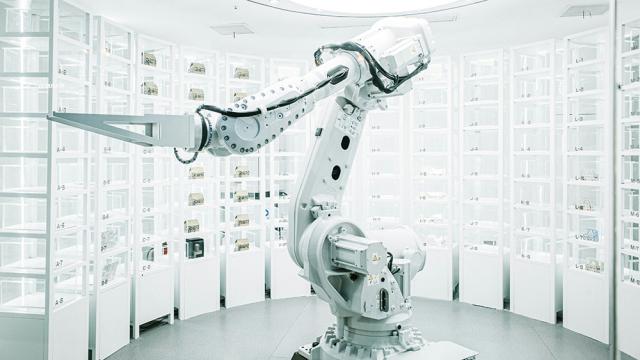
The deployment of automated software systems called AI agents has recently exploded. A November 2025 report by MIT Sloan School of Management and Boston Consulting Group found that 35% of surveyed businesses had already deployed AI agents, while another 44% planned to implement agentic AI soon.
To…
NIST
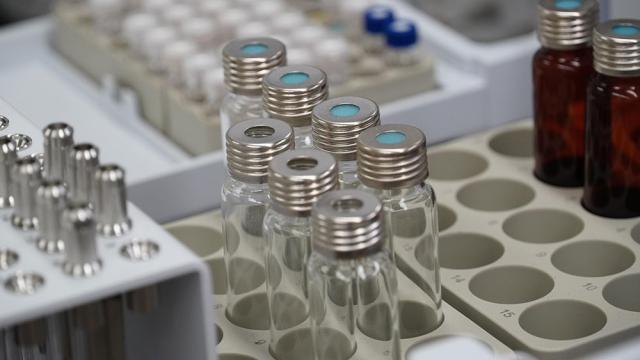
Whether you’re a researcher stumped by a mystery compound or a manufacturer perplexed by an unknown substance, there’s a major resource you can rely on: a library of chemical fingerprints, known as mass spectra, that the National Institute of Standards and Technology (NIST) has maintained for…

Rick Young
Manufacturers are exploring artificial intelligence, but most are still struggling to scale it across operations. According to the latest Sikich Manufacturing Industry Pulse survey, 92% of manufacturers are actively exploring AI. Yet roughly three-quarters of respondents remain in research or pilot…

Cornelia C. Walther
Every boardroom has heard it. Every procurement checklist includes it. Every investor deck now features it somewhere between the mission statement and the revenue model. “AI ethics” has become the term that signals seriousness without necessarily delivering it. That gap deserves examination—because…

Irina Shimko
Two years ago, the dominant conversation around AI in enterprise software was about pilots. Every company of a certain size had at least one: a proof of concept running in a sandbox, a chatbot layered over a knowledge base, or a model fine-tuned on proprietary data that never quite made it to…
Oak Ridge National Laboratory
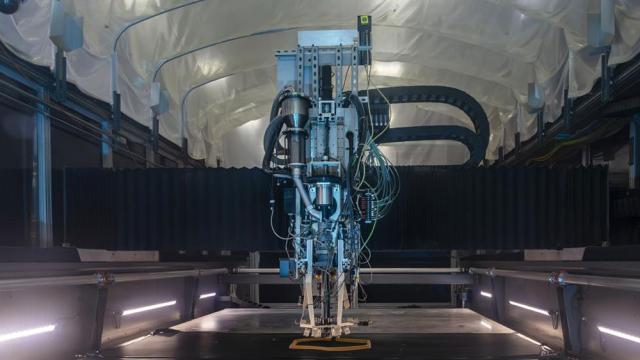
Researchers at the U.S. Department of Energy’s (DOE) Oak Ridge National Laboratory (ORNL) have created a new tool that can catch and correct potential mistakes in real time while 3D-printing large plastic parts.
The automated system could help U.S. manufacturers produce large, custom parts with…

Paul Hanaphy
Artec 3D is best known for professional 3D scanners. So it may come as a surprise that the company also offers a low-cost, accessible solution: AI photogrammetry.
Available via an Artec Studio Lite subscription or the full version of Artec’s flagship software, Artec Studio Pro, this feature is a…

Mike DeCapua
Hydroelectric generators are used to generate power in many parts of the United States. One of their interesting details is that despite how massive they are—a typical 5–20 MW generator can measure 8–12 ft in diameter and weigh about 50 tons—they are built to extremely demanding tolerances.
My…
Adam Zewe
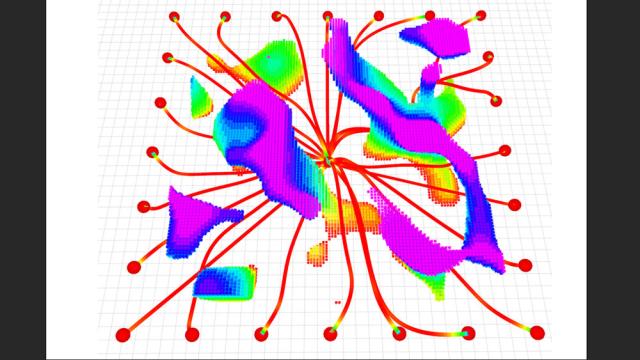
In the aftermath of a devastating earthquake, unpiloted aerial vehicles (UAVs) could fly through a collapsed building to map the scene, giving rescuers information they need to quickly reach survivors.
But this remains an extremely challenging problem for an autonomous robot, which would need to…
Quality Digest
(Massimo Group: Garland, TX) -- Massimo Group, a U.S.-based power sports and utility vehicle company, announced the formal launch of its AI intelligent patrol platform initiative, marking the company’s strategic expansion into AI-powered security infrastructure, autonomous patrol systems, and…
Pramin Pradeep
Here’s a scenario that should make any quality leader in pharma or medical devices uncomfortable: A software team building a diagnostic support tool uses an AI coding assistant to generate a data-processing module. The module looks correct, passes validation testing, and ships. Eighteen months…