Innovation
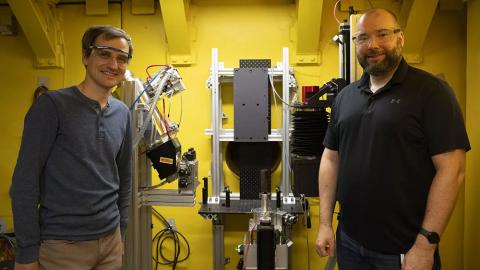
Four years ago, National Institute of Standards and Technology (NIST) researcher Cyrus Daugherty developed an algorithm to virtually unroll the tightly wrapped layers of a cylindrical lithium-ion battery. Daugherty’s software transformed X-ray images of the battery, taken at different angles,…
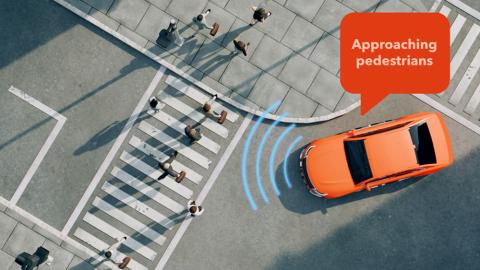
Self-driving cars are often controlled by deep learning models that sometimes fail in unexpected situations. For instance, the car might inexplicably brake and block the path of an oncoming emergency vehicle. A human driver or passenger may need to react rapidly to prevent a collision.
…
When doctors need to deliver precise doses of medicine on a strict schedule, they often administer it intravenously. Intravenous drug delivery methods need to carefully control the flow of medicine into a patient. Knowing the medicine’s flow rate—or the volume of fluid flowing into the patient…
Researchers at MIT have overcome a major challenge holding back the real-world deployment of microwave quantum technologies for advanced signal processing and secure communications.
The team developed a scalable platform that generates pairs of highly correlated radio frequency…

A sound that’s slightly off before a bearing fails. A smell that shows up before a chemical reaction runs hot. A texture that feels wrong before any instrument confirms it. Frontline workers pick up on signals like these constantly and, most of the time, nothing in the plant is built to capture…

When President Donald Trump announced a wave of tariffs in early 2025, he launched a war of words. Threats and counterthreats flew across the Atlantic and Pacific in a swirl of escalation, retaliation, and reprieve. Economists were hard-pressed to get a clear picture of what was happening beyond…