All Features

William A. Levinson
The recent revelation that a major steel maker falsified test data,1 and similar scandals at other companies,2 underscores the menace of counterfeit parts, or what a 1987 Senate hearing called COME UPS: COunterfeit MatErials and Unauthorized Product Substitutions. The history of COME UPS shows the…

Kevin Meyer
Changing an organization’s structure seems to be the common knee-jerk response to internal issues. My prior company embarked on a reorganization to eliminate arbitrary site- and function-based structures so that we could align around corporatewide value creation processes.
During the…
Mike Richman
During the Nov. 3, 2017, episode of QDL, we (figuratively) traveled the globe to bring you quality information. Let’s take a closer look:
“‘Made in Japan’ Falls from Grace Amid Scandals, Systematic Flaws in Manufacturing Industry” Kobe Steel is the latest Japanese manufacturer to admit to…

Tonianne DeMaria
Lean says: Map the value stream. Your brain says: I’ve been doing this so long, it’s become second nature to me. The steps are right here—in my head.
What’s at play here: • Illusion of transparency • Curse of knowledge/information imbalance • Status quo thinking • Groupthink/false consensus…

Sam Golan
In today’s economy, almost all manufacturing organizations are part of a supply chain, either as a buyer or a supplier themselves. Quite often they are both.
Outsourcing in traditional as well as new industries is growing rapidly. Consider that Boeing’s outsourcing evaluation grew from 400,000…

Mike Richman
We cover a wide range of topics on QDL most weeks, but our latest episode, from Friday, Oct. 20, 2017, provided a steady drumbeat of technological detail. Here’s what we chatted about:
“Energy Harvested from Evaporation Could Power Much of U.S., Says Study” Renewal sources of energy like solar…

Elizabeth Gasiorowski Denis
Global freight transport is a key component in the trade of goods and materials, but new demands on the transport network are creating fresh challenges for data. Transport companies are endeavoring to meet those new demands, but are they successful? Discover how an adaptive, intelligent supply…
Timothy Zimmerman
Cybersecurity, at this point in the technological age, has become a household word. Every week, almost like clockwork, it seems there is a story in the news about a newly discovered hack or data breach, often made possible by poor cybersecurity practices. Many of these incidents are focused around…
Mike Richman
Friday, Oct. 6, 2017, is Manufacturing Day, one of the most important events of the year for those of us working within industry. On this occasion, we should all take some time to honor the science and art of manufacturing, an endeavor that has quite literally built our amazing modern society from…

Graham Ross
Why doesn’t machine translation (MT) work for all languages? There are currently more than 7,000 languages worldwide. If each of those had four dialects, that would be more than 28,000 language variances. To offer a perspective, Google can translate 37 languages. If you take into account…

Taran March @ Quality Digest
One thing you can say about that critical commodity called steel: It gets around. Ancient ironware excavated in what is now Turkey has been dated to 1800 B.C. Some 1,200 years later, blacksmiths in Sri Lanka employed furnaces driven by monsoon winds to produce a high-carbon steel. The Tamils of…
Beth Colbert
When we think of champions of manufacturing today, we tend to think of some of the big companies such as Boeing, Caterpillar, Hewlett-Packard, and IBM. But companies don’t form themselves, and patents don’t automatically mean innovation—people do.
Not all companies have inventors. However, all…
GBMP
American Rheinmetall Systems (ARS) LLC, formerly Vingtech, is located in Biddeford, Maine. Established in January 2007, as part of a Norwegian company that had received a supplier contract for the U.S. Army’s CROWS remote weapon station program, the company was acquired by the Rheinmetall Group in…

William Hang, Zihua Liu, Kevin Yang
It seems to happen to every company, big or small, newcomer or seasoned expert. You ship a product design off to a manufacturer, and something goes wrong on the manufacturer’s side. The problem crops up in the design, production, or packaging, and leads to a bad apple in a batch of otherwise great…

Jeffrey Phillips
Lately I’ve been reading about the efforts to build or create innovation accelerators. Universities, businesses, and even cities and regions are talking about innovation and the need to create accelerators or innovation enablers. I’m glad that everyone is excited about innovation, and that they…

Dirk Dusharme
Our Sept. 8, 2017, episode of QDL examined a different way to conduct clinical trials, discussed fixing problems before they occur, and in the aftermath of Hurricane Harvey looked at resources for building a more resilient and sustainable infrastructure.
“A Better Way to Design Clinical Trials”
A…

Laurel Thoennes @ QD
There’s nothing like a splash of cold water to wake you up. Imagine what a 33-trillion-gallon splash would do. Maybe 24 hours of wind at 185 miles per hour would sweep you onto your feet. Hurricanes Harvey and Irma said, “Wakey wakey,” and we can’t afford to nod off.
How do you recover from…

Arun Hariharan
In the last week of August 2017, two extreme weather events occurred on opposite sides of the world. Hurricane Harvey brought record-breaking rain and catastrophic flooding to Houston, Texas, causing loss of life, mass evacuation of people, and damage estimated to be in billions of dollars. Around…

Mike Richman
Last week, my friend and colleague, QD editor in chief Dirk Dusharme, wrote an uplifting and important column in this space. Titled “The Day We All Looked for the Same Thing,” Dirk’s article used last week’s solar eclipse, seen in its totality in so many places around the United States, as a motif…
Thomas R. Cutler
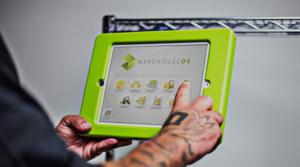
Flawless order fulfillment from a distribution center or warehouse to the customer’s door is the neglected leg of the supply chain. Ironically, without careful attention to the last mile, e-commerce customers are disappointed with the quality, accuracy, and condition of the products being…

MIT News
The first of the Massachusetts Institute of Technology’s (MIT) half online, half in-person supply chain management master’s degree programs is making a profit and bringing dozens of new degree-seeking students to campus.
The results from the blended program in supply chain management are…
Dirk Dusharme
Our August 11, 2017, episode of QDL looked at the role of technology in after-market service, stairs that help you up, Fidget Cubes, and more.
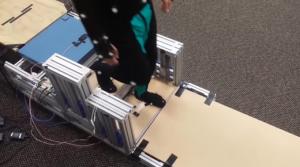
“Climbing Stairs Just Got Easier With Energy-Recycling Steps”
These stairs actually help you go up.
“The Curious Case of the Fidget Cube”
How a product…

Ryan E. Day
Innovation within industry is a must to improve processes, products, and customer experience. Although some innovations, like Amazon’s floating distribution center, seem implausible, other sci-fi technology is already revolutionizing and redefining the way employees accomplish tasks.
Tales of…

Loic Sadoulet, Giovanni Tassini
Making the most of its position as an important seaport, Venice’s remarkable economic development during the Middle Ages relied on network effects, contractual innovation, and coordination among the players involved in long-distance trade. Companies today still exploit these mechanisms to succeed…

Elizabeth Gasiorowski Denis
Change is nothing new. Nobel laureate Bob Dylan sang that “the times they are a-changin’” back in 1964. The difference today is the pace of change. In his book, Thank You for Being Late: An Optimist’s Guide to Thriving in the Age of Accelerations (Farrar Straus & Giroux, 2016), Thomas Friedman…