All Features

Katie Gilbert
William Overman began his Ph.D. program at Stanford Graduate School of Business in an auspicious moment—just two months before ChatGPT publicly launched in November 2022, exploding the widely held understandings of what machines can do.
Even as Overman began enlisting AI for his research, he grew…

William A. Levinson
Leadership responsibility is included in ISO 9001:2026, Clause 5.1.1, to promote quality culture and ethical behavior. A strong argument could be made for adding safety as well.
Ethics has a very wide range of applications, including the need to avoid conflicts of interest (like recommending a…
Megan Wallin-Kerth, Greg Hutchins
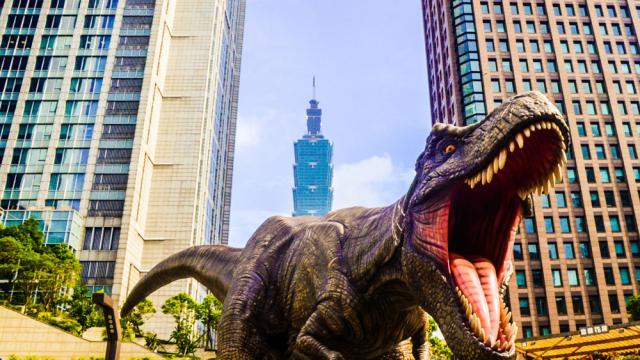
Given that AI has been this century’s biggest disruptor for nearly every industry in the world, it has been met with justifiable levels of angst, anger, questioning, and skepticism. It’s as if our world has essentially been turned into a version of Jurassic Park, where, instead of dinosaurs, we…

Santoshi Muriki
As food companies stand up digital traceability platforms to meet FSMA 204 requirements—now due by July 2028 after the compliance date extension—a quieter problem is showing up behind the deadline itself.
Most of these platforms are being deployed alongside existing quality management systems (QMS…

Neeta Verma
ISO 9001:2026, the sixth edition of the quality management systems standard, was published on Sept. 16, 2026, replacing ISO 9001:2015. ISO lists the new edition as Edition 6, 2026-09. ISO/TC 176 confirmed that the Final Draft International Standard (FDIS) was approved ahead of publication.
However…
Oak Ridge National Laboratory
(ORNL: Oak Ridge, TN) -- As much as 15.2 terawatt-hours of electricity could be generated annually at nonpowered dams—enough to supply more than 1.4 million homes, according to an updated assessment of hydropower technical potential across the nation compiled by researchers at the U.S. Department…

Winnie Jiang, Nicolas Bastoli, Henrike Gueth
When former United States secretary of state Madeleine Albright said, “There is a special place in hell for women who don’t help each other,” that quip captured a widespread expectation that women who reach the top should pull others up behind them. Yet it’s not uncommon for junior female employees…

Oliver Trabert
Manufacturing in the U.S. is seeing its fastest growth in more than four years, driven in large part by rising demand for AI infrastructure. That expansion is arriving alongside severe supply shortages and higher input costs.
Manufacturers look to AI to increase capacity and operate more…

Kendall Kunz
On March 3, 2026, the U.S. Food and Drug Administration (FDA) issued a warning letter to Tentamus India Private Limited. The inspection it describes started the way most do, with one difference. At the initiation of the inspection, the agency’s investigator observed the firm attempting to remove…

Candace Orbaugh
At first glance, the next version of RC14001, the management standard for the chemical industry, looks like a simplification. In practice, it gives organizations more flexibility but also more responsibility. The revised standard no longer hands organizations a predefined list of stakeholder groups…

Stephanie Ojeda
A quality team’s supplier toolbox is deep. Supplier questionnaires, PPAP, supplier scorecards, incoming inspection, audits, corrective action—the list goes on.
In my years of experience as a quality leader, the challenge I see is matching each one to the right stage in the supplier process and the…

Sachin Bhandari
On April 2, 2026, the U.S. Food and Drug Administration issued a warning letter to Purolea Cosmetics Lab, reference 722591-04022026. By now, most of you have heard the story. The company had used AI agents to write drug product specifications, procedures, and master production records. No qualified…

Neeta Verma
Extreme heat, drought, wildfires, floods, record-low rivers, and rising energy demand have defined much of the summer of 2026. But for businesses, the important story isn’t simply that weather records are being broken. It’s where those physical changes enter the operating system of a company.
A…

Neeta Verma
The European Commission’s latest Joint Actions on Compliance of Products (JACOP) project offers a useful starting point for understanding why products can still fail environmental compliance checks even when manufacturers have established compliance programs.
Published in June 2026, the JACOP…

Etienne Nichols
Ask a premarket team where corrective and preventive action (CAPA) sits on the priority list, and it usually lands below design controls, risk management, and the submission itself. The reasoning is easy to follow. Nothing has shipped, so there are no complaints to investigate, no returned product…

Grant Ramaley
Medical device companies selling into multiple countries don’t answer to one global regulator. They navigate a patchwork of national requirements that two organizations are trying to align in very different ways.
The International Medical Device Regulators Forum (IMDRF) and the Global…

Cornelia C. Walther
A CEO doesn’t need to read every AI law to understand why regulation matters. It shows up in subtler ways: a sales team using a chatbot with client data, a hiring manager testing an AI screening tool, a board member asking whether the company has an AI policy. AI governance has moved from the…

Neeta Verma
Product compliance is moving beyond certificates and restricted-substance checks. PFAS restrictions, digital product passports, artificial intelligence, supply-chain transparency, and sustainability increasingly require manufacturers to connect regulatory knowledge with reliable product, material,…

Pascal Terrien
In the electrotechnology sector, we know one thing for certain: Trust can’t be imposed; it must be built. Standardization enables us to build it every day. As the world grapples with climate, digital, and societal challenges, manufacturers, electricity producers, grid operators, conformity…
Stephanie Ojeda
The recent multistate outbreak of cyclosporiasis is a powerful reminder that food quality involves more than appearance, consistency, and shelf life. It requires an integrated approach to food safety, supplier control, traceability, risk management, and continuous improvement.
By mid-July 2026,…
Steve Romig
Quality teams throughout the food manufacturing industry face increasingly difficult obstacles and risks while keeping our food safe. A team can discover a positive Listeria result on a slicer component inside a ready-to-eat production zone after earlier environmental monitoring signals in the area…

Florian Harzenetter
In industrial manufacturing, quality failures carry consequences far beyond the factory floor. A single defect can trigger warranty claims, production downtime for customers, costly recalls, and long-term damage to brand reputation. Yet despite significant investments in quality programs, many…

Yuan Wang
Most manufacturing engineers have experienced some version of the same problem: A production process successfully completes validation. The production part approval process (PPAP) is approved. Yield is stable, customer requirements are being met, and everyone assumes the process is under control.…

Rob Moorey
The healthcare technology management (HTM) industry is facing a looming labor shortage and must attract enough skilled professionals to meet future demand. The industry is grappling with an aging workforce, a shrinking traditional talent pool, and increasingly complex medical equipment. Healthcare…

Vick Vaishnavi
The complexity of today’s manufacturing operations and ever-evolving digital disruptions, including the biggest of all, artificial intelligence (AI), require standards that set the pace and keep organizations around the world aligned with what quality looks like.
ISO 9001 has been the…