{domain:"www.qualitydigest.com",server:"169.47.211.87"} Skip to main content

        
User account menu
Main navigation
  • Topics
    • Customer Care
    • Regulated Industries
    • Research & Tech
    • Quality Improvement Tools
    • People Management
    • Metrology
    • Manufacturing
    • Roadshow
    • QMS & Standards
    • Statistical Methods
    • Resource Management
  • Videos/Webinars
    • All videos
    • Product Demos
    • Webinars
  • Advertise
    • Advertise
    • Submit B2B Press Release
    • Write for us
  • Metrology Hub
  • Training
  • Subscribe
  • Log in
Mobile Menu
  • Home
  • Topics
    • Customer Care
    • Regulated Industries
    • Research & Tech
    • Quality Improvement Tools
    • People Management
    • Metrology
    • Manufacturing
    • Roadshow
    • QMS & Standards
    • Statistical Methods
    • Supply Chain
    • Resource Management
  • Login / Subscribe
  • More...
    • All Features
    • All News
    • All Videos
    • Training

NIST Expands Library of ‘Chemical Fingerprints’ to Identify Unknown Substances

Researchers and manufacturers rely on it to identify unknown compounds for everything from food to space rocks

T. Mak/NIST

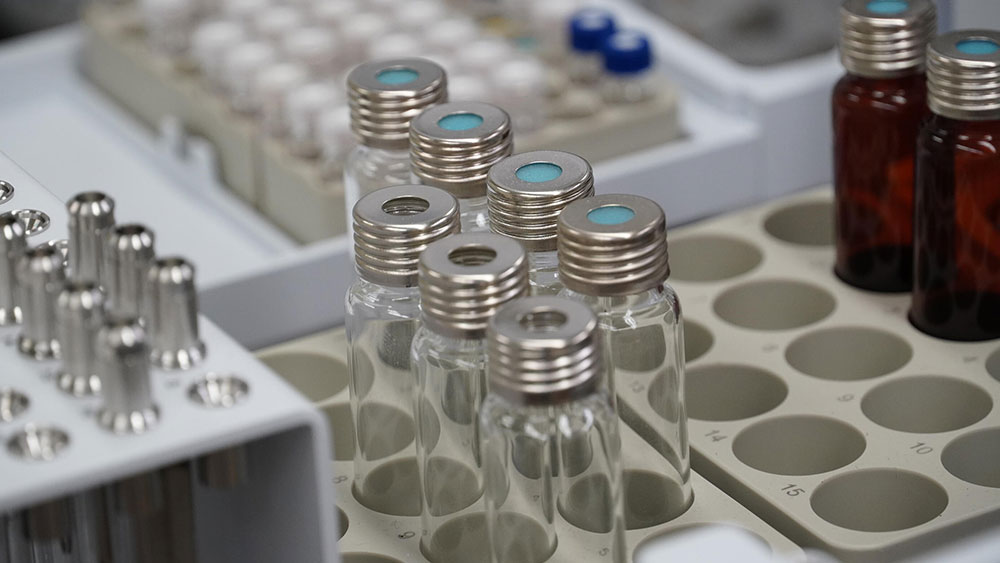
Vials of chemicals analyzed in the NIST mass spectral database

NIST
Bio
Thu, 07/30/2026 - 12:02
  • Comment
  • RSS

Social Sharing block

  • Print
Body

Whether you’re a researcher stumped by a mystery compound or a manufacturer perplexed by an unknown substance, there’s a major resource you can rely on: a library of chemical fingerprints, known as mass spectra, that the National Institute of Standards and Technology (NIST) has maintained for decades.

ADVERTISEMENT

NIST has released the latest update to that library, which industry experts, forensic scientists, and others have used since 1988 to identify unknown substances in food, drugs, cosmetics, the environment, and even space rocks.

The expanded library, formally known as Standard Reference Database 1A, contains mass spectra measured from hundreds of thousands of compounds.

NIST scientists generate chemical fingerprints using a mass spectrometer, an instrument that ionizes and shatters a compound into charged fragments and then sorts those fragments by their mass-to-charge ratio. That gives researchers enough information to create a bar chart-like graph known as a mass spectrum that is unique to that particular chemical.

 …

Want to continue?
Log in or create a FREE account.
Enter your username or email address
Enter the password that accompanies your username.
By logging in you agree to receive communication from Quality Digest. Privacy Policy.
Create a FREE account
Forgot My Password

Add new comment

Image CAPTCHA
Enter the characters shown in the image.
Please login to comment.

© 2026 Quality Digest. Copyright on content held by Quality Digest or by individual authors. Contact Quality Digest for reprint information.
“Quality Digest" is a trademark owned by Quality Circle Institute Inc.

footer
  • Home
  • Print QD: 1995-2008
  • Print QD: 2008-2009
  • Videos
  • Privacy Policy
  • Write for us
footer second menu
  • Subscribe to Quality Digest
  • About Us