{domain:"www.qualitydigest.com",server:"169.47.211.87"} Skip to main content

        
User account menu
Main navigation
  • Topics
    • Customer Care
    • Regulated Industries
    • Research & Tech
    • Quality Improvement Tools
    • People Management
    • Metrology
    • Manufacturing
    • Roadshow
    • QMS & Standards
    • Statistical Methods
    • Resource Management
  • Videos/Webinars
    • All videos
    • Product Demos
    • Webinars
  • Advertise
    • Advertise
    • Submit B2B Press Release
    • Write for us
  • Metrology Hub
  • Training
  • Subscribe
  • Log in
Mobile Menu
  • Home
  • Topics
    • Customer Care
    • Regulated Industries
    • Research & Tech
    • Quality Improvement Tools
    • People Management
    • Metrology
    • Manufacturing
    • Roadshow
    • QMS & Standards
    • Statistical Methods
    • Supply Chain
    • Resource Management
  • Login / Subscribe
  • More...
    • All Features
    • All News
    • All Videos
    • Training

New Tech Meets Old: 3D Printing in Hydroelectric Power

3D-printed fixtures speed installation at remote hydroelectric site

Buffalo Metrology

Mike DeCapua
Bio

Buffalo Metrology

Mon, 06/22/2026 - 12:02
  • Comment
  • RSS

Social Sharing block

  • Print
Body

Hydroelectric generators are used to generate power in many parts of the United States. One of their interesting details is that despite how massive they are—a typical 5–20 MW generator can measure 8–12 ft in diameter and weigh about 50 tons—they are built to extremely demanding tolerances.

ADVERTISEMENT

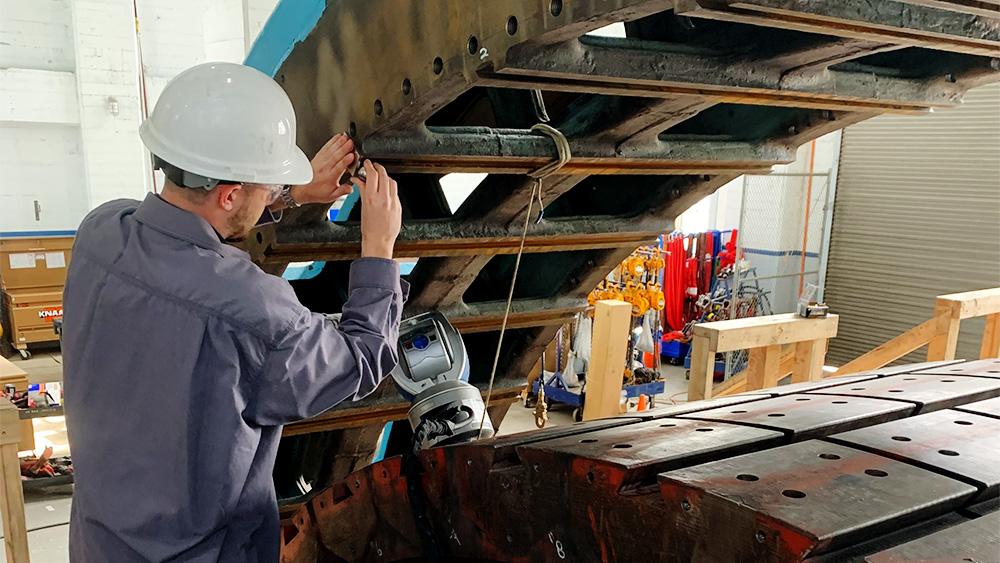
My company, BMI, was contracted to install new keybars in a hydroelectric generator stator frame. The stator frame houses the stator core that sits inside the generator. The keybars act as structural components to ensure the massive iron core is kept within the roundness tolerance.

Keybar manufacturing tolerances are tight, at this particular installation about 0.005 in. radius over the 24 in. keybar length. During installation, a series of fixtures are needed to hold the keybars in place and allow adjustment in and out, side to side, and to control twist during assembly so the stator’s inside diameter is held to a tolerance of +/– 0.01 in. over the 8–12 ft diameter.

 …

Want to continue?
Log in or create a FREE account.
Enter your username or email address
Enter the password that accompanies your username.
By logging in you agree to receive communication from Quality Digest. Privacy Policy.
Create a FREE account
Forgot My Password

Add new comment

Image CAPTCHA
Enter the characters shown in the image.
Please login to comment.

© 2026 Quality Digest. Copyright on content held by Quality Digest or by individual authors. Contact Quality Digest for reprint information.
“Quality Digest" is a trademark owned by Quality Circle Institute Inc.

footer
  • Home
  • Print QD: 1995-2008
  • Print QD: 2008-2009
  • Videos
  • Privacy Policy
  • Write for us
footer second menu
  • Subscribe to Quality Digest
  • About Us