{domain:"www.qualitydigest.com",server:"169.47.211.87"} Skip to main content

        
User account menu
Main navigation
  • Topics
    • Customer Care
    • Regulated Industries
    • Research & Tech
    • Quality Improvement Tools
    • People Management
    • Metrology
    • Manufacturing
    • Roadshow
    • QMS & Standards
    • Statistical Methods
    • Resource Management
  • Videos/Webinars
    • All videos
    • Product Demos
    • Webinars
  • Advertise
    • Advertise
    • Submit B2B Press Release
    • Write for us
  • Metrology Hub
  • Training
  • Subscribe
  • Log in
Mobile Menu
  • Home
  • Topics
    • Customer Care
    • Regulated Industries
    • Research & Tech
    • Quality Improvement Tools
    • People Management
    • Metrology
    • Manufacturing
    • Roadshow
    • QMS & Standards
    • Statistical Methods
    • Supply Chain
    • Resource Management
  • Login / Subscribe
  • More...
    • All Features
    • All News
    • All Videos
    • Training

When Brain Scans Beat Surveys, and When They Don’t

Brain imaging and consumer surveys predict different stages of the purchase process

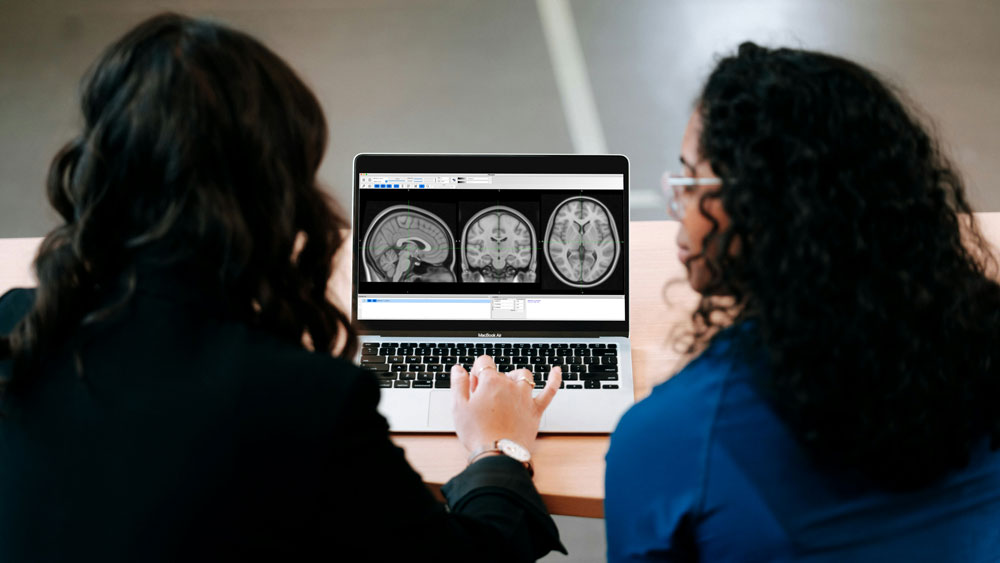
Keith Tanner/Unsplash

Hilke Plassmann
Bio
Paulo Albuquerque
Bio
Thu, 07/02/2026 - 12:02
  • Comment
  • RSS

Social Sharing block

  • Print
Body

A food company spends months and significant budget on consumer research before launching a new product. The survey scores are strong, so the store managers stock it. Six months later, the product is quietly pulled from the shelves. The consumers who said they would buy it didn’t.

ADVERTISEMENT

This pattern—confident prelaunch research followed by disappointing sales—is one of the most persistent and costly problems in marketing. Our research investigates whether brain imaging data can offer something traditional methods can’t: a more accurate window into what consumers will do, rather than what they say they will do.

We compared three types of data: internal market data on price and promotional activity; a consumer survey of 1,451 customers; and functional magnetic resonance imaging (fMRI) brain scan data from 44 participants making real, incentivized purchase decisions in a laboratory. Working with one of Germany’s largest retail chains and focusing on 56 food and beverage products in nearly 7,000 stores, we attempted to predict two outcomes: whether store managers would choose to stock a product, and whether consumers would buy it once it was on the shelf.

Channel push vs. market pull

Any product’s journey to a consumer’s basket is a two-stage process. First, a store manager must decide to carry the product. This is channel push: a commercial decision made by a gatekeeper weighing margins, shelf space, and perceived market demand. Second, a consumer standing in the aisle must decide to pick it up. This is market pull: an individual response, often instinctive, shaped by desire, novelty, and price. Our research found that these two decisions are driven by fundamentally different forces and are best predicted by different data.

For predicting channel push, surveys won decisively. The single most predictive variable was a question asking consumers to assess whether other people would buy the product. Conscious, considered, market-level reasoning is precisely what surveys are designed to capture, and they delivered. Brain scan data added little further insight. This makes intuitive sense: Store managers are making a commercial calculation, and the survey’s explicit prompts about market potential map directly onto how that calculation works.

For predicting market pull, brain imaging won, improving forecast accuracy by approximately 18% over a baseline model using market data alone. The reason comes down to what fMRI measures. Brain signals appear to capture immediate affective responses that register before a person has formed a conscious opinion or found the words to express it. Surveys ask people to translate those initial responses into language, but as the data show, something is inevitably lost in that translation.

The innovation premium

The advantage of brain scan data wasn’t uniform. This was most pronounced and statistically significant for novel products, rated by customers as genuinely innovative. Although people could accurately report for familiar items, their self-reported intentions became unreliable when facing something entirely new. In these instances, the brain’s immediate affective response to novelty remained a consistent predictor of actual behavior.

This finding matters in practice because the products most likely to transform a category are precisely the ones for which traditional research methods are weakest. A company launching a genuine innovation—a new format, a new ingredient combination, or a product with no direct precedent on the shelf—is relying on the least reliable data when the stakes are highest. It’s asking consumers to predict their own behavior toward something they have never experienced. Our findings suggest that in this specific context, measuring brain responses produces a more honest signal than asking for a considered opinion.

This is where our own skepticism was most challenged. We came to this study uncertain whether neural signals would add meaningful predictive value over and above well-designed surveys. The consistency of the fMRI advantage among multiple product categories was a genuine surprise.

The practical case

The economics are more favorable than companies might assume. A representative survey for 50 products costs roughly 15,000 euros ($17,000); a comparable fMRI study runs about 30,000 euros ($34,000). When improved forecast accuracy is translated into reduced inventory costs—fewer overstock write-downs, fewer missed sales—our estimates suggest that fMRI data alone could deliver annual savings of about 56,000 euros ($64,000) throughout the retail network. The survey and fMRI datasets aren’t in competition: Combined, they could deliver savings of about 225,000 euros ($256,000) against a data acquisition cost of 50,000 euros ($57,000).

The predictive power of the survey data was statistically identical whether it came from 1,451 carefully matched customers or from the same 44 laboratory participants who also provided the brain scan data. Demographic representativeness, in this context, didn’t improve the forecast. Because the fMRI participants completed the same survey as part of their session, a single lab study effectively delivered both neural data and a usable survey simultaneously. For companies spending significant sums on panel recruitment, that efficiency is worth examining carefully.

The right tool for the right question

Our findings point to a simple but often overlooked principle: Accuracy improves when companies match the research method to the decision they need to predict. Firms frequently rely on a single approach to guide both retailer acceptance and consumer demand, but these decisions are driven by different forces and require different types of evidence.

For predicting whether retailers will list a product, surveys remain the most reliable tool in the context of our study. They capture the conscious, market-level reasoning that mirrors how gatekeepers evaluate commercial viability. However, future brain imaging studies may explore how these results could be challenged when scanning store managers instead of consumers’ brains. For predicting whether consumers will buy a product, especially a novel one, neural data provide insight that surveys can’t access. When people encounter something unfamiliar, implicit affective responses matter more than stated intentions, and fMRI captures this early signal.

The takeaway is straightforward: Use surveys to forecast product acceptance, and add neural data to forecast behavior, especially when launching something new. For firms investing in innovation, aligning research tools with these two distinct decisions can transform forecasting from a costly guess into a strategic advantage.

Published June 22, 2026, by INSEAD Knowledge.

Add new comment

The content of this field is kept private and will not be shown publicly.
About text formats
Image CAPTCHA
Enter the characters shown in the image.

© 2026 Quality Digest. Copyright on content held by Quality Digest or by individual authors. Contact Quality Digest for reprint information.
“Quality Digest" is a trademark owned by Quality Circle Institute Inc.

footer
  • Home
  • Print QD: 1995-2008
  • Print QD: 2008-2009
  • Videos
  • Privacy Policy
  • Write for us
footer second menu
  • Subscribe to Quality Digest
  • About Us