{domain:"www.qualitydigest.com",server:"169.47.211.87"} Skip to main content

        
User account menu
Main navigation
  • Topics
    • Customer Care
    • Regulated Industries
    • Research & Tech
    • Quality Improvement Tools
    • People Management
    • Metrology
    • Manufacturing
    • Roadshow
    • QMS & Standards
    • Statistical Methods
    • Resource Management
  • Videos/Webinars
    • All videos
    • Product Demos
    • Webinars
  • Advertise
    • Advertise
    • Submit B2B Press Release
    • Write for us
  • Metrology Hub
  • Training
  • Subscribe
  • Log in
Mobile Menu
  • Home
  • Topics
    • Customer Care
    • Regulated Industries
    • Research & Tech
    • Quality Improvement Tools
    • People Management
    • Metrology
    • Manufacturing
    • Roadshow
    • QMS & Standards
    • Statistical Methods
    • Supply Chain
    • Resource Management
  • Login / Subscribe
  • More...
    • All Features
    • All News
    • All Videos
    • Contact
    • Training

3D Vision Aids Semiautonomous Aircraft Construction

Ensenso 3D camera ensures accurate detection, alignment of drilling positions in automated aircraft cabin assembly

IDS

IDS Imaging Development Systems
Wed, 05/27/2026 - 12:03
  • Comment
  • RSS

Social Sharing block

  • Print
Body

In modern aircraft production, precision is everything. Every hole and every fixing point must be precisely positioned to ensure safety and quality.

ADVERTISEMENT

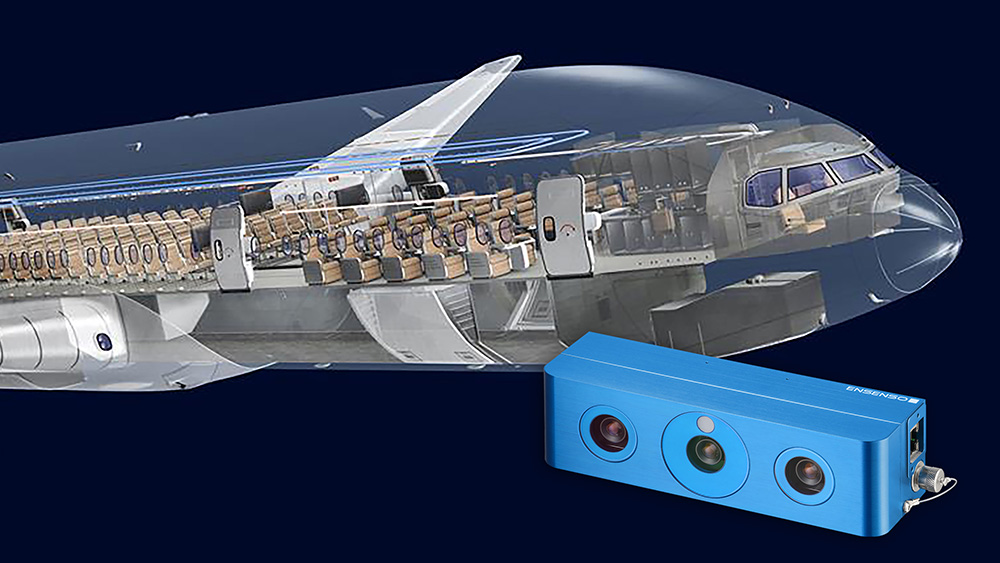
As part of the DiCADeMA project (Digital Cabin Architectures and Design for Manufacturing) led by the German Aerospace Centre (DLR), a novel digitally networked process has been developed. Through intelligent automation, this approach elevates aircraft cabin manufacturing to a new level. A key component in this process is an Ensenso 3D camera from IDS Imaging Development Systems that ensures precise detection and alignment of drilling positions.

Digital process chain, from design to production

The aim of the project is to establish a continuous digital thread, from design to production. Changes to the cabin design, such as seat spacing and the associated new position of the luggage compartments, are recorded directly in the digital design data and automatically transferred to production planning. Simulations allow these variants to be validated before any physical component is manufactured. Once digital validation is complete, production can begin immediately.

 …

Want to continue?
Log in or create a FREE account.
Enter your username or email address
Enter the password that accompanies your username.
By logging in you agree to receive communication from Quality Digest. Privacy Policy.
Create a FREE account
Forgot My Password
Top Stories
AI May Be Making Your Quality Problem Worse
The 6 Best Quality Management Software Features That Simplify Your QMS
What I Discovered About Quality Concepts by Watching My Newborn Granddaughter
Why Products Still Fail RoHS, REACH, and POPs Compliance
Your AI Model Is Drifting Right Now. Would You Know?

Add new comment

Please login to comment.

© 2026 Quality Digest. Copyright on content held by Quality Digest or by individual authors. Contact Quality Digest for reprint information.
“Quality Digest" is a trademark owned by Quality Circle Institute Inc.

footer
  • Home
  • Print QD: 1995-2008
  • Print QD: 2008-2009
  • Videos
  • Privacy Policy
  • Write for us
footer second menu
  • Subscribe to Quality Digest
  • About Us
  • Contact Us