{domain:"www.qualitydigest.com",server:"169.47.211.87"} Skip to main content

        
User account menu
Main navigation
  • Topics
    • Customer Care
    • Regulated Industries
    • Research & Tech
    • Quality Improvement Tools
    • People Management
    • Metrology
    • Manufacturing
    • Roadshow
    • QMS & Standards
    • Statistical Methods
    • Resource Management
  • Videos/Webinars
    • All videos
    • Product Demos
    • Webinars
  • Advertise
    • Advertise
    • Submit B2B Press Release
    • Write for us
  • Metrology Hub
  • Training
  • Subscribe
  • Log in
Mobile Menu
  • Home
  • Topics
    • Customer Care
    • Regulated Industries
    • Research & Tech
    • Quality Improvement Tools
    • People Management
    • Metrology
    • Manufacturing
    • Roadshow
    • QMS & Standards
    • Statistical Methods
    • Supply Chain
    • Resource Management
  • Login / Subscribe
  • More...
    • All Features
    • All News
    • All Videos
    • Training

Leadership Lessons From the President Who Most Prized Fun

Leaders who use humor are more motivating than those who don’t

Creative Commons

Chip Bell
Bio
Tue, 07/28/2026 - 12:02
  • Comment
  • RSS

Social Sharing block

  • Print
Body

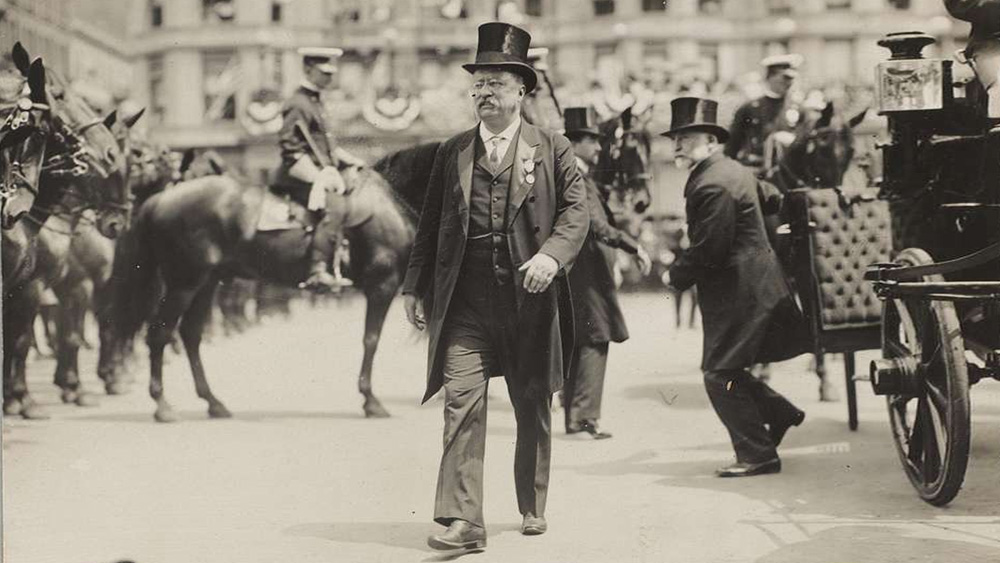
Theodore Roosevelt skinny-dipped in the Potomac River, owned a pet hyena, boxed in the White House, and reportedly drank a gallon of coffee a day (a legend that inspired Maxwell House to attribute the phrase “good to the last drop” to him). At his funeral, a New York police captain said, “It was not only that he was a great man, but, oh, there was such fun in being led by him!”

ADVERTISEMENT

Jennifer Aaker and Naomi Bagdonas, authors of Humor, Seriously: Why Humor Is a Secret Weapon at Work and in Life (Crown Currency, 2021), report that leaders who use fun and humor are 27% more motivating than leaders who don’t. “When people laugh,” they say, “a neurochemical response is activated, flooding their brains with hormones that make them feel calmer and more confident, resourceful, and creative.”

Fun is the fertilizer that helps work cultures cultivate innovation. People work with less fear, greater support, and higher morale. It produces leaders who are more trusted and yields winning work environments where leaders let go, light up, and turn on.

Teddy Roosevelt is a shining example of making fun an important attribute of leadership.

Who was Teddy?

Roosevelt hunted wild animals in Africa and, as a naturalist, helped establish the U.S. Forest Service. Awarded the Nobel Peace Prize in 1906 for his successful mediation to end the Russo-Japanese War, he also was posthumously awarded the Medal of Honor for heroism at the Battle of San Juan Hill in the Spanish-American War. He wrote more than 35 books and was fluent in multiple languages. 

With the assassination of William McKinley in 1901, Roosevelt became the youngest president ever at age 42. He was a carrier of bold joy. He was the first president to host an African-American, inviting Booker T. Washington to a White House dinner, and the first to appoint a Jewish person as a cabinet member. He was the first president to fly in an airplane or travel outside the U.S. while in office.

But what were the leadership features of this fun-loving leader?

Fun leaders are egalitarian

As a New York City police commissioner, Teddy Roosevelt walked the streets late at night, talking with all citizens, regardless of their stature. This man of great wealth and privilege learned to connect with ordinary people and demonstrate empathy and understanding. Dropping the arrogance and pugilistic style he had perfected as a boxer at Harvard, he was confident enough to show his humility and courageous enough to show compassion.

Innovation requires egalitarian settings that nurture power with, never power over. Leaders of innovation promote inclusion by letting everyone in on running the enterprise. They are intently curious about people. They practice realness rather than “roleness”—always showing genuineness. Sometimes tough, they are always kind. They work to make associates feel like they are working in a laboratory, not in a courtroom. As such, they never allow any action or attitude that risks eroding the self-esteem of others.

Fun leaders are impeccably fair

An ill-fated bear hunt revealed a Roosevelt character trait. He was invited on the hunt by the governor of Mississippi, and Roosevelt’s guides were committed to giving him a photogenic moment. They cornered a 235-pound bear and tied it to a tree for Roosevelt to shoot. Roosevelt refused, claiming it was unsportsmanlike. Roosevelt later wrote, “I have just had a most unsatisfactory experience in a bear hunt. My kind hosts, with the best of intentions, insisted upon turning the affair into a cross between a hunt and a picnic, which always results in a failure for the hunt and usually in a failure for the picnic.”

Fair dealing is tantamount to supporting an innovative culture. When associates can function in an emotionally unguarded workplace, they are freed to invest energy in bold thinking and playful experimentation. When they believe rules are applied consistently, and decisions are based solely on merit, they are far less restrained.

Fun leaders set the pace

When the United States entered World War I, ex-president Roosevelt, now 58, was impatient to get back on the front lines. He pressured President Woodrow Wilson to allow him to go to France with a voluntary force of thousands in a new version of the Rough Riders he commanded during the Spanish-American War. He even offered to personally finance and train the unit. Wilson, then Congress,  refused. It remained a major source of conflict between the two presidents.

Leaders of innovation are zealous progress-seekers and bold trailblazers. They take the mission seriously, not themselves. They are courageous enough to be who they are, never fretting over image or status. They demonstrate a strong allegiance to wholesome relationships, spotlighting the works of others over their own. And when smart risk-taking by an associate turns out to fail, they are quick to support learning, not blame.

Fun leaders show humor despite adversity

When Roosevelt was running for the Bull Moose Party in 1912, he was shot by an assassin while speaking outside his hotel before leaving to deliver a speech at the Milwaukee Auditorium a block away. The bullet was slowed by a steel glasses case and a 50-page manuscript of his speech folded up in his chest pocket. Wounded but undeterred, Roosevelt proceeded to the auditorium and remarked, “It takes more than that to kill a Bull Moose” in a speech that lasted nearly 90 minutes.

Leaders of innovation are ambassadors of happiness, willing to shake things up with quirky events, silly signs, and celebratory occasions. Cross pollination of ideas comes from supportive disruption, not sheltered order. Leaders seek moments to convey encouragement for ingenuity. And, even with serious work, they make certain no one is excused from a big belly laugh.

The Michael Scott character on the TV program The Office summarized it well: “Sometimes you have to take a break from being the kind of boss that’s always trying to teach people things. Sometimes you just have to be the boss of dancing!”

Add new comment

The content of this field is kept private and will not be shown publicly.
About text formats
Image CAPTCHA
Enter the characters shown in the image.

© 2026 Quality Digest. Copyright on content held by Quality Digest or by individual authors. Contact Quality Digest for reprint information.
“Quality Digest" is a trademark owned by Quality Circle Institute Inc.

footer
  • Home
  • Print QD: 1995-2008
  • Print QD: 2008-2009
  • Videos
  • Privacy Policy
  • Write for us
footer second menu
  • Subscribe to Quality Digest
  • About Us