All Features

Michael Sharp
American manufacturing is associated with high-quality standards that are meant to ensure both the reliability and longevity of the products produced. Manufacturers across all industries are looking for technological solutions and enhancements to continue to meet these high-bar standards and to…

Elizabeth Norwood
In manufacturing, selecting the right cleaning fluids is a critical determinant of product quality, reliability, and environmental impact. As industries increasingly prioritize sustainability, the transition to environmentally friendly cleaning fluids is imperative. This article delves into…

Henry A. Zumbrun
We’ve been asked by customers how many decimal places are enough. It’s either because they want to maximize the resolution of their purchase or they expect far more resolution from the equipment than is reasonable.
We’ve seen a lot, even a meter being set to read 100,000.001. That’s 100 million…

Jennifer King
As the modern work environment continues its march toward remote settings, managers are increasingly turning to agile metrics to keep their teams trackable and transparent. But what’s all the fuss about? Why are these tools not just beneficial but essential?
Measurement for remote teams
By…

Harish Jose
In this article, I’m looking at the relationship between capability index (Cpk or Ppk) and tolerance intervals. The capability index is tied to the specification limits, and tying this to the tolerance interval enables us to use the confidence/reliability statement allowed by the tolerance interval…

Donald J. Wheeler
One hundred years ago this month, Walter Shewhart wrote a memo that contained the first process behavior chart. In recognition of this centennial, this column reviews four different applications of the techniques that grew out of that memo.
The first principle for interpreting data is that no data…

William A. Levinson
The current alleged quality problems with the Boeing 737 underscore the importance of zero tolerance for poor quality. No manufacturing or quality professional should ever compromise on this issue. Most importantly, the potential consequences to customers but also to the organization are simply not…

Peter Cappelli
A recent report showed that 59% of managers said they had received no training on how to be a manager before becoming one. Management professor and director of Wharton’s Center for Human Resources Peter Cappelli says that stunning statistic is compounded by the fact that most of those managers are…

Etienne Nichols
In the United States, the Food and Drug Administration (FDA) is the federal agency tasked with regulating the medical device market and ensuring the safety and effectiveness of all devices for patients.
The FDA classifies medical devices by risk into three categories: Class I, Class II, and Class…

Stephanie Ojeda
An analysis of U.S. Food and Drug Administration (FDA) warning letters by the Food and Drug Law Institute reveals a perhaps not-so-surprising link between training gaps and FDA violations.
It’s one of several factors motivating companies to switch to automated training management software. The…

Kelly Nault, Ko Kuwabara, Yejin Park
Giving and receiving help are essential aspects of organizational life, whether that’s providing career advice or soliciting a colleague’s input on a tricky technical problem that you just can’t solve. Through help exchange, individuals gain access to ideas, resources, and relationships that help…

Pawel Korzynski
Amid seemingly never-ending layoffs and a laser focus on efficiency, companies expect their employees to make productive and focused use of their time on the clock. Yet, research has shown that they often spend a significant amount of time cyberloafing—using the internet for personal purposes…

Morehouse Instrument Co.
In the healthcare sector, precision isn’t just a requirement. It’s a necessity where the margins for error are perilously thin, and the consequences of inaccuracy can be grave. At the heart of this precision lies the unassuming yet critical load cell, a device whose reliability is foundational to…

Dawn Bailey
The Center for Organ Recovery & Education (CORE), a 2019 Baldrige Award recipient, is a nonprofit organ procurement organization (OPO) in Pittsburgh with a federally designated service area encompassing a population of 5.5 million in western Pennsylvania, West Virginia, and one county in New…

James Chan
Management of change (MOC) is a defined process that organizations establish and follow to ensure health, safety, and reduction of risk during periods of change. MOC systems and policies are essential for companies that undergo significant updates to their facilities, personnel, equipment, or…

Gleb Tsipursky
Generative AI, when harnessed correctly, has the potential to revolutionize the way companies operate, innovate, and compete. But the question that arises is how businesses can effectively tap into this potential. The answer lies in setting up an AI center of excellence that combines IT with…

ISO
Trust makes the world go ’round. Without it, democracies crumble and relationships suffer. The same goes for organizations and businesses: Without the trust of their customer base, they simply can’t succeed.
Trust, however, is never a given. Like respect, it must be won. In an ever-evolving…
Saurabh Joshi Shripad
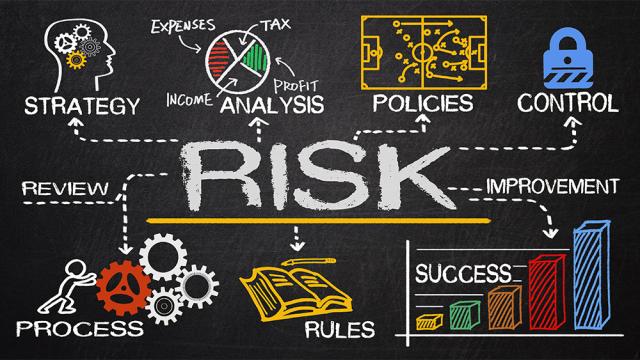
Risk assessment and continual process verification (CPV) are fundamental regulatory requirements for pharmaceutical companies to ensure drug safety, efficacy, and quality. While risk assessment involves analyzing, mitigating, communicating, and monitoring risks that could ultimately affect patients…

Ferdinando Fioretto
Artificial intelligence’s capacity to process and analyze vast amounts of data has revolutionized decision-making processes, making operations in healthcare, finance, criminal justice, and other sectors of society more efficient and often more effective.
However, with this transformative power…

Douglas C. Fair, Scott A. Hindle
In less than two months we will celebrate the 100th anniversary of the invention of the control chart, a tool most often associated with statistical process control (SPC). Considering SPC from our modern perspective made us ask, “Is SPC still relevant?”
It’s a question asked within the purview of…

Stephanie Ojeda
Companies today implementing automated compliance management systems are motivated by a wide variety of factors.
For many, it’s about reducing manual labor hours required to execute quality processes—and achieving greater efficiency and effectiveness in their operations. For others, the priority…

Patrick Gale
Medical equipment is a necessary yet substantial investment for any health system. Making strategic decisions about these assets can be daunting in the face of shifting patient demand, financial uncertainty, and fast-changing cybersecurity risks.
Because clinical assets account for an average of…
Denise Robitaille
The buzz has begun. ISO 9001 is being revised. There hasn’t been a revision in about 10 years, so it’s due—if not overdue. Still, there are individuals who don’t understand the justification or the purpose of the revision. After all, it’s a perfectly good standard. So, what’s up?
It’s worth…

Jennifer King
The cost of poor quality can be devastating to business: Failed quality control costs manufacturers anywhere between 15–20% of their total profits on average, and as much as 40% for some, the ASQ reveals. Businesses with successful quality programs, on the other hand, can benefit from increased…

William A. Levinson
What do quality and productivity have to do with World War III, which we all hope will never happen? The answer is everything. A massive loss of American manufacturing capability between 1945 and 2024 has conceded enormous advantages to aggressor nations that might be inclined to break the peace.…