Megan King/NIST
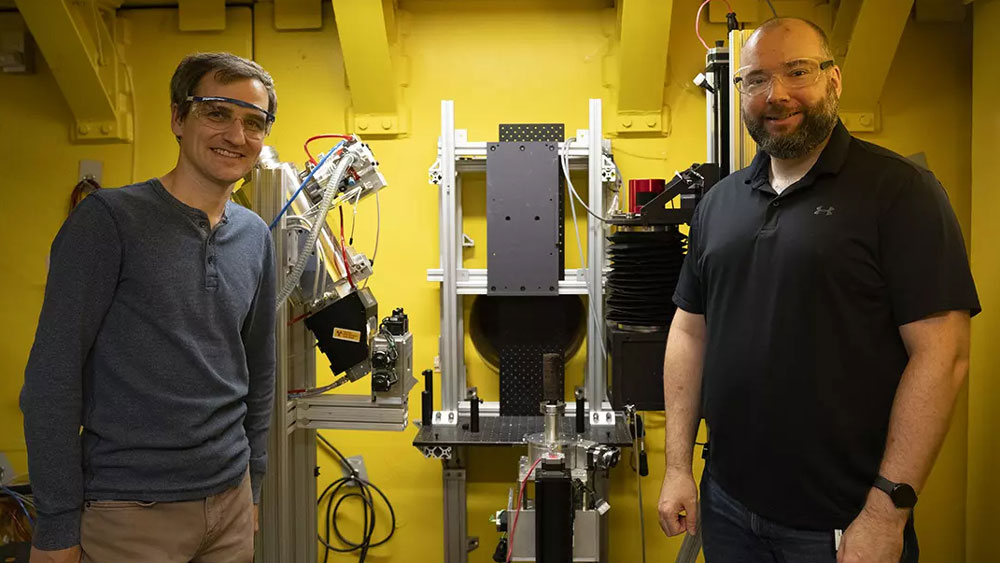
Cyrus Daugherty (left) and Jacob LaManna with the scroll they used to help work toward solving an ancient mystery.
Social Sharing block

Four years ago, National Institute of Standards and Technology (NIST) researcher Cyrus Daugherty developed an algorithm to virtually unroll the tightly wrapped layers of a cylindrical lithium-ion battery. Daugherty’s software transformed X-ray images of the battery, taken at different angles, into a CT scan. The scan, a 3D portrait of the battery’s interior, pinpointed hard-to-spot defects and highlighted wear and tear on its electrodes.
|
ADVERTISEMENT |
This study aims to extend the life of lithium-ion batteries, which power everything from laptops and cellphones to e-bikes and electric cars.
But Daugherty never imagined that his algorithm could serve a very different purpose: helping to decipher a trove of fragile papyrus scrolls. Ancient scholars inscribed these scrolls before the documents were entombed beneath the debris spewed by Mount Vesuvius two millennia ago.
…
Add new comment