Hexagon
Social Sharing block

For decades, reverse engineering was a tool reserved for large manufacturers. Aerospace manufacturers leaned on it to keep aging fleets in service when computer-aided design (CAD) data were missing. Defense contractors relied on it to re-create components that had long outlived their original documentation. Automakers used it to digitize legacy parts and prototypes. The barrier to entry, including high-end scanners, specialized software, and expert operators, kept smaller companies on the sidelines.
|
ADVERTISEMENT |
Today, that’s no longer the case. Reverse engineering is undergoing an underdog revolution, moving from a niche capability to a mainstream tool, reshaping how industries design, repair, and innovate. Three forces are driving the shift: democratization, reverse mentoring, and new frontiers for applications.
The democratization of reverse engineering
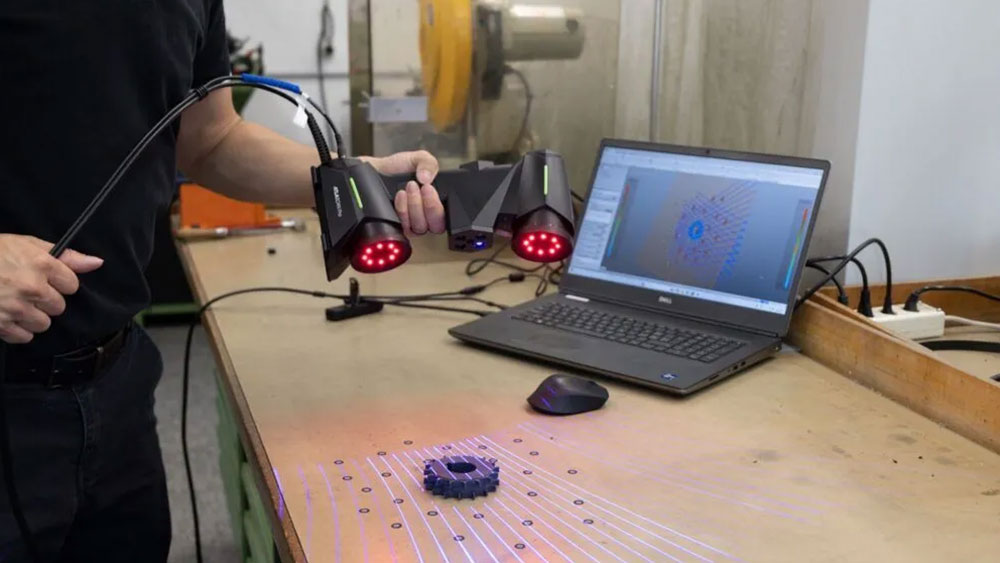
What once cost tens of thousands of dollars can now be done with tools available to anyone. Handheld scanners can be purchased for as little as $300. Subscription-based software allows shops to digitize parts without the risk of a large upfront investment. Even consumer-grade hardware, like a RevoPoint or a 3DMaker Pro, can capture detailed data that feed directly into professional software.
For small manufacturers, mold and die shops, or automotive garages, the effect is profound. A task that once meant painstaking manual measurement with paper templates or cardboard cutouts can now be completed in minutes with a scan-to-CAD workflow. As one engineer put it, “It’s not cardboard-aided design anymore.”
And this shift couldn’t come at a better time: Hexagon’s 2025 America’s State of Manufacturing Report found that 72% of U.S. manufacturers say outdated technology is hurting their ability to attract and retain workers. For many small shops, adopting modern reverse-engineering tools isn’t just about efficiency; it’s becoming essential for staying competitive in the race for talent.
Crucially, economics have shifted. For $2,000–$5,000, a shop can now assemble a capable hardware-and-software setup that’s good enough to handle a wide range of noncritical parts with precision and speed. This “good enough” factor is creating new opportunities for companies that never could have justified investing in reverse engineering before.
Reverse mentoring: The skills gap flipped
Manufacturing has long wrestled with a skills gap. But in the reverse-engineering space, younger workers are flipping that narrative. Digital natives entering the workforce are instantly comfortable with scanning, modeling, and manipulating 3D data. These are skills they often picked up using tools like SolidWorks or Fusion 360 in school or even through hobby projects.
Instead of veterans teaching new hires, it’s often the reverse. Fresh talent is showing experienced machinists how to use handheld scanners, digitize a part, and get it into CAD faster than traditional methods ever allowed. This “reverse mentoring” dynamic not only accelerates adoption but also helps companies overcome resistance to change.
Yet only 8% of manufacturers believe they’re doing enough to reskill their workforce, according to Hexagon’s report. This has created a gap that makes this new generation of reverse engineering-savvy workers even more valuable. By letting younger hires lead the way on new tools, companies can speed up adoption while closing their skills gap from within.
New frontiers beyond the factory
Reverse engineering is also breaking out of its traditional industrial boundaries. In construction and civil engineering, drones and lidar (light detection and ranging), a scanning technology that uses lasers to create detailed 3D maps, are used to monitor tunnels, bridges, and freeways for cracks or structural wear without shutting down traffic for days of scaffolding and manual inspection. Mining companies are adopting it to inspect excavation equipment, balancing safety with lower inventory costs by repairing parts on demand instead of warehousing expensive spares.
In the creative world, artists and woodworkers are digitizing sculptures and handcrafted objects. With tools like Geomagic Freeform, they can blend physical craft with digital flexibility. A sculptor can now “carve” in 3D space with haptic feedback, feeling resistance as though working with marble or wood, while still enjoying the freedom of undo buttons and replication.
Even in automotive customization, small shops are scanning cars without OEM data, identifying fixed points and reverse-engineering the exact components needed for modification with tools like Geomagic Design X. What once required proprietary designs and painstaking manual work is now within reach for independent businesses.
Speed, accuracy, and reflection in the digital space
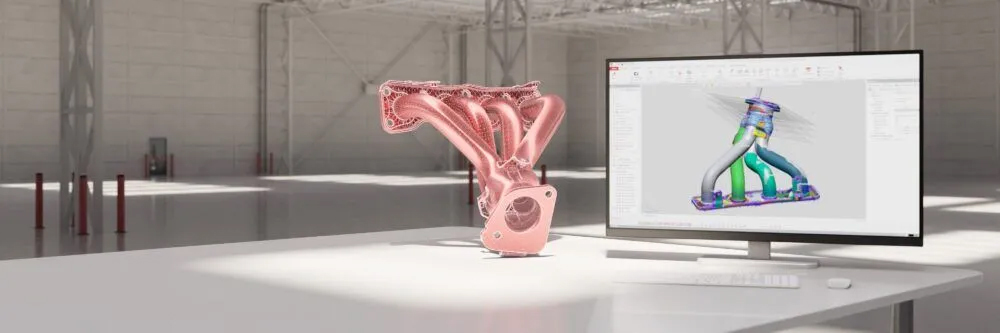
At its core, reverse engineering is about speed and accuracy. But just as important is the ability to reflect. Scanning allows companies to create a virtual replica, also known as a digital twin, of an object or environment that can be measured, compared, and stress-tested. In aerospace, that means validating the geometry of a turbine blade. In civil engineering, it means modeling how long a structure can continue to operate safely.
This data-driven approach turns reactive maintenance into predictive action. Instead of rebuilding an entire system, companies can identify specific areas that need repair, extend the life of critical assets, and reduce downtime.
The silver bullet for small shops
For mom-and-pop shops, reverse engineering is proving to be a silver bullet. Labor is scarce, legacy methods are slow, and customers demand fast turnarounds. By lowering costs and complexity, today’s scanning and software tools provide a direct path to modern digital workflows without requiring massive investment.
And unlike AI, where the hype often outruns real adoption, reverse engineering technology is already here, proven and easy to implement. With integrated ecosystems like Hexagon’s Geomagic platform, companies can start at an entry-level subscription and scale up to enterprise-grade precision as their needs grow.
From elite to everyday
Reverse engineering’s evolution is one of the most striking examples of how digital tools can level the playing field in manufacturing. What was once a highly specialized capability is now democratized, practical, and adaptable across industries.
Whether it’s a hobbyist scanning a motorcycle part in their garage, a civil engineer using drones to assess bridge safety, or an aerospace technician extending the service life of a 28-year-old aircraft, the same fundamental capability is at work: the ability to capture reality, digitize it, and act on it.
That shift is more than just a technology trend. It’s a transformation in how manufacturers—and increasingly, everyone else—approach the challenges of design, repair, and innovation. Reverse engineering has stepped out of the shadows of aerospace labs and defense contractors and into the mainstream. In doing so, it might just be one of the most disruptive forces shaping the future of manufacturing.
Published April 14, 2026, by Hexagon.
Add new comment