{domain:"www.qualitydigest.com",server:"169.47.211.87"} Skip to main content

        
User account menu
Main navigation
  • Topics
    • Customer Care
    • Regulated Industries
    • Research & Tech
    • Quality Improvement Tools
    • People Management
    • Metrology
    • Manufacturing
    • Roadshow
    • QMS & Standards
    • Statistical Methods
    • Resource Management
  • Videos/Webinars
    • All videos
    • Product Demos
    • Webinars
  • Advertise
    • Advertise
    • Submit B2B Press Release
    • Write for us
  • Metrology Hub
  • Training
  • Subscribe
  • Log in
Mobile Menu
  • Home
  • Topics
    • Customer Care
    • Regulated Industries
    • Research & Tech
    • Quality Improvement Tools
    • People Management
    • Metrology
    • Manufacturing
    • Roadshow
    • QMS & Standards
    • Statistical Methods
    • Supply Chain
    • Resource Management
  • Login / Subscribe
  • More...
    • All Features
    • All News
    • All Videos
    • Contact
    • Training

‘Robot, Make a Chair’

AI-driven system lets users design and build multicomponent objects by describing them

Researchers/MIT

Adam Zewe

MIT

Wed, 01/21/2026 - 12:03
  • Comment
  • RSS

Social Sharing block

  • Print
Body

Computer-aided design (CAD) systems are tried-and-true tools used to design many of the physical objects we use each day. But CAD software requires extensive expertise to master, and many tools incorporate such a high level of detail that they don’t lend themselves to brainstorming or rapid prototyping.

ADVERTISEMENT

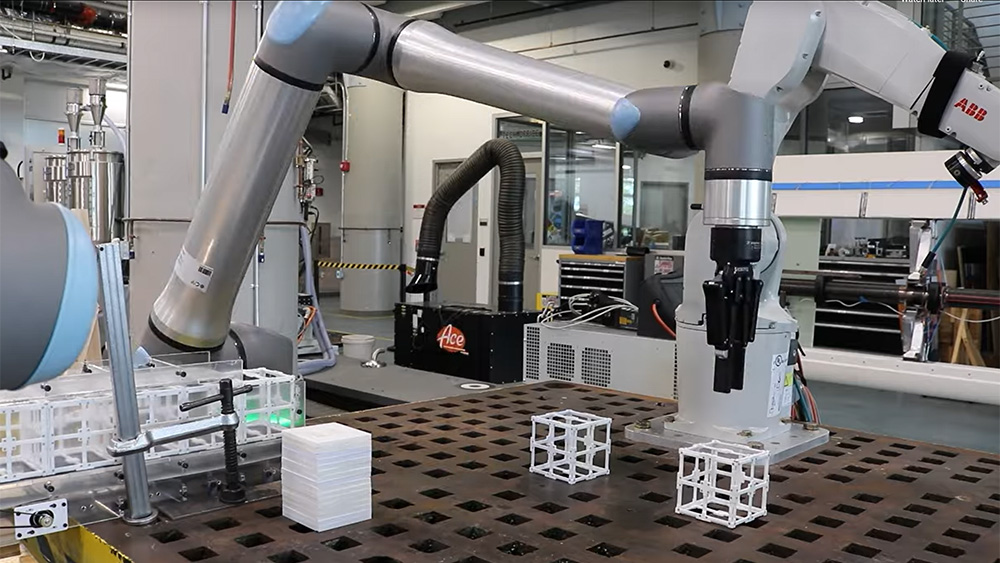
In an effort to make design faster and more accessible for nonexperts, researchers from MIT and elsewhere developed an AI-driven robotic assembly system that enables people to build physical objects by simply describing them in words.

Their system uses a generative AI model to build a 3D representation of an object’s geometry based on the user’s prompt. Then, a second generative AI model reasons about the desired object and figures out where different components should go, according to the object’s function and geometry.          

The system can automatically build the object from a set of prefabricated parts using robotic assembly. It can also iterate on the design based on feedback from the user.

 …

Want to continue?
Log in or create a FREE account.
Enter your username or email address
Enter the password that accompanies your username.
By logging in you agree to receive communication from Quality Digest. Privacy Policy.
Create a FREE account
Forgot My Password
Top Stories
What FDA Warning Letters Reveal About Records, Spreadsheets, and AI
The Art of Forecasting: Part 1
Avoiding the 7 Deadly Killers of Projects
AI Layoffs Need Evidence, Not Executive Storytelling
ISO 9001:2026 Is Here

Add new comment

Please login to comment.

© 2026 Quality Digest. Copyright on content held by Quality Digest or by individual authors. Contact Quality Digest for reprint information.
“Quality Digest" is a trademark owned by Quality Circle Institute Inc.

footer
  • Home
  • Print QD: 1995-2008
  • Print QD: 2008-2009
  • Videos
  • Privacy Policy
  • Write for us
footer second menu
  • Subscribe to Quality Digest
  • About Us
  • Contact Us