
{domain:"www.qualitydigest.com",server:"169.47.211.87"} Skip to main content

        
User account menu
Main navigation
  • Topics
    • Customer Care
    • Regulated Industries
    • Research & Tech
    • Quality Improvement Tools
    • People Management
    • Metrology
    • Manufacturing
    • Roadshow
    • QMS & Standards
    • Statistical Methods
    • Resource Management
  • Videos/Webinars
    • All videos
    • Product Demos
    • Webinars
  • Advertise
    • Advertise
    • Submit B2B Press Release
    • Write for us
  • Metrology Hub
  • Training
  • Subscribe
  • Log in
Mobile Menu
  • Home
  • Topics
    • Customer Care
    • Regulated Industries
    • Research & Tech
    • Quality Improvement Tools
    • People Management
    • Metrology
    • Manufacturing
    • Roadshow
    • QMS & Standards
    • Statistical Methods
    • Supply Chain
    • Resource Management
  • Login / Subscribe
  • More...
    • All Features
    • All News
    • All Videos
    • Contact
    • Training

Tiny New Lasers Opening New Applications

Filling a long-standing gap in the rainbow of visible-light colors

Photo by Alexander Grey on Unsplash

NIST
Thu, 09/12/2024 - 12:02
  • Comment
  • RSS

Social Sharing block

  • Print
Body

It’s not easy making green.

ADVERTISEMENT

Scientists have made small red and blue lasers for years, but other colors have been a challenge. Now, researchers have filled an important technology gap by creating orange, yellow, and green lasers tiny enough to fit on a chip. Low-noise, compact lasers in this wavelength range are important for quantum sensing, communications, and information processing.
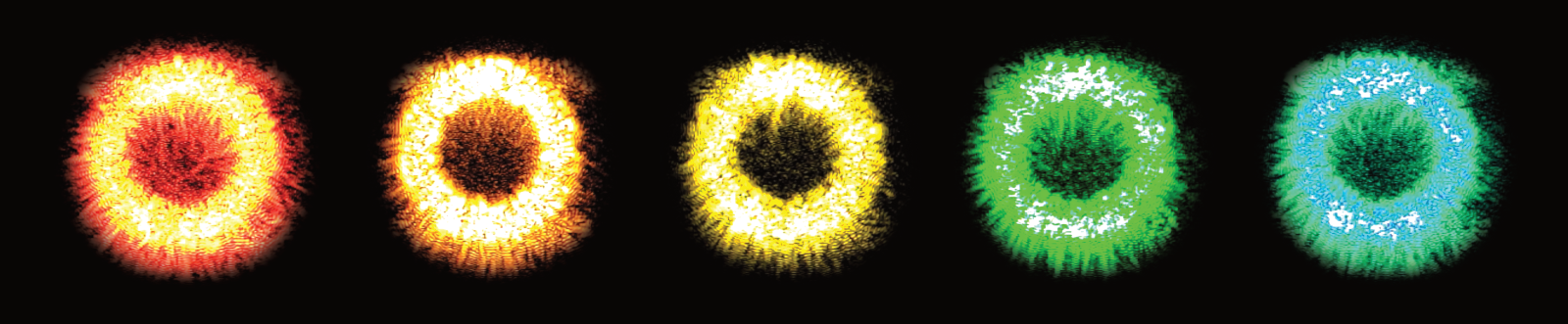

Series of visible-light colors generated by a microring resonator. Credit: S. Kelley/NIST

For years, scientists have fabricated small, high-quality lasers that generate red and blue light. However, the method they typically employ—injecting electric current into semiconductors—hasn’t worked as well in building tiny lasers that emit light at yellow and green wavelengths. Researchers refer to the dearth of stable, miniature lasers in this region of the visible-light spectrum as the “green gap.” Filling this gap opens new opportunities in underwater communications, medical treatments, and more.

 …

Want to continue?
Log in or create a FREE account.
Enter your username or email address
Enter the password that accompanies your username.
By logging in you agree to receive communication from Quality Digest. Privacy Policy.
Create a FREE account
Forgot My Password
Top Stories
All Whys Are Not The Same
AI May Be Making Your Quality Problem Worse
Flying Blind: What Your Quality Data Miss Every Shift
The 6 Best Quality Management Software Features That Simplify Your QMS
Momentum Technologies Achieves Record Purity Milestones for Rare Earths

Add new comment

Please login to comment.

© 2026 Quality Digest. Copyright on content held by Quality Digest or by individual authors. Contact Quality Digest for reprint information.
“Quality Digest" is a trademark owned by Quality Circle Institute Inc.

footer
  • Home
  • Print QD: 1995-2008
  • Print QD: 2008-2009
  • Videos
  • Privacy Policy
  • Write for us
footer second menu
  • Subscribe to Quality Digest
  • About Us
  • Contact Us