{domain:"www.qualitydigest.com",server:"169.47.211.87"} Skip to main content

        
User account menu
Main navigation
  • Topics
    • Customer Care
    • Regulated Industries
    • Research & Tech
    • Quality Improvement Tools
    • People Management
    • Metrology
    • Manufacturing
    • Roadshow
    • QMS & Standards
    • Statistical Methods
    • Resource Management
  • Videos/Webinars
    • All videos
    • Product Demos
    • Webinars
  • Advertise
    • Advertise
    • Submit B2B Press Release
    • Write for us
  • Metrology Hub
  • Training
  • Subscribe
  • Log in
Mobile Menu
  • Home
  • Topics
    • Customer Care
    • Regulated Industries
    • Research & Tech
    • Quality Improvement Tools
    • People Management
    • Metrology
    • Manufacturing
    • Roadshow
    • QMS & Standards
    • Statistical Methods
    • Supply Chain
    • Resource Management
  • Login / Subscribe
  • More...
    • All Features
    • All News
    • All Videos
    • Contact
    • Training

Specular Included or Specular Excluded?

Which is best for measuring ‘true’ color?

Tim Mouw
Wed, 05/02/2018 - 12:03
  • Comment
  • RSS

Social Sharing block

  • Print
Body

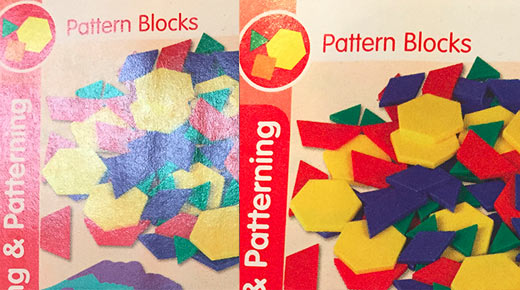
Surface appearance can change your perception of color. Think of a glossy magazine. If the light is shining directly on the page, you may need to tilt the magazine and change the reflection angle to clearly see the colors. Likewise, a textured surface may appear to be a different color than a smooth surface of the same object.

ADVERTISEMENT

Because spectrophotometers determine a color’s spectral values by shining light onto the surface and measuring the reflectance, choosing the right instrument and the proper measurement mode is crucial. These choices will determine what passes and what fails your tolerance, as well as how the results correlate to visual inspection.

Sphere spectrophotometers are the preferred choice for paints, coatings, plastics, and textile applications because they can include or exclude the specular component of surface appearance. This ability is critical to being able to evaluate the color only or the color and appearance of the object being measured.

 …

Want to continue?
Log in or create a FREE account.
Enter your username or email address
Enter the password that accompanies your username.
By logging in you agree to receive communication from Quality Digest. Privacy Policy.
Create a FREE account
Forgot My Password
Top Stories
Beyond the Statistics: Implementing the New <em>VDA AIAG SPC Manual</em>
Multivariate Charts
All Whys Are Not The Same
Flying Blind: What Your Quality Data Miss Every Shift
<span class="overline">Book Preview</span><br><em>The Psychology of AI Adoption at Work</em>

Add new comment

Please login to comment.

© 2026 Quality Digest. Copyright on content held by Quality Digest or by individual authors. Contact Quality Digest for reprint information.
“Quality Digest" is a trademark owned by Quality Circle Institute Inc.

footer
  • Home
  • Print QD: 1995-2008
  • Print QD: 2008-2009
  • Videos
  • Privacy Policy
  • Write for us
footer second menu
  • Subscribe to Quality Digest
  • About Us
  • Contact Us