How Chinese Products Went From Cheap and Cheerful to Trade War Weapons
XL Image
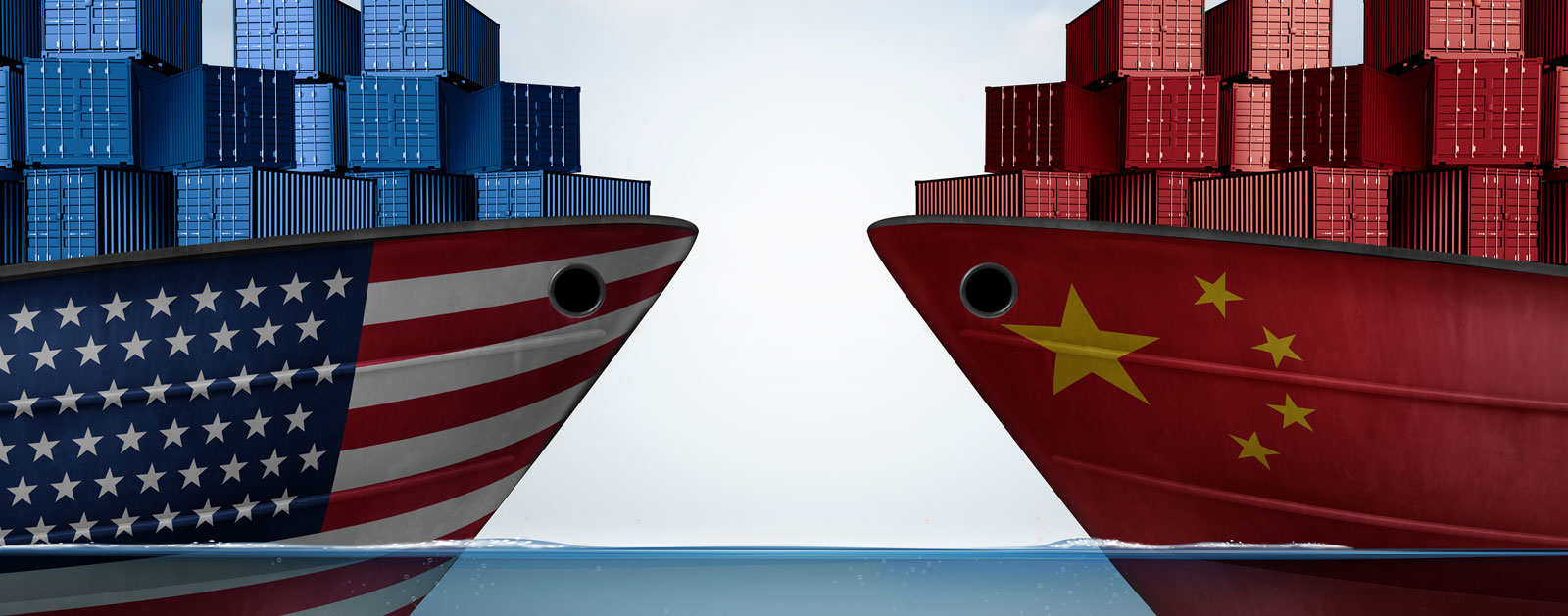
Tensions are escalating between China and the United States over trade. The Chinese government has announced retaliatory measures on a range of U.S.
Twitter RSS Feed. Stories for Twitter go here.
Tensions are escalating between China and the United States over trade. The Chinese government has announced retaliatory measures on a range of U.S.

With the threat of a trade war between China and the United States looming, business relations between Asia and the West have not been this hot a topic since the Japanese Economic Mir
In part one of this article, we discussed the origins of the United States and China, and how their relationship began to emerge.

In part one we saw that China has made great strides in terms of product quality, notably in the tech sector. But it still has a long way to go in other products.

Without manufacturing, the room where you make dinner would be rather stark and barren. There’d be no pots, no pans, no stoves, no spatulas, no appliances—big or small. There’d be no way to prepare the meals that give you and your family sustenance.

Back in the 1950s and 1960s, Japanese products were synonymous with cheaply made. Anyone over the age of 50 probably remembers cheap Japanese transistor radios when they were a kid. We all believed, in the day, that the more transistors a radio had, the better.
In June of 1950, W. Edwards Deming began offering training to the Japanese Union of Scientists and Engineers (JUSE) on the precepts of statistical process control.
Researchers at the National Institute of Standards and Technology (NIST) have been developing a novel way of measuring laser power.
A job safety analysis (JSA) worksheet is almost identical in organization to a job breakdown sheet and standard work, all of which assess a job (or process) on a step-by-step basis.
As the 21st century dawned, Germany was known as the “sick man of Europe,” with lower GDP growth and higher unemployment than peer nations such as France, Italy, and the United Kingdom.