{domain:"www.qualitydigest.com",server:"169.47.211.87"} Skip to main content

        
User account menu
Main navigation
  • Topics
    • Customer Care
    • Regulated Industries
    • Research & Tech
    • Quality Improvement Tools
    • People Management
    • Metrology
    • Manufacturing
    • Roadshow
    • QMS & Standards
    • Statistical Methods
    • Resource Management
  • Videos/Webinars
    • All videos
    • Product Demos
    • Webinars
  • Advertise
    • Advertise
    • Submit B2B Press Release
    • Write for us
  • Metrology Hub
  • Training
  • Subscribe
  • Log in
Mobile Menu
  • Home
  • Topics
    • Customer Care
    • Regulated Industries
    • Research & Tech
    • Quality Improvement Tools
    • People Management
    • Metrology
    • Manufacturing
    • Roadshow
    • QMS & Standards
    • Statistical Methods
    • Supply Chain
    • Resource Management
  • Login / Subscribe
  • More...
    • All Features
    • All News
    • All Videos
    • Training

What AI Adoption in Global Firms Really Looks Like

AI is transforming organizations in theory, but the real battle is making it work in practice

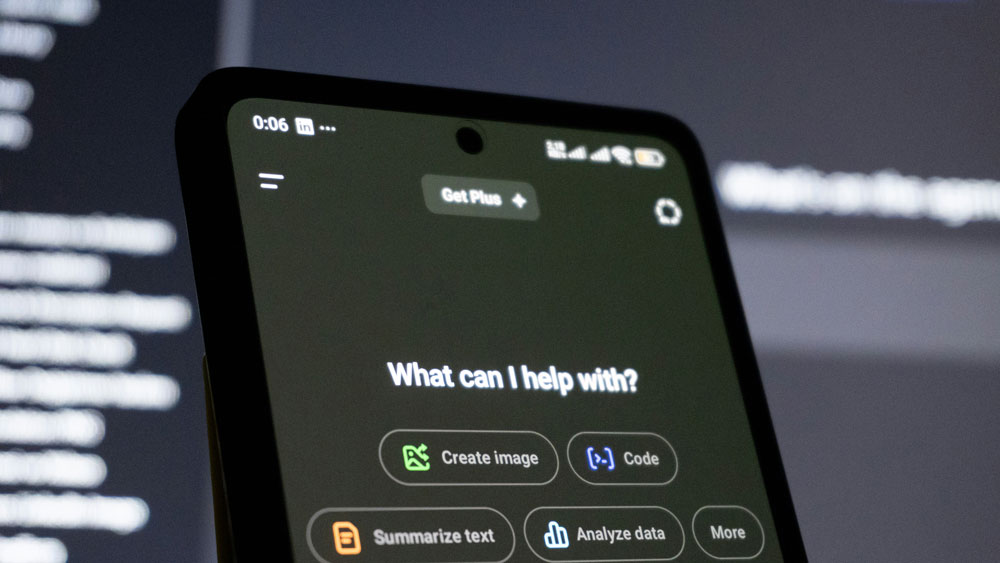
Zulfugar Karimov/Unsplash

Mark Stabile
Bio
Ridhima Aggarwal
Bio
Thu, 07/16/2026 - 12:02
  • Comment
  • RSS

Social Sharing block

  • Print
Body

We often think of AI as a technological revolution that will transform industries, disrupt jobs, and change the nature of competitive advantage. But inside organizations, it’s unfolding in a much more complex, less predictable way. In many firms, AI is still more narrative than operational reality, making it hard to move from discussion to meaningful action.

ADVERTISEMENT

This tension was revealed by senior leaders of global firms at a recent workshop in Paris co-organized by INSEAD’s Stone Centre for the Study of Wealth Inequality, its counterpart at University College London, and the Centre for Economic Policy Research (CEPR).

The senior executives, who came from professional services, retail, creative, consumer goods, and other sectors, spoke on condition of anonymity. They said AI is reshaping how work gets done, how decisions are made, and how value gets created and distributed, but that the real challenge is how firms make sense of the AI transformation.

Underneath the surface of experimentation and investment are deeper questions around organizational design, human capability, and the future of work. From what the participants said, four key tensions stood out.

1. What does AI adoption really mean?

Across organizations, the term AI adoption is widely used but understood differently. For some firms, AI is primarily a tool for incremental productivity gains, improving efficiency at the margins. For others, AI is empowering a more fundamental shift: Employees of all manner of functions are building solutions themselves, enabling innovation by many rather than a select few.

In other contexts, particularly in knowledge-intensive sectors, AI raises questions beyond productivity: think authorship, data origins, and credibility. When outputs are generated by models trained on vast amounts of external data, it raises the questions of who creates value and how that value should be recognized.

A key insight of the workshop, which had some 30 participants, is that shared language and AI literacy are closely connected. When organizations use the same term internally to describe fundamentally different phenomena, this can lead to misalignment. Leaders might see a coherent strategy while employees experience a fragmented set of initiatives with no clear purpose, resulting in a gap between AI ambitions and their limited connection to everyday operations.

People in the same organization need both a common understanding of what AI is and the knowledge and confidence to use it effectively. Firms that begin with language and learning—that develop a shared, working understanding of what AI is, what it’s not, and what it’s expected to achieve—tend to move more effectively from experimentation to impact.

The challenge for firms is to integrate AI in ways that continue to develop human capability.

The implication for leaders is simple but important: Before scaling AI, define it not just in technical terms but also in strategic ones. What specific problems is the technology meant to solve? Where is it expected to create value, and where is it not? What does success look like, and during what time frame?

This isn’t just about semantics. One workshop participant from a not-for-profit organization described a split between AI enthusiasts and skeptics, noting that there’s often “a mismatch between what AI does and the sentiment we give to it.” Without a shared understanding, the lack of common meaning becomes, in the words of the participant, “prohibitive to the discussion,” let alone to working together.

2. Overcoming organizational bottlenecks

As well as addressing ambiguity, the issue of organizational readiness is equally important. Access to tools, data, or technical expertise is often cited as a barrier to AI adoption. In practice, however, most firms can access powerful systems; the bigger challenge is integrating them into existing structures and workflows.

This reflects the “J-curve” effect seen in previous waves of technological change. Initial adoption is typically followed by a period of adjustment, during which productivity may decline. One leader of a firm providing coaching and mentoring services augmented by AI offered a candid account of this transition. The firm spent 18 months in a building phase that generated little visible output, and said, “It was an unproductive time, but gains take time to realize.” To its credit, the firm understood it as a necessary investment—and it has since seen returns. The J-curve demands patience as much as capability.

Several participants described this phase as lasting 12–18 months, often with limited visible gains. Understanding the J-curve not as failure but as a necessary phase helps organizations manage expectations and sustain commitment. Firms that persevere are those that invest in complementary capabilities, including training, redesigning workflows, and change management.

As AI enables more widespread experimentation, employees throughout levels and functions can test, adapt, and build. This calls for a shift in both structure and mindset, with leaders supporting a degree of decentralization and ambiguity while staying aligned with strategic priorities.

3. Spreading AI’s benefits

Perhaps the most immediate effects of AI adoption are being felt in the human experience of work. AI is creating divisions as employees who are able and willing to use these tools effectively often gain a disproportionate advantage. The rest are at risk of being left behind due to lack of access, training, or confidence.

These differences aren’t only technical but behavioral and cultural. Some people are more inclined to experiment, while others are more cautious, particularly when technology challenges the existing ways of working or raises concerns about quality and reliability. Firms that invest in broad-based AI literacy and create environments for experimentation tend to distribute benefits more evenly. One academic participant argued that leadership needs to take responsibility. “If we don’t do anything, it will increase inequality,” it was argued. Indeed, the divergence in hiring trends suggests that a gap is already opening between the AI-savvy and the rest.

There’s also a deeper dimension related to meaning and identity. In many roles, especially those involving creativity or human interaction, AI raises questions about authorship, autonomy, and the value of work. Some employees may find meaning in tasks that others are quick to automate, highlighting the need for careful and inclusive decisions about where AI is applied.

Additionally, AI is increasingly being used in people management processes such as hiring. Although this can improve efficiency, it also raises new challenges, such as making it harder to distinguish among candidates when many now use AI tools to craft their CVs. This places greater emphasis on human judgement and the interpersonal aspects of recruitment.

For leaders, the challenge is to ensure that AI adoption doesn’t create a tiered or hierarchical organization. This isn’t only a question of fairness but also of performance.

4. The nature of human work and developing talent

As AI systems become more capable, they are increasingly performing tasks that were previously central to many roles. Activities such as drafting reports, writing code, and conducting analysis are now automated or significantly accelerated. Roles are evolving, with a shift from execution to oversight and judgement.

A useful way to think about this shift is in terms of “semiautonomy.” Rather than fully delegating decisions to AI, organizations are designing systems that augment human judgement while preserving human responsibility for consequential decisions. The role of the human is moving from being inside the loop to being on top of it.

This has implications for organizational design and talent development. In professional services firms, junior employees were traditionally trained in detailed analytical work under supervision. If AI reduces the need for such work, how will expertise be developed and assessed? At the same time, the skills that differentiate individuals are changing. The ability to think critically, connect distinct pieces of information, and exercise judgement in uncertain situations is becoming increasingly valuable. Ditto interpersonal skills such as empathy, communication, and leadership. Several leaders expressed concern about “intellectual offloading,” where individuals defer to AI outputs without fully engaging with the underlying reasoning.

The risk of skipping foundational steps was captured vividly in the discussion. If the pace of AI-assisted work is prioritized over depth of understanding, organizations may accumulate blind spots. Panelists noted that new graduates might still need fluency with underlying data, even if they no longer produce it directly. As one participant put it, some young people today can’t change a light bulb because the task has always been handled for them.

By the same logic, if detailed knowledge is never acquired it can’t be drawn on when things go wrong. The challenge for firms is to ensure that speed doesn’t come at the cost of the judgment that only arises from getting one’s hands dirty. In other words, integrate AI in ways that continue to develop human capability. This might require different training, redesigning career pathways, and creating new opportunities for experiential learning.

Leading through the transition

Beyond internal organization, AI is pushing firms to rethink how they create and capture value. In professional services, the traditional model based on billable hours is increasingly under pressure and gradually being replaced by value-based pricing.

At the same time, sources of competitive advantage are evolving—proprietary data, strong client relationships, and the ability to build ecosystems are becoming critical. Beyond generating solutions, firms must have the data and context to create something that scales and delivers long-term value.

Leading through this transition requires deliberate, not just fast, action. Organizations should be clear about what they are trying to achieve, thoughtful about which decisions should remain human, and intentional about how AI aligns with organizational design and purpose.

Published June 29, 2026, by INSEAD.

Add new comment

The content of this field is kept private and will not be shown publicly.
About text formats
Image CAPTCHA
Enter the characters shown in the image.

© 2026 Quality Digest. Copyright on content held by Quality Digest or by individual authors. Contact Quality Digest for reprint information.
“Quality Digest" is a trademark owned by Quality Circle Institute Inc.

footer
  • Home
  • Print QD: 1995-2008
  • Print QD: 2008-2009
  • Videos
  • Privacy Policy
  • Write for us
footer second menu
  • Subscribe to Quality Digest
  • About Us