
{domain:"www.qualitydigest.com",server:"169.47.211.87"} Skip to main content
        
User account menu
Main navigation
  • Topics
    • Customer Care
    • Regulated Industries
    • Research & Tech
    • Quality Improvement Tools
    • People Management
    • Metrology
    • Manufacturing
    • Roadshow
    • QMS & Standards
    • Statistical Methods
    • Resource Management
  • Videos/Webinars
    • All videos
    • Product Demos
    • Webinars
  • Advertise
    • Advertise
    • Submit B2B Press Release
    • Write for us
  • Metrology Hub
  • Training
  • Subscribe
  • Log in
Mobile Menu
  • Home
  • Topics
    • Customer Care
    • Regulated Industries
    • Research & Tech
    • Quality Improvement Tools
    • People Management
    • Metrology
    • Manufacturing
    • Roadshow
    • QMS & Standards
    • Statistical Methods
    • Supply Chain
    • Resource Management
  • Login / Subscribe
  • More...
    • All Features
    • All News
    • All Videos
    • Training

The Space Docking Problem

Roadshow: Season 1, Episode 4

Why lasers are a key to getting humans back to the moon

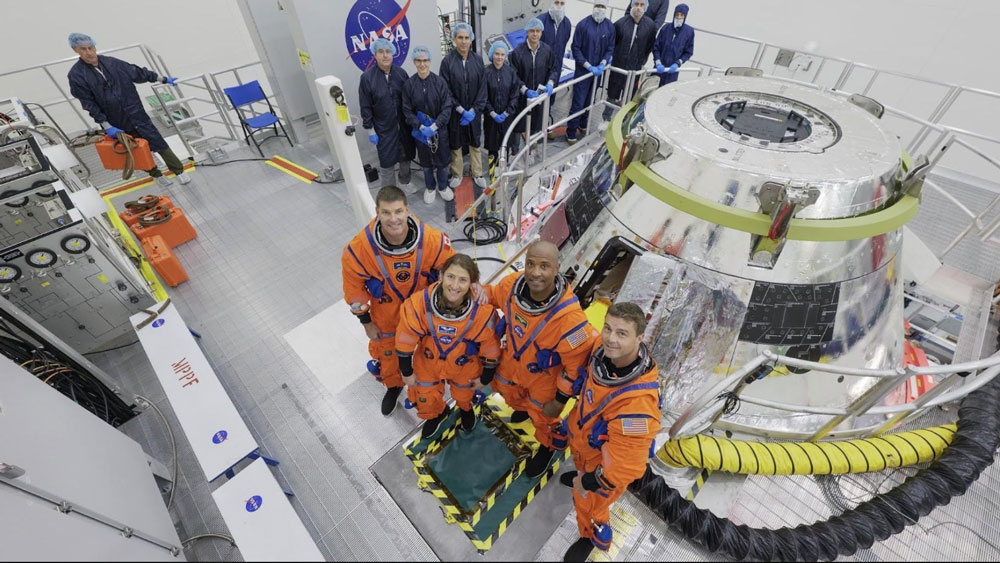
The Artemis II crew members and the Orion spacecraft

Jeff Dewar
Bio

Quality Digest

Thu, 05/21/2026 - 12:03
  • Comment
  • RSS

Social Sharing block

  • Print
Body

Our video producer Chris Smith almost watched the Artemis II launch in person. He drove to Kennedy Space Center with all his fancy gear, along the way got stuck in the snow twice—in Texas, of all places—and then NASA scrubbed the launch and rolled the rocket back for repairs. So Chris drove back to California and watched it happen without him. That’s space exploration for you.
ADVERTISEMENT

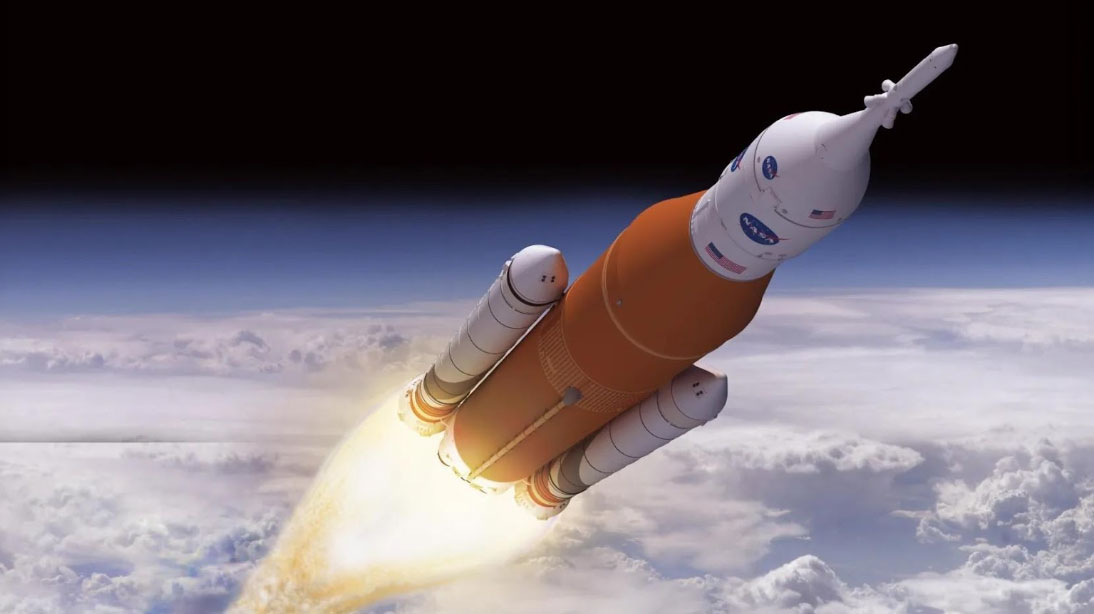
Artist rendering of Artemis II launch: The small top conical section is the Orion spacecraft containing the four astronauts. Source: NASA

But Artemis II was just a test flight around the moon with no landing. Artemis III is the main event—and it will be the most complicated space mission NASA has ever attempted. Chris documents the whole story in Episode 4 of The Quality Digest Roadshow, “Lasers and the Moon.” I want to tell you what he found, because it gets to the heart of why metrology, the science of measurement, exists.

The problem: Docking. A lot of it.

Here’s the thing most people don’t appreciate about going to the moon: The hardest part isn’t getting there. It’s docking.

In the Apollo era, astronauts had to dock with the lunar lander, undock, land on the moon, launch back to lunar orbit, dock again, then rocket home. Each docking was performed largely by feel—a pilot looking out a window, consulting a primitive radar, adjusting thrusters by hand, trying not to punch a hole in something. The walls of the lunar lander, to save weight, were one-third of a millimeter thick. So yes, be gentle.

Even before the Apollo missions started, docking nearly killed Neil Armstrong during a Gemini flight (the NASA program that preceded Apollo) when a stuck thruster sent his capsule into a spin so violent he nearly blacked out. He survived by making the right call in a fraction of a second. The point: Docking in space has always been the dangerous Achilles heel of a mission.

Artemis III makes Apollo look simple.

Because the new lunar landers are enormous (SpaceX is building one, as is Blue Origin), they can’t launch on the same rocket as the Orion crew capsule. So the plan, as of this writing, is something like this: Launch the SpaceX lander separately, then launch a refueling rocket and dock those two in Earth orbit—a refueling maneuver that has never been done before. Then the Orion spacecraft arrives and docks with the fueled lander for in-space testing. Then Blue Origin launches its lander, refuels it in orbit the same way, and Orion detaches from SpaceX and redocks with Blue Origin.

Artemis III and IV will use the SpaceX Starship Lunar Lander.  Artemis V will use Blue Origin’s Blue Moon Lander. Source: NASA 

Five launches; two lunar landers; first-ever in-orbit refueling; all of it requiring the Orion spacecraft to dock, undock, and redock with precision that leaves no room for error—because there are four human lives on the line and billions of dollars of hardware that can’t be scratched, poked, torn, or even slightly damaged.

The Artemis II crew members with the Orion Spacecraft in which they spent 10 days inside the 330 ft3 capsule (that’s about a 7 x 7 x 7 ft cube).

The solution: Lasers

This is where metrology comes in. The Orion spacecraft uses a lidar- (light detection and ranging) based docking system—a technology that uses laser beams the way radar uses radio waves, measuring distance and position to extreme accuracy. Where a human pilot once squinted out a window, Orion’s software sees the world in lasers and knows, within millimeters, exactly where it is and where its docking target is.

But how do you know the software really knows? That it doesn’t just think it knows?

You measure. Independently. Redundantly. And that’s exactly what Chris filmed.

A hilltop near Santa Cruz

On a hillside near Santa Cruz, California, there’s a Lockheed Martin test facility. It’s a quiet, unassuming place—but it has history. Lockheed has been testing space hardware there since the Gemini program in the 1960s. Bob Elliot, a metrologist working on the Orion program, mentioned that detail with obvious pride when Chris filmed him. He’s doing his work today quite literally in the shadow of the facility where Gemini hardware was tested. The same mountain, the same purpose: Get human beings safely into space and back.

Elliot was there with Keith Barr, a Lockheed engineer running the Orion docking tests. Their setup was clever in its simplicity: A trailer stood in for the Orion crew module. A drone stood in for the lunar lander Orion needs to dock with. And Elliot’s job was to locate both—with extraordinary precision—using means completely independent of the Orion software itself.

If you want to really geek out with some very cool measurement strategies, this episode of The Quality Digest Roadshow shows what Bob Elliot and Keith Barr did. 

The result

Here’s what Barr told us about the outcome: “In the end, the test was very successful. Our goal was to confirm the accuracy of the lidar, and we proved that it was within specifications during this complicated test.”

“Within specifications” is NASA-speak for “It worked exactly as intended.”

Barr put it plainly: “Since I was a small boy, I’ve always thought that the Apollo story was just the most impressive story of innovation in human history. And so being able to work on the next chapter of lunar exploration is just an incredible honor.”

Elliot was more understated, which felt right coming from a metrologist. “We’re going back to the moon after over 50 years,” he said. “And even though we’re a small part, we are a part.”

That’s what this series keeps showing us, episode after episode. The people making the modern world possible are often the ones you’ve never heard of, doing work you’ve never seen, in places you’ll never visit. Bob Elliot, on a hillside in Santa Cruz, measuring a trailer and a drone with a laser, is part of a chain that ends with humans standing on the moon.

Episode 4 of The Quality Digest Roadshow, “Lasers and the Moon,” is available now at qualitydigest.com/topic/roadshow.

Add new comment

The content of this field is kept private and will not be shown publicly.
About text formats
Image CAPTCHA
Enter the characters shown in the image.

© 2026 Quality Digest. Copyright on content held by Quality Digest or by individual authors. Contact Quality Digest for reprint information.
“Quality Digest" is a trademark owned by Quality Circle Institute Inc.

footer
  • Home
  • Print QD: 1995-2008
  • Print QD: 2008-2009
  • Videos
  • Privacy Policy
  • Write for us
footer second menu
  • Subscribe to Quality Digest
  • About Us