{domain:"www.qualitydigest.com",server:"169.47.211.87"} Skip to main content

        
User account menu
Main navigation
  • Topics
    • Customer Care
    • Regulated Industries
    • Research & Tech
    • Quality Improvement Tools
    • People Management
    • Metrology
    • Manufacturing
    • Roadshow
    • QMS & Standards
    • Statistical Methods
    • Resource Management
  • Videos/Webinars
    • All videos
    • Product Demos
    • Webinars
  • Advertise
    • Advertise
    • Submit B2B Press Release
    • Write for us
  • Metrology Hub
  • Training
  • Subscribe
  • Log in
Mobile Menu
  • Home
  • Topics
    • Customer Care
    • Regulated Industries
    • Research & Tech
    • Quality Improvement Tools
    • People Management
    • Metrology
    • Manufacturing
    • Roadshow
    • QMS & Standards
    • Statistical Methods
    • Supply Chain
    • Resource Management
  • Login / Subscribe
  • More...
    • All Features
    • All News
    • All Videos
    • Training

When Women Shape the Rules, Consumers Benefit

Consumer protection is only as strong as the diversity of the people designing it

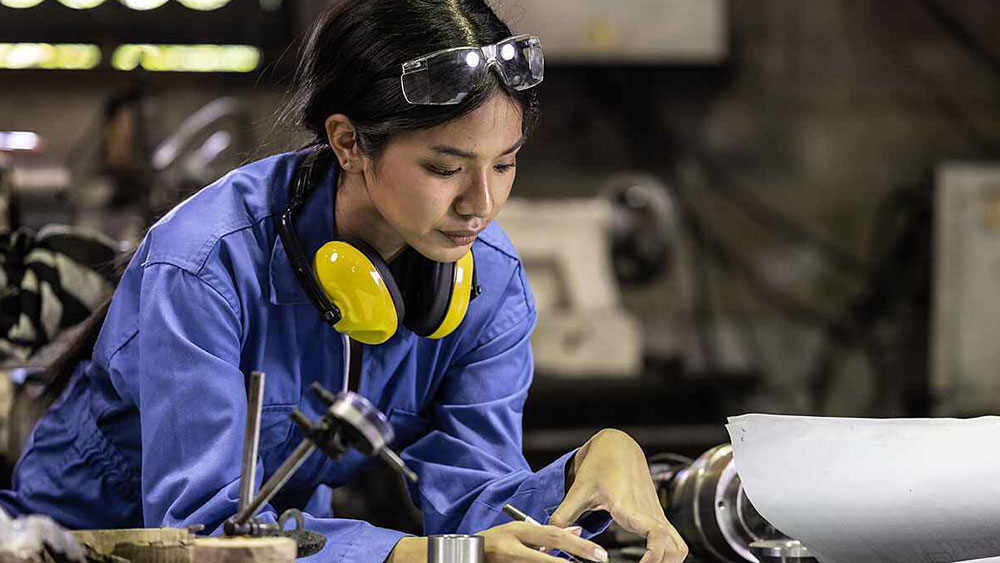
ISO/Shutterstock

ISO
Bio
Wed, 04/29/2026 - 12:01
  • Comment
  • RSS

Social Sharing block

  • Print
Body

Markets run on trust. Trust runs on standards. And standards only work when the people shaping them reflect the people they are meant to protect.

ADVERTISEMENT

That’s why International Women’s Day and World Consumer Rights Day aren’t just two dates on the calendar—they are part of the same story. When women participate fully in standards development and economic decision-making, consumer protection systems become focused, more relevant, and more credible. And when protection improves, markets work better for everyone.

This isn’t symbolic. It’s structural.

The invisible architecture of trust

Most consumers never read a standard. They don’t need to. Standards sit quietly behind the scenes, defining safety thresholds, testing methods, labeling requirements, and performance benchmarks. They make sure products are safe, services are reliable, and claims are verifiable.

But here’s the catch: Standards are written by people. If those people don’t reflect the diversity of real users, the system develops blind spots.

Women are responsible for an estimated 70 %–80 % (Nielsen, 2024) of consumer purchasing decisions globally. They are primary decision-makers in households, heavy users of health and financial services, and key actors in small and medium-size enterprises. Yet participation in standards development worldwide doesn’t always mirror that reality.

That gap matters, because consumer protection isn’t theoretical. It’s technical. It’s built into specifications. And if lived experience is missing from the room, the protection may be incomplete.

Why representation changes outcomes

The ISO committee on consumer policy (COPOLCO) plays a critical role in ensuring that consumer perspectives are integrated into International Standards. For Eunsook Moon, chair of COPOLCO, the mission is straightforward: Standards must work for real people in real markets. She has often emphasized that bringing consumers into the process improves outcomes, because consumers ask different questions:
• Is the labeling clear?
• Is the product intuitive to use?
• Do the safety requirements reflect actual use conditions?
• Who might be left out?

As Moon explains, COPOLCO works to ensure that “real consumer experiences and concerns are reflected in ISO policies and standards,” starting at the governance level and continuing throughout technical development. “By integrating priorities such as safety, usability, clear information, and the protection of vulnerable groups, ISO standards better address societal needs and strengthen consumer trust,” she says.

And when women are actively involved, those questions become even more grounded. Women bring insight shaped by everyday experience: running businesses, managing households, navigating healthcare systems, and using digital platforms. Those perspectives strengthen the end result.

Moon’s point is simple but powerful: Consumer participation isn’t a “nice to have.” It’s a quality control mechanism for the system itself. Rather than diluting technical rigor, inclusion sharpens it.


Dr. Eunsook Moon, chair, ISO Committee on Consumer Policy (COPOLCO)

The cost of missing voices

History has shown what happens when diversity is absent from design and decision-making. For years, crash-test dummies were modeled primarily on male physiology. Personal protective equipment often reflected male body dimensions. Digital systems failed to anticipate patterns of online harassment disproportionately affecting women. These weren’t malicious decisions. They were omissions. And omissions have consequences.

That concern is echoed by representatives of Consumers International’s Next Generation Leaders Network, a platform bringing forward young consumer advocates from around the world. Vanessa Pratley of Consumer NZ in New Zealand says, “When women’s cultural identities, histories, knowledge, and lived experiences are involved in the economy, consumer protection systems are more likely to be fair, inclusive, and reflective of society as a whole.”

In other words, representation shapes fairness.


Vanessa Pratley, investigative writer, Consumer NZ

Dimitri Claverie Doukoua, who represents a consumers organization in Côte d’Ivoire, makes a similar point. She says, “Women often face specific risks related to product safety, health, and access to information.”

Their inclusion improves the relevance, fairness, and credibility of standards while helping build consumer trust and more resilient markets.

The implications are clear. If standards committees don’t include women, they may unintentionally overlook risks, usability issues, or safety concerns that affect half the population.

That’s not just a gender issue. It’s a market issue.


Dimitri Claverie Doukoua, directrice exécutive, Association Ivoirienne des Consommateurs (AIC)

A practical case: Menstrual products and ISO/TC 338

Few examples illustrate this more clearly than the work of ISO/TC 338, the ISO technical committee developing standards for menstrual products. For decades, menstrual products were widely available but inconsistently regulated in various markets. Safety benchmarks varied. Labeling practices differed. Testing methodologies lacked harmonization. Consumers often had little basis for comparing quality or safety claims.

That changed when the issue moved into the standards arena—and critically, when women were at the table.

Fatou Bintou Thiam, CEO of Global Service For Women in Senegal, and a member of ISO/TC 338, emphasizes how standards directly influence the quality, safety, and accessibility of products, particularly in sectors such as health, textiles, and social innovation. Participation, she says, also gives women entrepreneurs access to technical knowledge and compliance processes, enabling them to anticipate regulatory expectations, improve quality, and strengthen business sustainability.

For Fatou, credibility is central. “When international standards exist, I can align my production with recognized safety benchmarks,” she says. “This reassures customers, partners, and regulators that our reusable pads are not just affordable and eco-friendly but also medically and technically safe.”


Fatou Bintou Thiam, CEO, Global Service For Women

Elijah Kiwanuka, from Afripads, also an ISO/TC 338 member, underscores how involving women directly influences product design and safety. Discussions around absorbency, materials, hygiene, durability, and environmental effect are different when women users and manufacturers are present.

When diverse perspectives are considered, he says, “requirements around fit, safety, and performance become more accurate for women. The result is safer, more effective products with reduced risk of injury, product failure, and unintended bias.”


Elijah Kiwanuka, technical product manager, Afripads

Lowering barriers, raising standards

Both committee members also point to barriers that still limit broader participation: lack of awareness about standards processes, resource constraints for smaller producers, time burdens, and structural gender imbalances in technical sectors. When those barriers are lowered, participation broadens, and the quality of the outcome rises.

ISO/TC 338 chair Gerda Mazi Larsson says the standards under development will establish clear safety requirements and comparable testing methods, ensuring a consistent baseline regardless of where products are made or sold. “Harmonized standards reduce the risk of unsafe products reaching consumers and help ensure that products are fit for purpose,” she says.

The ambition is to create practical and inclusive standards that all countries can sign up to. This will improve access to safe menstrual products and enable informed consumer choice, wherever a woman lives.

That’s consumer protection in action. And it happens because women are involved, not as a gesture but as technical contributors.


Gerda Mazi Larsson, chair, ISO/TC 338

Inclusion is a market performance issue

Zoom out, and the principle holds across sectors. When women participate in standards development: 
• Product requirements better reflect real-world use
• Safety thresholds become more reliable
• Accessibility improves
• Innovation expands

Research across governance and business shows that diverse decision-making bodies make better decisions. As Gerda notes, when actual users are present in the room—including in leadership roles—standards are far more likely to reflect real-world needs rather than theoretical assumptions. Inclusive expert groups identify risks earlier. They anticipate unintended consequences. They improve legitimacy, and that is the backbone of trust.

Consumer protection systems don’t function on enforcement alone. They function because people believe in them. Consumers trust certification marks. They rely on quality labels. They assume standards are fair.

That belief strengthens markets.

Participation, protection, trust

Through COPOLCO, consumer voices are embedded in technical work. Through committees such as ISO/TC 338, everyday realities are translated into global benchmarks. Through leaders like Eunsook Moon and Gerda Mazi Larsson, and contributors like Fatou, Elijah, Vanessa, and Dimitri, inclusion becomes operational, not rhetorical.

The chain of effects is clear. When women participate fully in shaping standards, consumer protection becomes more relevant and robust. When consumer protection is robust, trust grows. When trust grows, markets function better. Society is stronger, fairer, and more resilient.

Consumer protection is only as strong as the diversity of the people designing it. And when the room reflects the real world, everyone benefits.

International Women’s Day is about participation. World Consumer Rights Day is about protection. The link between them is standards.

Published March 10, 2026, by ISO.

Add new comment

The content of this field is kept private and will not be shown publicly.
About text formats
Image CAPTCHA
Enter the characters shown in the image.

© 2026 Quality Digest. Copyright on content held by Quality Digest or by individual authors. Contact Quality Digest for reprint information.
“Quality Digest" is a trademark owned by Quality Circle Institute Inc.

footer
  • Home
  • Print QD: 1995-2008
  • Print QD: 2008-2009
  • Videos
  • Privacy Policy
  • Write for us
footer second menu
  • Subscribe to Quality Digest
  • About Us