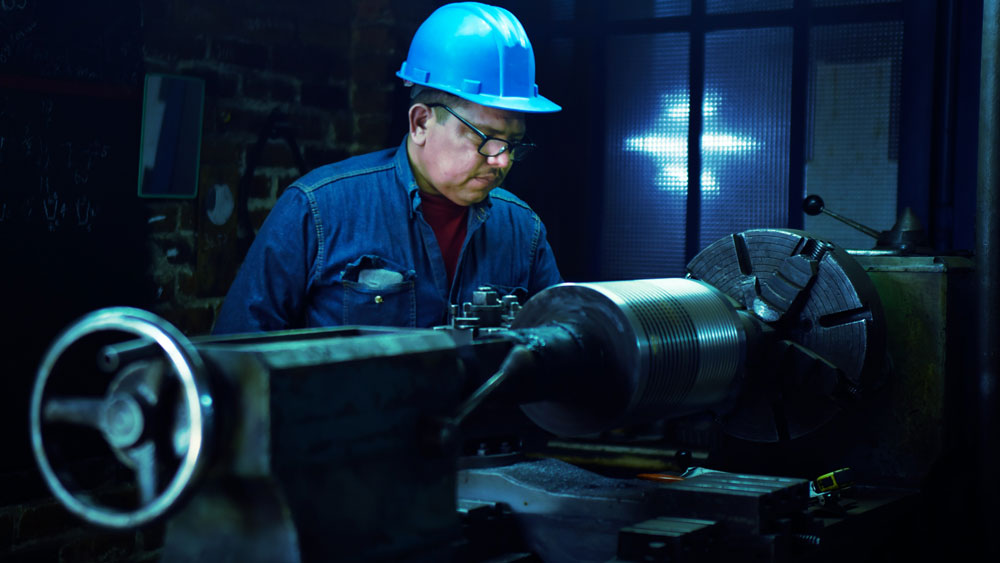
At Dozuki, our teams are constantly on the factory floor. We spend hundreds of hours every year walking production lines, sitting in breakrooms with operators, and standing alongside quality managers during high-stakes audits. These site visits have given us a front-row seat to the friction between legacy processes and modern production demands. We’ve seen firsthand how the combination of industrial AI and connected worker tools is finally solving the age-old problem of tribal knowledge.
|
ADVERTISEMENT |
The following lessons are drawn from these real-world observations. They represent a blueprint for how quality leaders and executives can use technology to bridge the gap between human expertise and operational excellence.
The mobility manufacturer: Quality as a proactive constraint
During our visits to a leading manufacturer of wheelchair-accessible vehicles and mobility solutions, it became clear that their assembly process was high-stakes and high-complexity. Previously, quality was a backward-looking metric, something measured by how many units failed inspection or, worse, how many were returned by customers.
By implementing digital work instructions, the company shifted the focus to the point of creation. It integrated high-resolution visuals and mandatory data-capture steps directly into the assembly process. This forced a standardized rhythm where a mistake became difficult to make and impossible to ignore.
The lessons
Move quality upstream: When you embed standards into the workflow, you stop inspecting for quality and start building it.
The ROI of prevention: This facility saw its year-to-date warranty rate plummet from 18% to 1.3%. The cost of a warranty claim is always higher than the cost of a digital standard.
The pet-food producer: Breaking the documentation bottleneck with industrial AI
One of the most common complaints we hear during site visits is that subject matter experts simply don’t have time to write manuals. At a major premium pet-food producer, this content bottleneck was a major hurdle to digital transformation. The company used industrial AI to ingest raw technical data and tribal knowledge, instantly converting it into structured, step-by-step digital guides. What used to take hours of manual drafting and formatting was reduced to a 5- to 10-minute review process.
The lessons
AI as a force multiplier: Industrial AI should be used to handle the administrative heavy lifting of drafting, reducing content creation time by up to 98%.
Empower the expert: By removing the “blank page” problem, you allow your best engineers to spend their time refining technical accuracy rather than fighting with word processors.
The global food processor: Capturing expertise
During our time at several facilities for a Fortune 500 food processing company, leadership was highly focused on the aging workforce. With 25% of its veteran workers nearing retirement, decades of nuanced operational knowledge were close to walking out the door. The company used connected worker tools to record the specific “tricks of the trade” from their most experienced operators. This wasn’t just about what buttons to press; it was about the subtle signs of machine health. By digitizing this expertise, the company reduced training time by 62% and accelerated changeovers fourfold.
The lessons
Capture the nuance: Use video and AI-assisted descriptions to document the subtle adjustments that veteran workers do by instinct.
Scalable onboarding: Once knowledge is digitized, your ability to train a new hire no longer depends on the availability of a specific human mentor.
The paper and packaging leader: Visibility is the foundation of accountability
At a large-scale corrugated packaging plant, a visit to the shop floor revealed a common gap: Supervisors knew what needed to be done, but they had no real-time way to verify it was happening across shifts. Compliance for basic tasks like line cleanup was stagnant at 53%. By moving these requirements into a digital dashboard, compliance became visible to everyone in real time. Within one month, compliance rose to nearly 100%.
The lessons
You can’t manage what you can’t see: Digital dashboards transform abstract expectations into concrete, measurable outcomes.
The psychology of compliance: When operators know their work is being digitally verified, the internal standard for discipline naturally rises.
The heavy equipment OEM: The financial power of digital traceability
A specialized manufacturer of foundation drilling rigs illustrates a lesson we often see in heavy equipment: the high cost of disputes. Without a digital paper trail, the company was often held liable for damage that occurred during third-party transport. By requiring operators to take photos of finished machines and upload them to a digital work log, the company created an indisputable record of quality. This saved $70,000 on a single disputed warranty claim.
The lessons
Traceability as insurance: Digital records are a financial safeguard that protects the company’s bottom line from external liabilities.
Data-rich evidence: A photo is worth more than a thousand words in a quality audit or a legal dispute.
The industrial motion control giant: Shortening the path to proficiency
At a global leader in motion and control technologies, the “factory visit” reality was that traditional training took far too long. In some areas, it took a full year for an operator to reach total proficiency. This led to “double-manning,” where two people were paid to do the work of one just to ensure quality. By switching to video-based digital instructions, the company was able to certify operators in less than a day. This 75% improvement in training speed allowed the company to be much more agile with its labor force.
The lessons
Eliminate training waste: Lengthy training cycles are a form of operational waste that can be solved with better media and clearer instructions.
Flexibility is key: When you can train a worker in hours instead of months, you can react to demand shifts much more effectively.
The agricultural cooperative: Solving the global standard challenge
Visiting international sites for a major fruit and juice cooperative highlights the difficulty of maintaining a single standard in different cultures and languages. The company’s challenge was ensuring that a plant in South America operated with the same precision as a plant in North America. It implemented a unified digital connective layer that allowed for instant translation and global standard updates. This led to an 87% active engagement rate in its global workforce.
The lessons
Centralize the truth: Multifacility organizations need one single source of truth to prevent “standard drift” between locations.
Bridge the language gap: Use industrial AI and digital tools to ensure that safety and quality instructions are accessible in the native language of every worker.
The energy services leader: Turning audits into a routine nonevent
For many quality leaders we meet, an upcoming audit means 48 hours of stress, paper-shuffling, and panicked data collection. At a major global energy services provider, audit prep used to take 2–3 days of manual labor. By having all its quality checks performed and recorded digitally, the company reduced that preparation time to 5 minutes. They simply pulled up the dashboard and showed the auditor the real-time compliance data.
The lessons
Stay audit-ready: If your processes are digital, you are always in a state of “continuous audit.”
Reduce administrative burden: The 99.6% reduction in audit time the company achieved allowed the quality team to focus on improvement rather than just documentation.
The century-old water products foundry: Feedback in a traditional environment
A visit to an iron foundry that’s more than 160 years old shows that even the most traditional environments can benefit from high-tech tools. The company put tablets in the hands of workers who had been doing things the same way for decades. This opened a massive feedback loop. Operators began leaving hundreds of digital comments on how to improve the process. This direct line of communication helped lead to a 60% reduction in scrap waste.
The lessons
Empower the frontline: Your workers are your best source of continuous improvement ideas; give them the digital tools to share them.
Modernize the culture: Even in industries with deep traditions, workers appreciate tools that make their jobs easier and their expertise visible.
The diversified technology conglomerate: Automating the administrative rot
At a multibillion-dollar technology and engineering firm, we saw how much time was being wasted on the “paperwork of training.” The company was manually grading 1,300 quizzes every year and tracking the results in scattered spreadsheets and folders. By automating the grading and tracking process within its connected worker platform, it saved $40,000 in labor costs alone.
The lessons
Identify administrative rot: Look for repetitive, manual tasks that add no value to the final product and automate them.
Redirect human capital: When you automate the “grading,” you free up your trainers to actually “train” and coach the people who need it most.
Dozuki continues to walk these floors because the most effective solutions aren’t built in a vacuum—they’re built in the heat of the foundry and the complexity of the assembly line. These 10 facilities proved that when you combine the speed of industrial AI with the practical execution of connected worker tools, tribal knowledge ceases to be a risk and becomes a documented, scalable asset. By stepping out of the office and onto the floor, we’ve seen that true operational excellence is simply the result of giving your frontline workers the digital clarity they need to succeed every single day.

Add new comment