
Photo by Bornil Amin on Unsplash
Social Sharing block

In a long-running collaboration with GE Aerospace, researchers at the University of Melbourne in Australia have been steadily working to improve the performance of high-pressure turbine (HPT) engines through computer simulations on leadership-class computing systems. These turbines are the heart of jet engines used in many commercial and military aircraft.
|
ADVERTISEMENT |
Now, with their first project on Frontier, the world’s most powerful supercomputer for open science, located at the U.S. Department of Energy’s Oak Ridge National Laboratory, the team has achieved findings at a level of detail and accuracy never before possible.
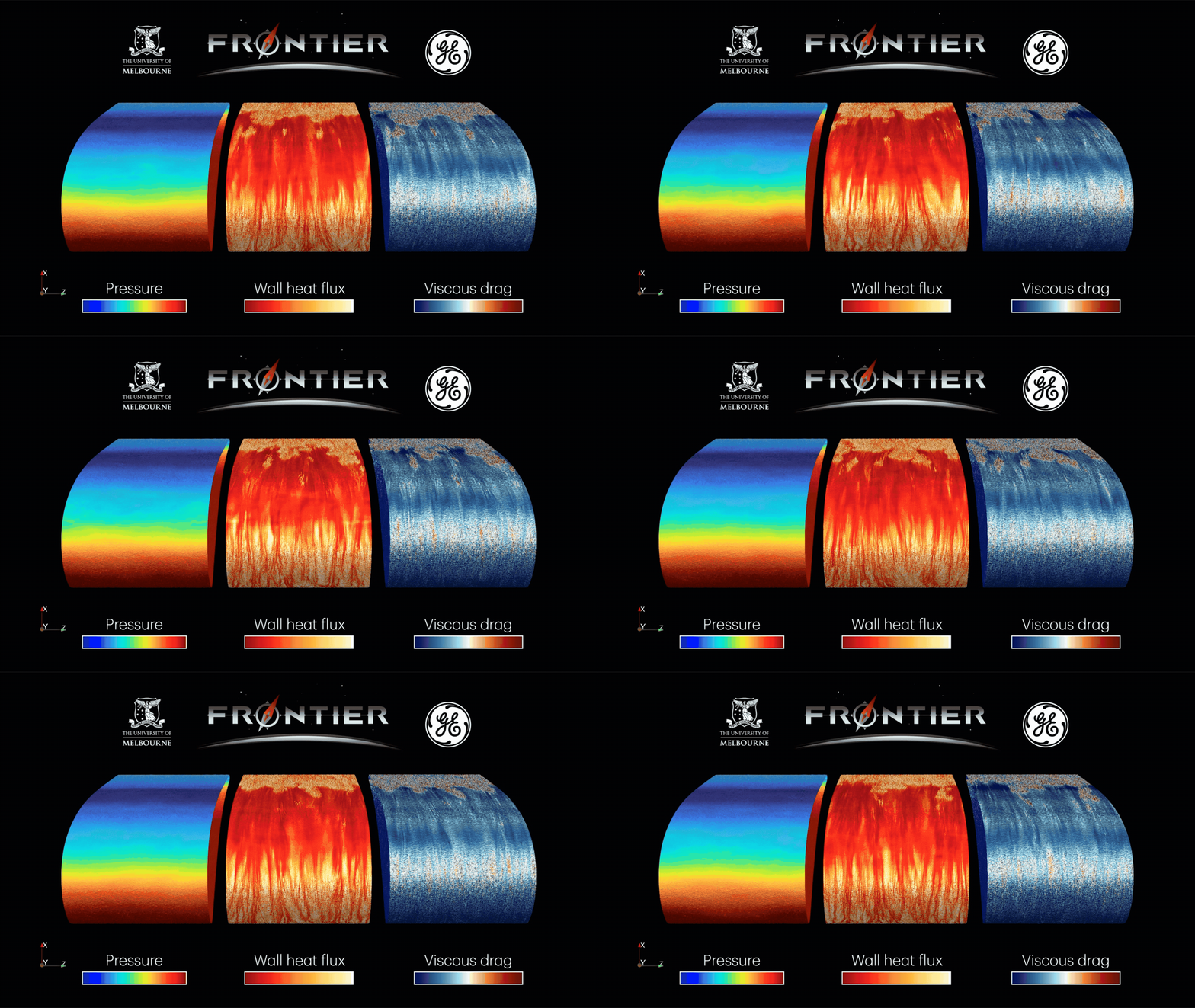
This animation shows suction-surface transition mechanisms on a high-pressure turbine vane with microscale surface roughness, including instantaneous pressure (left), wall-heat flux (middle), and viscous drag (right). Credit: Thomas Jelly, University of Melbourne
…
Add new comment