{domain:"www.qualitydigest.com",server:"169.47.211.87"} Skip to main content

        
User account menu
Main navigation
  • Topics
    • Customer Care
    • Regulated Industries
    • Research & Tech
    • Quality Improvement Tools
    • People Management
    • Metrology
    • Manufacturing
    • Roadshow
    • QMS & Standards
    • Statistical Methods
    • Resource Management
  • Videos/Webinars
    • All videos
    • Product Demos
    • Webinars
  • Advertise
    • Advertise
    • Submit B2B Press Release
    • Write for us
  • Metrology Hub
  • Training
  • Subscribe
  • Log in
Mobile Menu
  • Home
  • Topics
    • Customer Care
    • Regulated Industries
    • Research & Tech
    • Quality Improvement Tools
    • People Management
    • Metrology
    • Manufacturing
    • Roadshow
    • QMS & Standards
    • Statistical Methods
    • Supply Chain
    • Resource Management
  • Login / Subscribe
  • More...
    • All Features
    • All News
    • All Videos
    • Contact
    • Training

System Helps Humans Predict When Self-Driving Cars Will Make Mistakes

CW-Net translates the reasoning process of an autonomous vehicle’s AI system to explain its behavior

MIT News; iStock

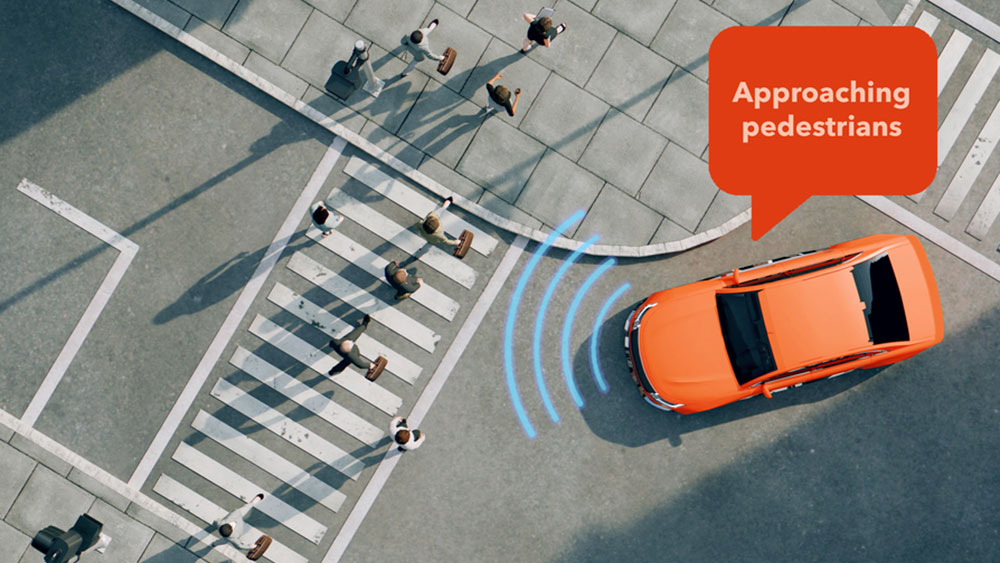
The CW-Net technique explains the behavior of an autonomous vehicle using understandable concepts. “Instead of just wondering why the car stopped, having real-time data provides feedback that lets you test the system during deployment,” says AI researcher Eoin Kenny.

Adam Zewe

MIT

Tue, 09/29/2026 - 12:03
  • Comment
  • RSS

Social Sharing block

  • Print
Body

Self-driving cars are often controlled by deep learning models that sometimes fail in unexpected situations. For instance, the car might inexplicably brake and block the path of an oncoming emergency vehicle. A human driver or passenger may need to react rapidly to prevent a collision.

ADVERTISEMENT

To help humans better anticipate a vehicle’s mistakes, researchers from MIT and autonomous vehicle technology company Motional developed a new method that provides clear explanations of the underlying model’s decisions.

Usually, the internal reasoning process of a deep learning model is opaque and difficult to understand. But the new method, called the Concept-Wrapper Network (CW-Net), translates that reasoning process into concepts that faithfully describe the autonomous vehicle’s decisions without altering its driving performance.

CW-Net explains the decisions of machine learning-based planners using understandable concepts like “approaching stopped vehicle” or “close to cyclist.” These explanations can correct misconceptions drivers and passengers have about vehicle behavior and improve their situational awareness.

 …

Want to continue?
Log in or create a FREE account.
Enter your username or email address
Enter the password that accompanies your username.
By logging in you agree to receive communication from Quality Digest. Privacy Policy.
Create a FREE account
Forgot My Password
Top Stories
Your First 12 Months of ISO 9001:2026 Transition: An Auditor’s Perspective
ISO 9001:2026 Ethics and Quality Culture
Why Remote Work Isn’t Working
A Blueprint for Keeping Humans in Control of AI
A Passing Gauge R&R Doesn’t Mean the Measurement System Is Capable

Add new comment

Please login to comment.

© 2026 Quality Digest. Copyright on content held by Quality Digest or by individual authors. Contact Quality Digest for reprint information.
“Quality Digest" is a trademark owned by Quality Circle Institute Inc.

footer
  • Home
  • Print QD: 1995-2008
  • Print QD: 2008-2009
  • Videos
  • Privacy Policy
  • Write for us
footer second menu
  • Subscribe to Quality Digest
  • About Us
  • Contact Us