{domain:"www.qualitydigest.com",server:"169.47.211.87"} Skip to main content

        
User account menu
Main navigation
  • Topics
    • Customer Care
    • Regulated Industries
    • Research & Tech
    • Quality Improvement Tools
    • People Management
    • Metrology
    • Manufacturing
    • Roadshow
    • QMS & Standards
    • Statistical Methods
    • Resource Management
  • Videos/Webinars
    • All videos
    • Product Demos
    • Webinars
  • Advertise
    • Advertise
    • Submit B2B Press Release
    • Write for us
  • Metrology Hub
  • Training
  • Subscribe
  • Log in
Mobile Menu
  • Home
  • Topics
    • Customer Care
    • Regulated Industries
    • Research & Tech
    • Quality Improvement Tools
    • People Management
    • Metrology
    • Manufacturing
    • Roadshow
    • QMS & Standards
    • Statistical Methods
    • Supply Chain
    • Resource Management
  • Login / Subscribe
  • More...
    • All Features
    • All News
    • All Videos
    • Contact
    • Training

Product News: Torsional Stiffness Apparatus 108

Standing stiff to measure bends

Paul N. Gardner Co. Inc.
Wed, 10/13/2010 - 13:24
  • Comment
  • RSS

Social Sharing block

  • Print
Body

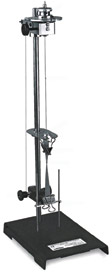
(Paul N. Gardner Co.: Pompano Beach, FL) -- Stiffness Tester Model 108 is based on the torsion apparatus described in test method ASTM D2821—“Standard test method for measuring the relative stiffness of leather by means of a torsional wire apparatus.” It is used to measure the flexibility and stiffness of leather or other bendable specimen and has been shown to be a reliable method of evaluating the relative stiffness of leather used in gloves.

ADVERTISEMENT

Simple to use, rugged design provides repeatable test results

Mounted to a rigid stand, the instrument consists of a torsion head, and a fixed torsional wire and specimen clamp­ing system. A specimen is affixed to a weighted clamp secured at the bottom of a torsion wire. A torsion head equipped with a dial protractor is turned in a plane normal to the torsion wire until the specimen has been twisted 90°. Torsion values are obtained by measuring the applied angular twist required to reorient the sample 90° or some other specified setting.

 …

Want to continue?
Log in or create a FREE account.
Enter your username or email address
Enter the password that accompanies your username.
By logging in you agree to receive communication from Quality Digest. Privacy Policy.
Create a FREE account
Forgot My Password
Top Stories
Problem Solving and Continuous Improvement Are Not the Same
‘Not relevant’ is no longer an answer on climate change
AI Job Growth Claims Outrun the Evidence
How Many Units Should Be in the Metric System?
Your Innovation Problem May Not Be an Innovation Problem

Add new comment

Please login to comment.

© 2026 Quality Digest. Copyright on content held by Quality Digest or by individual authors. Contact Quality Digest for reprint information.
“Quality Digest" is a trademark owned by Quality Circle Institute Inc.

footer
  • Home
  • Print QD: 1995-2008
  • Print QD: 2008-2009
  • Videos
  • Privacy Policy
  • Write for us
footer second menu
  • Subscribe to Quality Digest
  • About Us
  • Contact Us