A. Boss/NIST
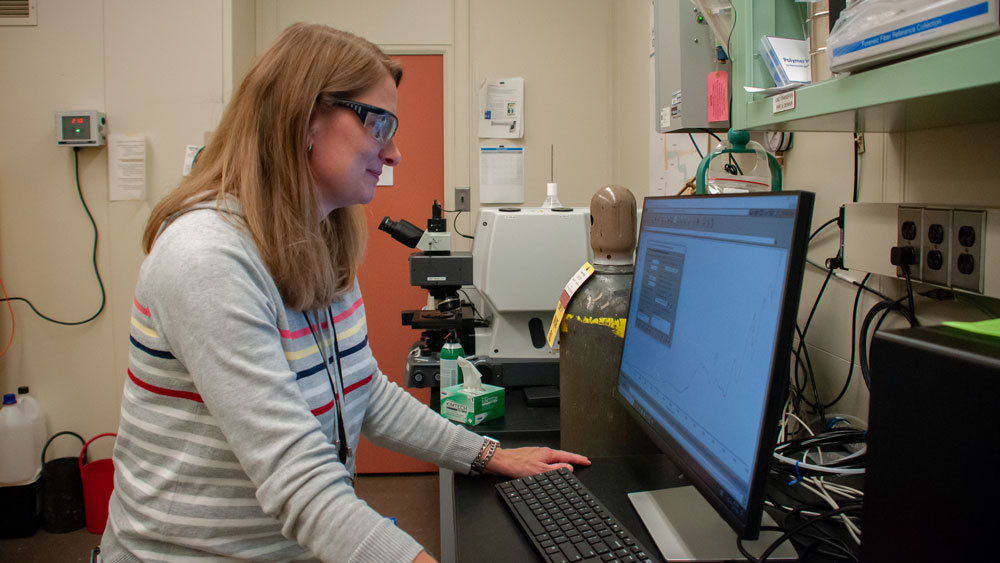
NIST researcher Amanda Forster helped create a product for the textile recycling industry that will help train forensic fiber examiners.
Social Sharing block

Painter Bob Ross taught us that “happy accidents” can make beautiful art. Happy accidents also happen in science when experiments take research in unexpected directions. One dramatic example is Sir Alexander Fleming’s accidental discovery of penicillin.
|
ADVERTISEMENT |
Not all unexpected scientific developments are that momentous, but our NIST researchers have found similarly unexpected applications for their work. (Maybe they’re accidental detectives.)
“The need to be able to use scientific evidence in court means forensic scientists sometimes have to reach out to other technologies and fields to be able to develop things in more detail,” says John Butler, NIST fellow and special assistant to the director for forensic science. “And NIST has played a role in many developments in forensic science going back to the 1960s, when automatic fingerprint technology was initially developed at NIST.”
Here, we’ll discuss ways in which forensic science has progressed with help from unexpected places.
…
Add new comment