tangi bertin/Mahr/Unsplash
Social Sharing block

Contact surface-finish measurement and confocal optical surface-finish measurement are two different methods of measuring the roughness or irregularity of a surface.
|
ADVERTISEMENT |
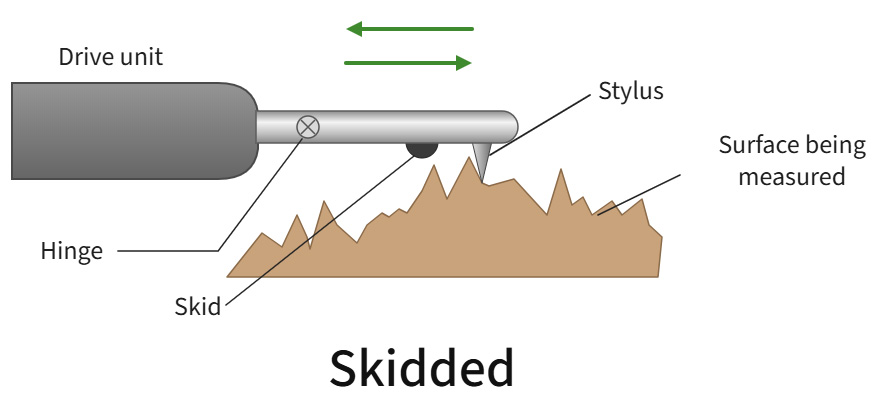
Contact surface-finish measurement uses a diamond-tipped probe that moves across the part. There are two basic varieties: skid-type or averaging systems and skidless or profiling systems. Skidded gauges have a hinged probe assembly, with the probe riding next to a relatively broad skid that also contacts the workpiece. The skid tends to filter out waviness, so the probe measures only short-wavelength variations. A skid gauge has an LCD readout to display the measurement as a single numerical value.
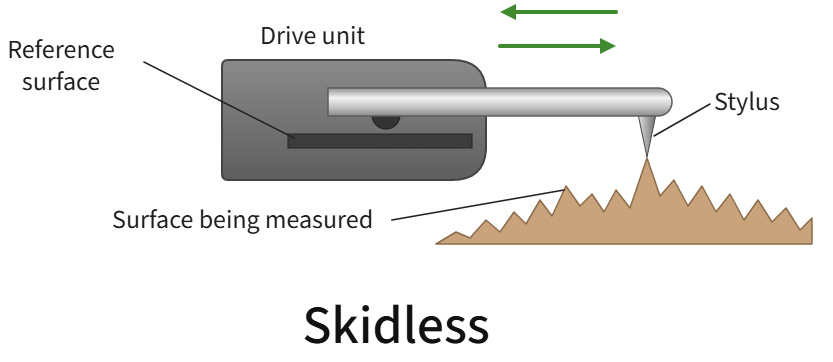
Skidless gauges incorporate a smooth, flat internal surface as a reference so the probe can respond to waviness as well as roughness. In order to allow separate analysis of long- and short-wavelength variations, profiling gauges usually generate a chart (on paper or a computer screen) rather than a single numerical result.
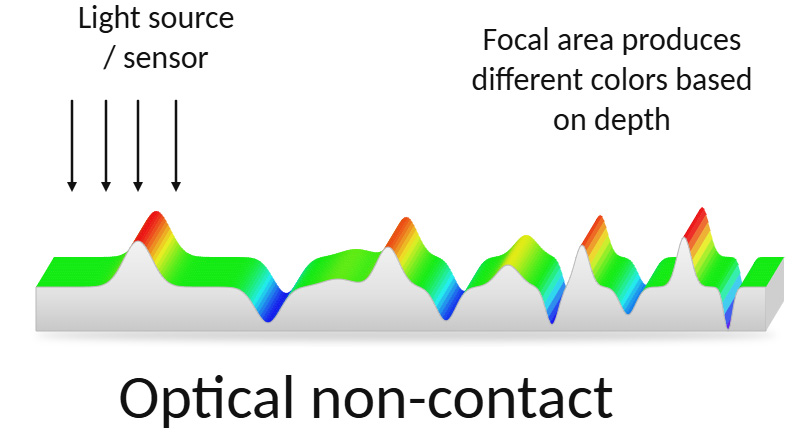
Optical surface finish is typically done with a confocal microscope using light to detect the surface contours. The confocal technology has the ability to take pictures of a surface area and then analyze those pictures for depth of focus. The result is a picture of the area showing the depth of the peaks and valleys. Surface finish parameters can be applied from the areal peaks and valleys.
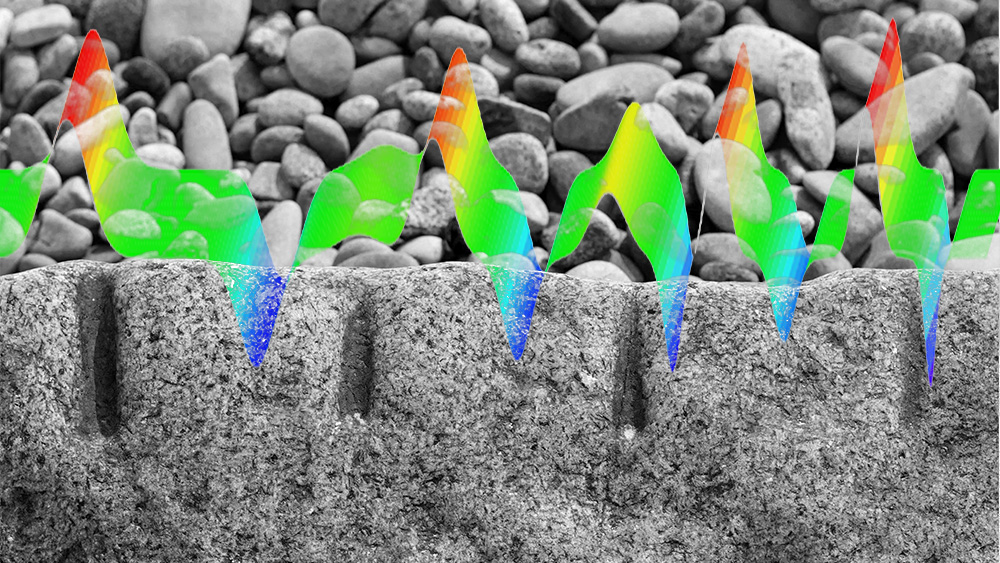
Right away, it's clear that there is potential for seeing differences in the results: The probing method provides line analysis in 2D, while the confocal microscope analyzes an area in 3D. In terms of the parameters to analyze the surface roughness, profile, or contour, the parameters for 2D and 3D methods conceptually work in similar ways, and there should be a correlation between the two systems. In fact, for many typical surfaces with a roughness result between 0.1 and 10 µm, one will get a good correlation between the contact and the noncontact method.
However, factors such as the type of surface, the wavelength of light, the resolution of the detector, and the way that parameters are analyzed may reduce the correlation between the systems. By understanding these differences, the discrepancies can be explained, used as an advantage, or even compensated for to produce better correlation.
In many instances, reasons for using confocal include surfaces that have a roughness of less than 0.1um, or if the function of the surface area is critical to the product’s performance. With optics’ higher resolution, it’s possible to view into smaller valleys than with a contact probing system. Thus, it might not seem as if there is a correlation between the methods.
Take, for example, a process that blasts the surface with a very fine medium. When measuring the surface with a probing system, one could obtain results showing that the surface isn’t as rough as what a noncontact method would show. The assumption is that there’s no correlation. However, by understanding how the surface is being measured and the process is being used, the results can be adjusted to get a correlation based on similar measuring parameters.
With the blasted surface, the light from the confocal microscope gets deeper into the valleys as a result of the focal area, and the resolution of the sensor is smaller than the radius contact on the probing stylus. Thus, the optical system is apt to present readings higher than the contact system because it sees a larger difference between the peaks and valleys.
From first glance, and not understanding these differences, the natural “assumption” is that there are correlation issues. But knowing these differences, there are features within many of the confocal microscope software options that will simulate a stylus tip radius. The results look as if a stylus were used with the noncontact system, and then correlation falls into place.
Of course, this should only be done as needed. When measuring surfaces with nanometer-type finishes, the higher resolution of the confocal microscope is essential for proper analysis.
Add new comment