Social Sharing block

(Digital Metrology: Columbus, OH) -- Digital Metrology Solutions, a provider of measurement software, consulting, and training, has announced a major new release of its OmniSurf surface profile analysis software. This highly visual software provides an easy-to-use toolkit for exploring surface data for a wide range of users and applications.
|
ADVERTISEMENT |
“Roughness measurements hold a wealth of information. Yet most gauges reduce that data to a few parameters or maybe a static graph,“ says Mark Malburg, president of Digital Metrology Solutions. “Numbers alone aren’t enough to tell how a part is performing or why it failed. OmniSurf lets engineers and designers see and interact with their profile data to develop specifications, fine-tune processes, and quickly troubleshoot production issues. It brings surface analysis out of the lab and into everyone’s hands.”
Most surface texture software is tied to one measurement system in a quality lab. OmniSurf 5.0 brings analysis out of the lab, enabling engineers and designers to explore surface data from measurement systems in product development, manufacturing processes, and supply chains. Batch processing enables rapid analysis of data to quickly qualify processes and suppliers, and to discover root causes of production issues.
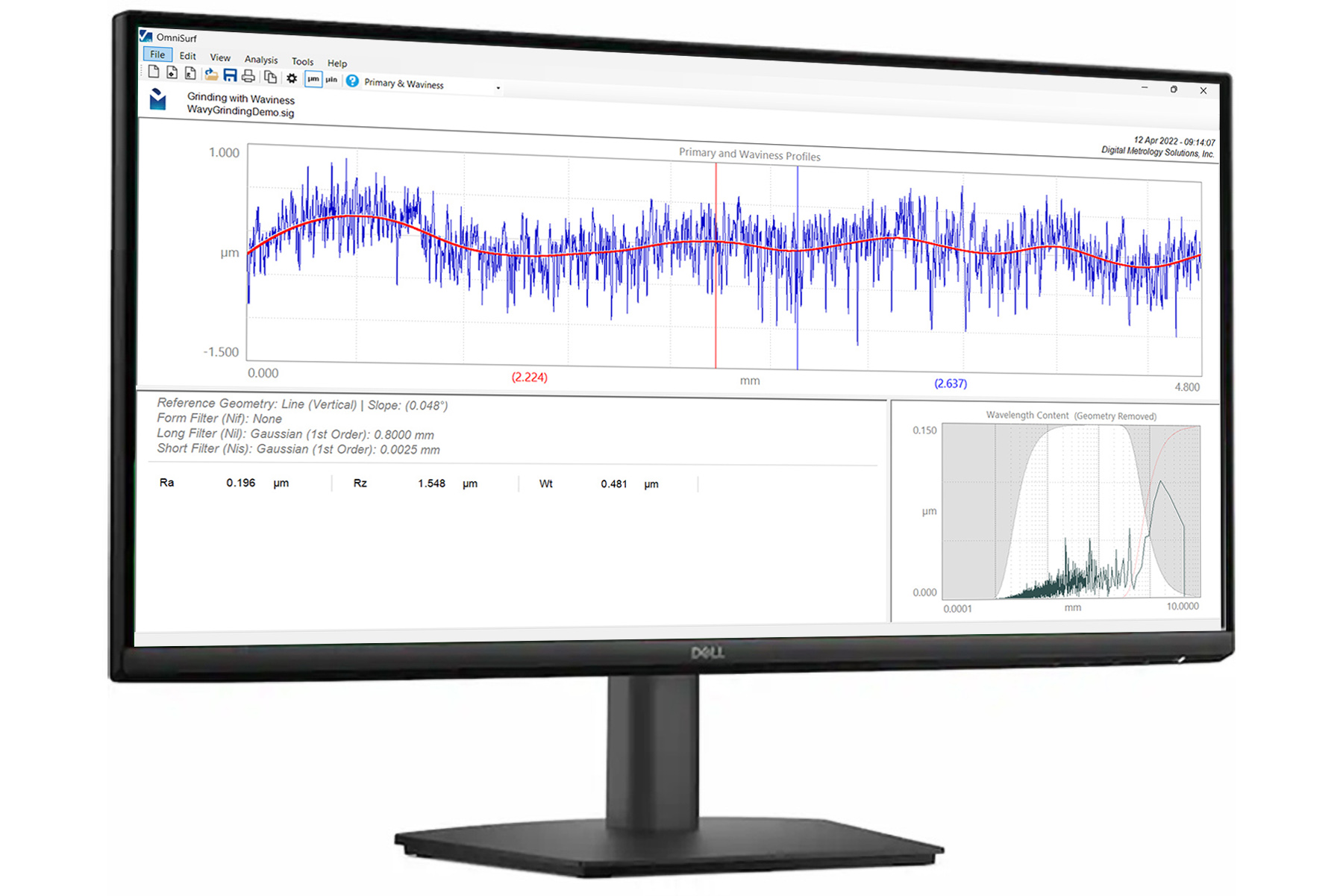
The revamped OmniSurf 5.0 interface guides users through the analysis process, showing the effects of every analysis step. New tools have been added for preprocessing, geometry extraction, and filtering. Hundreds of ISO 29210, ASME, and function-specific parameters are now available to relate texture directly to performance.
OmniSurf 5.0 also introduces analytical tools that aren’t available in any other software. The Wavelength Content graph shows the shapes in data more clearly than any other software. Users can now interact directly with the wavelength content graph to develop filtering specifications based on actual data. The Macro Wear tool quickly computes depths and volumes of wear scars, while the Micro Wear analysis accurately measures microscopic amounts of wear without the need for accelerated testing. Morphological filters reveal voids where leaks could occur, and highlight sharp features that could lead to cracking and penetration points in an oil film.
“The original OmniSurf gave users the ability to explore their surface textures for the first time,” says Malburg. “The 5.0 release dramatically builds on that foundation, adding dozens of new tools to address new standards, new production challenges, and new ways of specifying texture.”
OmniSurf 5.0 is available as a single-use software license or as a subscription-based package for deployment in IT-managed settings.
For more information, including product details, videos, and purchasing options, visit digitalmetrology.com.
Add new comment