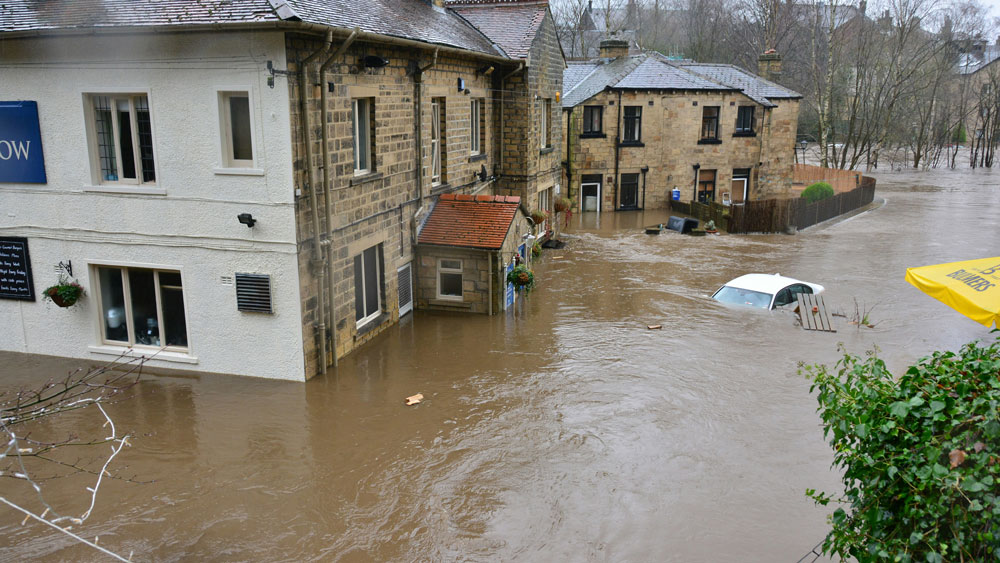
Extreme heat, drought, wildfires, floods, record-low rivers, and rising energy demand have defined much of the summer of 2026. But for businesses, the important story isn’t simply that weather records are being broken. It’s where those physical changes enter the operating system of a company.
|
ADVERTISEMENT |
A drought can become a transportation problem. A heat wave can become an energy and productivity problem. A wildfire can become a supplier disruption. A flood can become a business-continuity event. When companies respond by changing suppliers, materials, logistics routes, or production processes, those emergency decisions can eventually become quality risks.
That progression, from physical event to operational disruption to supply-chain change to quality risk, is the central business and quality-management issue.
The risk doesn’t have to begin at a company’s own facility. It can begin when the infrastructure, supplier, carrier, utility, or logistics route supporting that facility becomes less reliable.
Global examples: One common pattern
Europe shows how climate exposure can move through infrastructure. According to the European Commission’s Joint Research Centre, drought conditions deteriorated sharply through July and August 2026. The Loire, Po, Rhine and Danube rivers all reached record-low levels in August as prolonged low rainfall combined with recurrent heat waves. Lower water levels can reduce vessel loads, restrict navigation, and increase transportation costs, forcing companies to consider alternative transportation when routes become unreliable.
The economic signal is also significant. Triodos Bank estimated that extreme heat and drought could reduce EU GDP by approximately 1% in 2026, equivalent to about 180 billion euros; this is a modeled economic-impact estimate, not a confirmed loss total. The United Kingdom provides another illustration: The Met Office reported that England and Wales each recorded their driest July on record, with England receiving just 6.5 mm of rainfall, about 10% of its long-term July average.
Asia illustrates the combined pressure of heat, water, and infrastructure. Reuters reported that South Korea’s Korea Meteorological Administration recorded 42.5°C (108.5°F) in Yangsan, the country’s highest temperature in 122 years of observations. Extreme heat can increase cooling requirements, electricity consumption, and worker-related productivity pressures. In India, Associated Press reported that flooding in Assam displaced more than 700,000 people and had killed 100 people by Aug. 10. Roads, electricity infrastructure, and transportation were also affected.
North America demonstrates the importance of frequency. Climate Central reported weather and climate disasters during the first half of 2026 that caused at least $31.9 billion in damage and 183 deaths. It was the fifth-highest first half since records began in 1980. The business question isn’t only how much damage a single event causes, but whether another disruption arrives before repairs, supplier recovery, inventory rebuilding, or alternative logistics arrangements are complete.
Wildfire illustrates the cascading pattern. A fire doesn’t need to reach a company’s factory to affect it. A supplier may be in the affected region, a logistics provider may lose access to a route, employees may be unable to reach a facility, or electricity and communications infrastructure may be disrupted. The physical event and the business effects can therefore occur in different locations.
A global chokepoint: The Panama Canal
The Panama Canal is another example of how a physical climate factor can become a global supply-chain issue. The Panama Canal Authority announced temporary modifications to transit capacity because of reduced precipitation in the Canal watershed and water-management measures related to El Niño.
According to the Authority:
• From Sept. 3, 2026, daily slots at the Neopanamax Locks will be adjusted to nine
• Daily slots at the Panamax Locks will be 25
• From Sept. 15, Panamax capacity will be further adjusted to 23 daily slots
• The Authority warned that reduced daily transits may increase waiting times for vessels arriving without a secured reservation
These changes matter beyond Panama. Restrictions on vessel movements can affect transit schedules, shipping costs, cargo planning, and route decisions. Companies that never operate in Panama can still be affected if their suppliers, customers, or logistics providers depend on the route. Physical exposure doesn’t have to occur at the company’s own site to become a business exposure.
The global physical signals
The wider climate indicators reinforce the need to look beyond individual events.
Copernicus reported that average sea-surface temperature across the extra-polar oceans reached 20.96°C in July 2026, the highest July value on record.
The forward-looking signal is particularly important. On Aug. 13, NOAA’s Climate Prediction Center reported that El Niño was strengthening, with a greater than 90% chance of a very strong event during the Northern Hemisphere fall and winter of 2026–27. NOAA also estimated a 69% chance that October through December 2026 would produce a historic El Niño exceeding the strength of previous El Niño events dating back to 1950.
This doesn’t mean every region will experience the same effects. But it does make the remaining months of 2026 a meaningful planning window.
Munich Re reported nearly $112 billion in global natural-disaster losses during the first half of 2026, of which about $44 billion was insured. That leaves approximately 60% of losses uninsured.
For businesses, that gap matters because uninsured losses don’t disappear. They can emerge as repair costs, lost production, delayed deliveries, higher supplier costs, lost revenue, or increased working-capital requirements. Companies may therefore be carrying more physical climate exposure on their own balance sheets than an insurance review suggests.
Munich Re also warned that the developing El Niño could increase second-half exposure. Companies should distinguish between transferring financial risk and reducing operational risk. Property insurance, business interruption insurance, and qualifying contingencies can transfer part of the financial risk. They can’t ensure that a supplier has an alternative source, that a production process can be restarted safely, or that a replacement material has been properly qualified.
Where climate risk becomes quality risk
This is where the discussion gains relevance for quality professionals. Consider a manufacturer’s primary supplier affected by flooding. The immediate response may be to identify another supplier. That introduces questions about supplier qualification, materials, specifications, manufacturing capability, process controls, and traceability.
A drought may force a logistics change that affects handling, storage, or delivery conditions. An energy shortage may force a production interruption and restart under pressure. An alternative material can affect product specifications or performance. A temporary process change can create traceability gaps.
The risk isn’t the emergency decision itself. The risk arises when the decision is made without evaluating how it could affect the product or process.
For example:
• A supplier substitution can introduce material variation.
• A logistics change can alter handling conditions.
• A rushed production restart can create process-control risks.
• An alternative material can affect product specifications or performance.
• A temporary process change can create traceability gaps
The progression is therefore:
Climate event → operational disruption → supplier, material, logistics or process change → quality risk
This is why climate resilience belongs within quality management, procurement, supply-chain management, operations, business continuity, finance, compliance, and enterprise risk management. In regulated sectors such as pharmaceuticals, medical devices, and food, emergency changes may also require documented evaluation, traceability, and evidence that requirements continue to be met.
What should companies do?
Companies don’t need to predict every extreme-weather event. They need to understand what happens if a critical dependency becomes unavailable.
A practical assessment can begin with six subjects.
Critical suppliers: Which suppliers are essential, and what physical climate exposures exist where they operate?
Infrastructure dependencies: Which facilities and suppliers depend heavily on electricity, water, roads, ports, railways, or river transport?
Single points of failure: Which suppliers, facilities, or logistics routes have no realistic alternative?
Alternate sourcing: How quickly can an alternative supplier be qualified without weakening quality controls?
Business continuity: Have climate-related scenarios actually been tested rather than simply documented?
Insurance: Which consequences are insured, which are partially covered, and which must be managed operationally?
These questions map naturally into existing management systems. ISO 9001:2015 was amended in 2024 to add an explicit climate-change consideration to Clause 4.1. The organization must determine whether climate change is a relevant issue. Clause 4.2 also includes a note that relevant interested parties can have requirements related to climate change. The ISO 9001 Auditing Practices Group has clarified that the overall intent of Clauses 4.1 and 4.2 remains unchanged, while the amendment ensures that climate change is explicitly considered within the management system.
The timing is important. ISO confirms that ISO/FDIS 9001 is under publication and that the sixth edition is expected to replace ISO 9001:2015 in September 2026. ISO/TC 176 has specifically announced that the sixth edition is scheduled for publication on Sept. 16, 2026. Until the new edition is published, the 2024 climate amendment to ISO 9001:2015 remains the current published requirement. The article doesn’t assume that the climate wording in the final 2026 edition is unchanged.
For quality teams, this connects naturally with:
• Clause 6.1, addressing risks and opportunities
• Clause 8.4, addressing control of externally provided processes, products, and services
• ISO 22301, providing a broader framework for business-continuity management
The goal isn’t to create a new climate bureaucracy. It’s to make physical climate exposure visible within processes that companies already manage and audit. The answers should feed supplier-risk assessments, business-continuity plans, quality planning, and enterprise-risk processes.
Companies should also look beyond direct suppliers. Sub-tier component makers, raw-material producers, and logistics providers can determine whether a critical input arrives on time and to specification.
Build resilience into normal management systems
The strongest response is to integrate physical climate risk in normal management systems.
Supplier qualification can incorporate relevant physical-risk considerations. Business-continuity exercises can test a focused set of scenarios:
• Extreme heat or water shortage
• Flooding or wildfire
• Loss of electricity or critical infrastructure
• Transportation disruption
• Failure of a critical supplier
Change-control procedures can require an emergency supplier, material, or logistics change to trigger appropriate evaluation and validation rather than bypassing normal controls. Quality teams can identify where climate-driven substitutions could affect specifications or process performance. Procurement can examine whether a low-cost, single-source strategy creates unacceptable vulnerability. Operations can evaluate dependencies on water, electricity, and transportation.
Finance and enterprise-risk teams can test whether insurance assumptions reflect actual operational consequences. Handled this way, climate resilience becomes part of normal operational discipline rather than an isolated sustainability initiative.
The business question has changed
The summer of 2026 offers a connected set of examples: Europe’s record-low rivers, Asia’s extreme heat and flooding, North America’s billion-dollar disasters, reduced Panama Canal transit capacity, record ocean temperatures, and an insurance gap of approximately 60%. Not every weather event will create a major business disruption. But the pathway from physical climate event to business impact, and from business impact to quality risk, is becoming easier to see.
Companies have a timely opportunity to examine their vulnerabilities. Four questions can provide a practical starting point:
• Where could climate risk enter our supply chain first?
• Which critical suppliers, facilities, or infrastructure dependencies have no realistic alternative?
• Can emergency supplier, material, or logistics changes move through appropriate change control without weakening quality?
• Are our traceability, business-continuity, supplier-qualification, and risk controls strong enough to respond when disruption occurs?
Climate resilience is increasingly part of operational and quality resilience. The companies best positioned to manage the next disruption will be those that understand these connections before an emergency forces them to act.

Add new comment