{domain:"www.qualitydigest.com",server:"169.47.211.87"} Skip to main content

        
User account menu
Main navigation
  • Topics
    • Customer Care
    • Regulated Industries
    • Research & Tech
    • Quality Improvement Tools
    • People Management
    • Metrology
    • Manufacturing
    • Roadshow
    • QMS & Standards
    • Statistical Methods
    • Resource Management
  • Videos/Webinars
    • All videos
    • Product Demos
    • Webinars
  • Advertise
    • Advertise
    • Submit B2B Press Release
    • Write for us
  • Metrology Hub
  • Training
  • Subscribe
  • Log in
Mobile Menu
  • Home
  • Topics
    • Customer Care
    • Regulated Industries
    • Research & Tech
    • Quality Improvement Tools
    • People Management
    • Metrology
    • Manufacturing
    • Roadshow
    • QMS & Standards
    • Statistical Methods
    • Supply Chain
    • Resource Management
  • Login / Subscribe
  • More...
    • All Features
    • All News
    • All Videos
    • Training

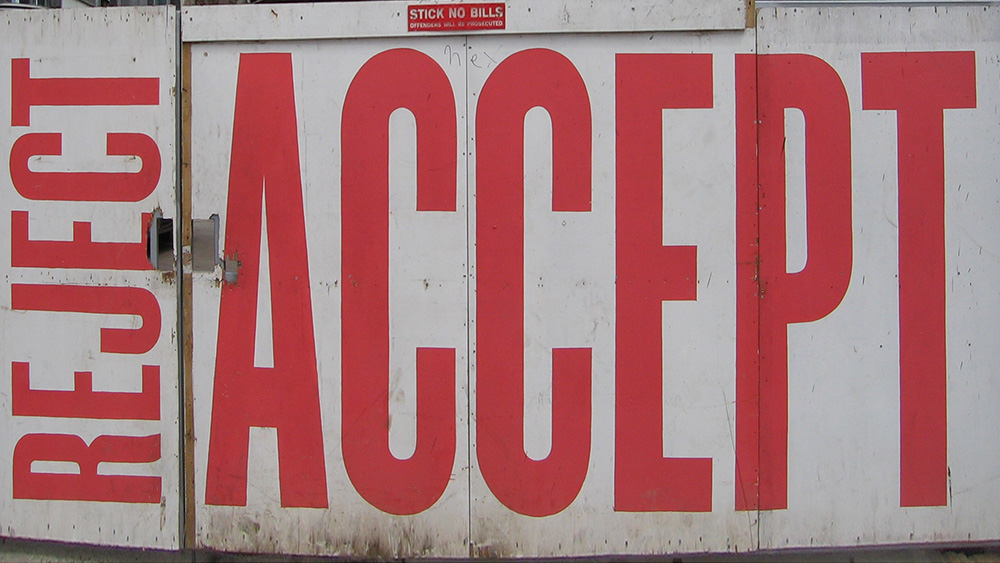
Reducing False Rejects Without Adding Line Complexity

Looking at rules-based vs. AI vision inspection systems

Simon Lieschke/Flickr

Bhuvan Yadav
Bio

SwitchOn

Wed, 07/22/2026 - 12:03
  • Comment
  • RSS

Social Sharing block

  • Print
Body

False rejects quietly impede manufacturing efficiency, yet most quality teams treat them as an acceptable cost. This article examines why they persist, what makes them hard to eliminate with conventional systems, and how AI-based visual inspection is helping plants address the root cause.

ADVERTISEMENT

The hidden cost nobody tracks closely enough 

Walk through most manufacturing plants and you’ll find an inefficiency sitting right on the quality line: good parts being pulled off as rejects. False rejects, also called false positives, occur when an inspection system flags a conforming product as defective. The part gets pulled, reviewed manually, often cleared, and then reintroduced or scrapped depending on the rework cost.

The numbers add up. Quality teams in automotive, fast-moving consumer goods (FMCG), pharma, and electronics manufacturing frequently report that false rejects account for a meaningful share of total line rejections, enough to represent a measurable drag on throughput and operator time. Yet they rarely appear on dashboards the way defect escapes do. The business case for reducing them is real, but the problem has historically been difficult to solve without making the inspection system so permissive that actual defects start slipping through.

Why rule-based systems struggle with natural variation 

Most automated visual inspection systems in use today operate on rules-based logic: If a measurement, color value, or pixel pattern falls outside a defined threshold, the part is rejected. This works well for defects that are consistent, repeatable, and geometrically predictable.

The problem is that many manufacturing surfaces aren’t perfectly consistent from part to part. A slight variation in surface texture, a minor shift in lighting across shifts, or a marginal positional difference as a part moves down the line can all trigger a rejection, even when the part is perfectly within specification. The system isn’t wrong by its own logic. It’s just that the logic wasn’t built to distinguish between real defects and acceptable natural variation.

The typical response is to widen the tolerance band, which then allows more actual defects to pass; or to add more cameras and sensors, which adds capital cost and line complexity without addressing the underlying issue. Quality teams are then left managing a dial that can’t be turned in either direction without consequences.

What changes with AI-based inspection 

AI-based visual inspection approaches the problem differently. Instead of defining what a defect looks like through fixed thresholds, an AI model learns what good looks like from examples of conforming parts. It builds an understanding of the natural variation range within a normal product population, and then identifies deviations that fall outside that learned range as anomalies worth flagging.

This shift in logic has a practical effect on false reject rates. Because the model has been trained on real examples of acceptable variation, it’s less likely to flag surface-texture differences, minor lighting shifts, or small positional offsets as defects. At the same time, it remains sensitive to the kinds of random, nonrepeating defects, such as cracks, scratches, or surface contamination, that matter most to quality teams.

The result is an inspection system that doesn’t need to be retrained every time a minor process variable changes, and doesn’t require tolerance bands to be relaxed to bring the false reject rate under control.

Deployment on existing lines 

A common concern among quality engineers and plant managers is whether adopting AI-based inspection requires significant changes to existing infrastructure. In practice, most deployments work with cameras already present on the line, or standard industrial cameras added at inspection stations. The AI software runs at the edge, directly onsite, which means latency is low enough to support inline inspection at production speeds without routing image data through external networks.

Model training works from good-part images captured under real production conditions. In practice, fewer than 200 images of conforming parts are typically sufficient to train a production-ready model, with training completed in roughly 45 minutes. This makes the path from installation to live inspection considerably shorter than building a rule set from scratch for a complex surface-inspection task.

For operations teams evaluating AI inspection, a few practical areas are worth reviewing early. Camera coverage should be confirmed against the inspection surface before deployment, tailored to the part geometry and defect type being inspected. In high-speed packaging and assembly lines, inconsistent overhead lighting between shifts is one of the more common contributors to inflated false reject rates, and worth auditing before any inspection system is introduced. Integration with existing line-stop or divert mechanisms through standard PLC or IO interfaces is also worth mapping early to avoid surprises during commissioning.

What realistic outcomes look like 

Reducing false rejects doesn’t require an overhaul of the quality process. In many deployments, the most immediate benefit is the reduction in manual review time at the end of the line, where operators currently sort through pulled parts to identify the ones flagged incorrectly. When the false reject rate drops, that manual intervention shrinks proportionally, freeing operators for higher-value tasks.

The traceability benefit deserves equal attention, particularly in regulated industries. AI inspection systems log every inspection with image evidence, creating a time-stamped record of every part that passed or failed, and why. In pharmaceutical and food manufacturing environments where production documentation is a regulatory requirement, this kind of built-in audit trail reduces the administrative burden of compliance and makes it easier to respond to quality investigations quickly and accurately.

The broader point is this: False rejects aren’t an inevitable cost of running automated inspection. They are largely a symptom of inspection logic that wasn’t designed to handle natural variation. Addressing that at the model level is a more direct path to improvement than adjusting tolerances or layering on additional hardware. For quality teams looking to reduce line waste without adding complexity, that’s a meaningful place to start.

Add new comment

The content of this field is kept private and will not be shown publicly.
About text formats
Image CAPTCHA
Enter the characters shown in the image.

© 2026 Quality Digest. Copyright on content held by Quality Digest or by individual authors. Contact Quality Digest for reprint information.
“Quality Digest" is a trademark owned by Quality Circle Institute Inc.

footer
  • Home
  • Print QD: 1995-2008
  • Print QD: 2008-2009
  • Videos
  • Privacy Policy
  • Write for us
footer second menu
  • Subscribe to Quality Digest
  • About Us