Social Sharing block

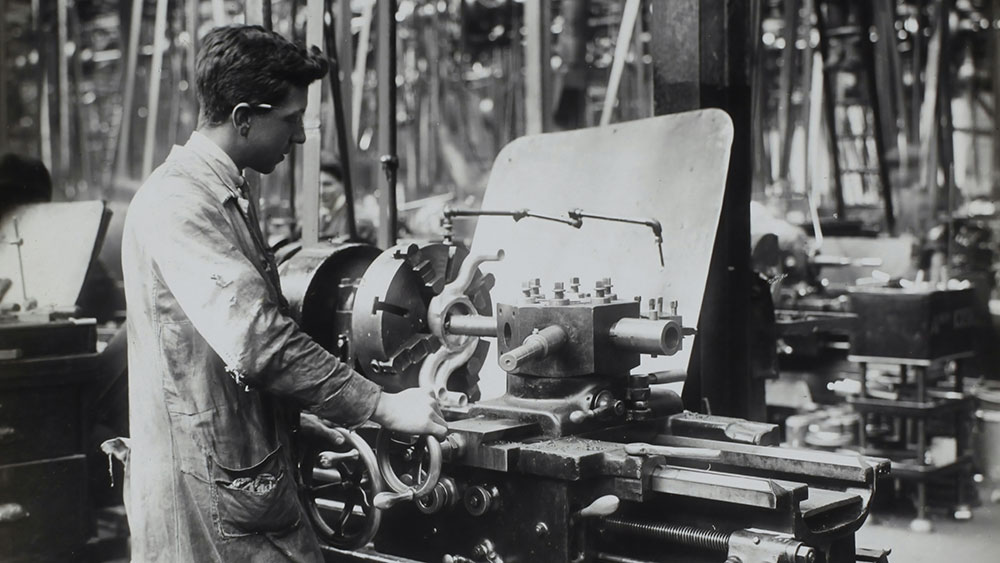
When you picture a career in manufacturing, what do you see? For many, it’s images of dark, soot-filled factories from the early 20th century, and rows of heavy, dangerous machinery covered in grease.
|
ADVERTISEMENT |
That imagery bears little resemblance to reality. Today’s manufacturing sector is undergoing a massive transformation, driven by advanced technologies, sustainable practices, and highly skilled professionals.
If you are evaluating your career options, it’s time to look beyond outdated stereotypes. Let’s dismantle the top myths about modern manufacturing and reveal what the industry looks like today.
Myth 1: Manufacturing is a “dirty, greasy, and dangerous” job
The reality: High-tech, pristine environments
The “dirty factory” stereotype is officially dead. Modern manufacturing facilities are often cleaner and quieter than a typical commercial kitchen. Because the industry relies heavily on precision electronics, biotechnology, and aerospace components, many plants require strict climate control, advanced air filtration, and dust-free clean rooms.
Safety protocols have also evolved dramatically. Advanced sensors, wearable safety gear, and automated machinery handle the most hazardous, ergonomically demanding tasks. Today’s manufacturing professional is far more likely to wear a lab coat or a polo shirt than grease-stained overalls.
Myth 2: Assembly lines mean repetitive, low-skill work
The reality: A playground for tech-savvy problem solvers
The days of standing in one spot for eight hours, pulling a single lever, are gone. Modern manufacturing is a deeply cognitive, creative field. Because automation handles repetitive physical labor, human workers are tasked with high-level cognitive work such as programming, troubleshooting, and optimizing.
On any given day, a manufacturing professional may be:
• Programming industrial robots or collaborative bots (cobots)
• Using 3D printing (additive manufacturing) to prototype aerospace parts
• Analyzing big data and internet of things (IoT) streams to predict maintenance needs for machinery
• Designing workflows using virtual reality (VR) simulations
Myth 3: Automation is eliminating jobs
The reality: Robots are creating a need for skilled workers
It’s a common fear that robots are stealing human jobs. In manufacturing, the opposite is true—technology is creating a critical demand for skilled human workers. Automation shifts the workforce from manual labor to technical oversight.
The industry is facing a massive “skills gap.” Companies are urgently seeking individuals who can operate, maintain, and innovate alongside automated systems. This means excellent job security and long-term career prospects for anyone entering the field with the right technical foundation.
Myth 4: Manufacturing careers are low-paying and offer no growth opportunities
The reality: High earning potential and rapid advancement
Because modern manufacturing requires specialized technical skills, employers are willing to pay a premium for talent. According to industry data, manufacturing workers often earn higher average wages and better benefits than their peers in the retail, hospitality, or general service sectors.
Furthermore, career paths are highly dynamic. Someone starting as a CNC machine operator or a quality control technician can quickly advance to roles such as data analyst, robotics engineer, supply chain manager, or plant director. Many manufacturing companies also invest heavily in their employees, offering tuition reimbursement and paid certifications.
Myth 5: You need a traditional four-year degree to succeed
The reality: Accelerated, accessible pathways to entry
While there are many roles for traditional mechanical, electrical, and chemical engineers, a four-year university degree is by no means the only gateway to the industry.
Manufacturing champions skills-based hiring. High-paying, stable careers can be launched through:
• Apprenticeships: Earn-while-you-learn programs that pair on-the-job training with classroom instruction
• Technical colleges: Targeted 1- to 2-year associate degrees in automation or mechatronics
• Industry certifications: Short-term credentials, such as Manufacturing Skill Standards Council (MSSC) or National Institute for Metalworking Skills (NIMS) certifications, that demonstrate mastery of specific technical skills in just a few months
The big picture
Modern manufacturing is no longer about brute strength; it’s about brainpower. It’s an industry where you can see the fruits of your labor—whether that’s a lifesaving medical device, semiconductor microchip, or a component destined for space.
If you love technology, enjoy solving complex puzzles, and want a career that offers stability and financial growth, it’s time to take a closer look at manufacturing. The National Institute of Standards and Technology (NIST) has two programs that can help guide your journey.
The Manufacturing Extension Partnership (MEP), with MEP Centers located across the U.S. and in Puerto Rico, provides an extensive range of workforce programs, services, and training, and can connect you with manufacturers through job placement services, apprenticeships, certification courses, and more.
The Office of Advanced Manufacturing recently released the Manufacturing USA Advanced Manufacturing Occupation and Competency Framework, which outlines more than 100 new occupations and the knowledge, skills, and abilities required in areas such as automation, biomanufacturing, robotics, and more. Twelve Manufacturing USA Modern Makers share stories about their individual career pathways in advanced manufacturing.
The future is being built now, and it looks nothing like the past.
Published Oct. 30, 2026, in the NIST Manufacturing Innovation blog.
Add new comment