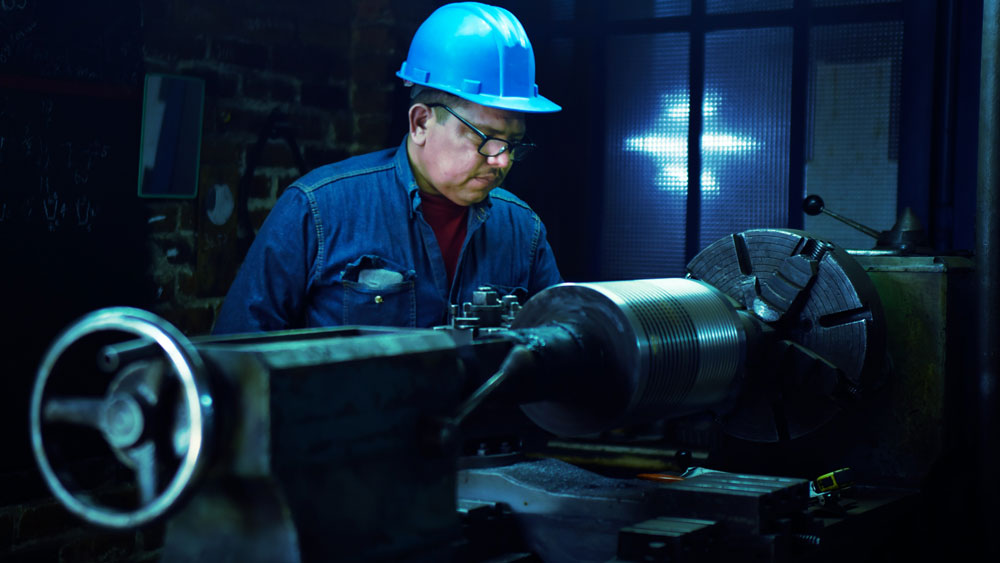
At Dozuki, our teams are constantly on the factory floor. We spend hundreds of hours every year walking production lines, sitting in breakrooms with operators, and standing alongside quality managers during high-stakes audits. These site visits have given us a front-row seat to witness the friction between legacy processes and modern production demands. We’ve seen firsthand how the combination of Industrial AI and connected worker tools is finally solving the age-old problem of tribal knowledge.
|
ADVERTISEMENT |
To provide a more effective blueprint for quality leaders, we’ve synthesized these hundreds of visits into five in-depth lessons. These examples represent the bridge between human expertise and operational excellence.
1. Breaking the documentation bottleneck: Pet food manufacturing
One of the most common complaints we hear during site visits is that subject matter experts (SMEs) simply don’t have the time to write manuals. At Blue Buffalo, a major premium pet food producer, this content bottleneck was a primary hurdle to their digital transformation. Their quality standards were high, but their ability to document those standards was slow, manual, and prone to error.
The company used industrial AI to upload raw technical data and unrefined notes from its veteran operators, instantly converting them into structured, step-by-step digital guides. What used to take hours of manual drafting, formatting, and video embedding was reduced to a 5–10-minute review process. By removing the “blank page” problem, the company allowed its best engineers to spend their time refining technical accuracy rather than fighting with word processors.
The lessons
AI as a force multiplier: Industrial AI should handle the administrative heavy lifting of drafting, thereby reducing content creation time by up to 98%.
Scalable expertise: When documentation is this fast, you can keep pace with rapid process changes that would otherwise leave paper manuals obsolete.
2. Capturing expertise before the ‘silver tsunami’: Fortune 500 food processing
During our time at several facilities for General Mills, a Fortune 500 food processing leader, leadership was highly focused on an aging workforce. With 25% of its veteran workers nearing retirement, decades of nuanced operational knowledge was about to walk out the door. In these facilities, “quality” often lived in the heads of a few experts who knew exactly how a machine sounded when it was running correctly.
The company used connected worker tools to record the specific tricks of the trade from these experienced operators. By digitizing this expertise through AI-assisted descriptions and mobile video, they reduced training time by 62% and accelerated changeovers fourfold. Once knowledge is digitized, training a new hire no longer depends on the availability of a specific human mentor.
The lessons
Capture the nuance: Use video to document the subtle adjustments veteran workers make by instinct, then use AI to standardize those descriptions.
Resilience through documentation: Digital standards ensure that your facility’s institutional memory is protected against turnover and retirement.
3. High-tech feedback in a traditional environment: Water products and foundry
A visit to 160-year-old Mueller Water Products, a leading manufacturer of products and services used in the transmission, distribution, and measurement of water and gas, proved that even the most traditional environments benefit from high-tech tools. We stood on floors that had been operating since the 19th century, where quality was often seen as a matter of “feel.” The company put tablets in the hands of workers who had been doing things the same way for decades, and the results were immediate. This opened a massive, real-time feedback loop. Operators began leaving hundreds of digital comments on how to improve the process, identifying specific bottlenecks that management had never seen from the office.
This direct line of communication helped lead to a 60% reduction in scrap waste and a massive culture shift where frontline workers felt like part of the quality solution.
The lessons
Empower the front line: Your workers are your best source of continuous improvement ideas; give them the digital tools to share them.
Modernize the culture: Even in industries with deep traditions, workers appreciate tools that make their jobs easier and their expertise visible.
4. Turning audits into a routine nonevent: Global energy services
For many quality leaders we meet, an upcoming audit means 48 hours of stress, paper-shuffling, and panicked data collection. At a major global energy services provider, audit preparation used to take two or three days of manual labor to ensure every signature and date was in place.
By moving all quality checks to a digital format, the company reduced that preparation time to 5 minutes. When the auditor arrived, the company didn’t present a stack of binders; it pulled up a dashboard and showed real-time compliance data and time-stamped digital records. It achieved a 99.6% reduction in audit-related administrative time.
The lessons
Stay audit-ready: If your processes are digital, you’re always in a state of continuous audit, as opposed to a fire-drill mentality.
Data integrity: Digital records eliminate the risks of missing signatures or illegible handwriting, which are the leading causes of audit findings.
5. Solving the global standard challenge: Agricultural cooperative
Visiting international sites for a major fruit and juice cooperative highlights the difficulty of maintaining a single quality standard between different cultures and languages. The challenge was to ensure that a plant in South America operated with the same precision and safety standards as a plant in North America.
The company implemented a unified digital connective layer that allowed for instant translation and global standard updates. When a quality standard changed at headquarters, it was pushed out to every tablet in the company simultaneously, translated into the local language. This led to an 87% active engagement rate across the company’s global workforce, and a significant reduction in cross-border quality deviations.
The lessons
Centralize the truth: Multifacility organizations need one single source of truth to prevent standard drift between locations.
Bridge the language gap: Use industrial AI to ensure that safety and quality instructions are accessible in the native language of every worker instantly.
The Dozuki team continues to walk these floors because the most effective solutions aren’t built in a vacuum. They’re built in the heat of the foundry and the complexity of the assembly line.
These five examples prove that when you combine the speed of industrial AI with the practical execution of connected worker tools, tribal knowledge ceases to be at risk and becomes a documented, scalable asset. By stepping out of the office and onto the floor, we’ve seen that true operational excellence is simply the result of giving frontline workers the digital clarity they need to succeed every single day.

Add new comment