{domain:"www.qualitydigest.com",server:"169.47.211.87"} Skip to main content

        
User account menu
Main navigation
  • Topics
    • Customer Care
    • Regulated Industries
    • Research & Tech
    • Quality Improvement Tools
    • People Management
    • Metrology
    • Manufacturing
    • Roadshow
    • QMS & Standards
    • Statistical Methods
    • Resource Management
  • Videos/Webinars
    • All videos
    • Product Demos
    • Webinars
  • Advertise
    • Advertise
    • Submit B2B Press Release
    • Write for us
  • Metrology Hub
  • Training
  • Subscribe
  • Log in
Mobile Menu
  • Home
  • Topics
    • Customer Care
    • Regulated Industries
    • Research & Tech
    • Quality Improvement Tools
    • People Management
    • Metrology
    • Manufacturing
    • Roadshow
    • QMS & Standards
    • Statistical Methods
    • Supply Chain
    • Resource Management
  • Login / Subscribe
  • More...
    • All Features
    • All News
    • All Videos
    • Training

My Research Is Working Toward a Pain-Free Mammogram Alternative

Low-field MRI may be the key

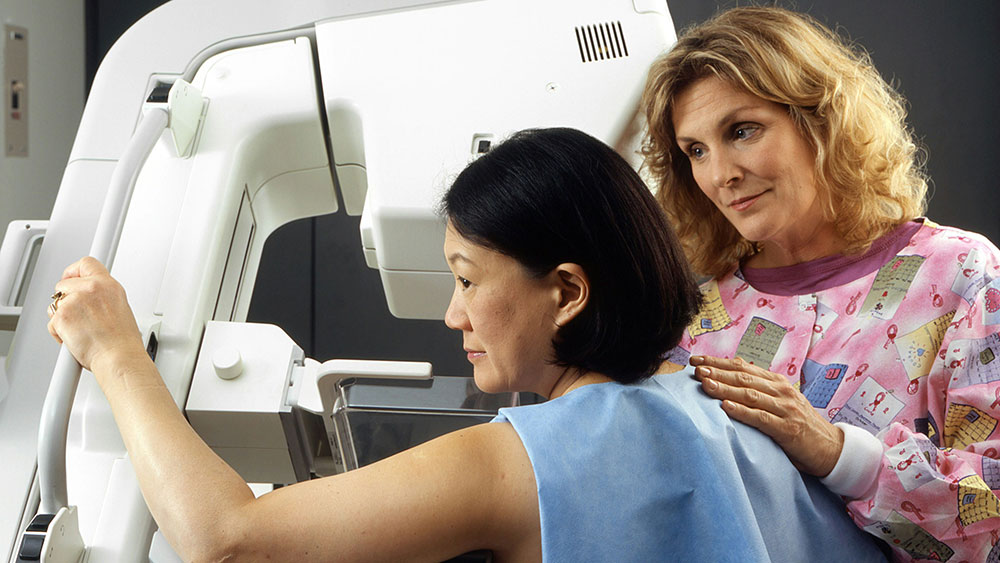
National Cancer Institute / Unsplash

Kathryn Keenan
Bio

NIST

Wed, 06/10/2026 - 12:02
  • Comment
  • RSS

Social Sharing block

  • Print
Body

At some point during my teenage years, I became aware that when I grew up, I’d have to get a mammogram, and it was clear that it would hurt.

ADVERTISEMENT

If you’re a woman over 40 (or you’ve talked to women over 40 about this topic), you probably know that this annual screening requirement for all women is uncomfortable at best and can be painful. Imagine, a woman who lives into her 80s might have to undergo this test 40 or more times throughout her life!

But it’s a lifesaving test that all women (and some men) need.

Now, I’m a medical imaging researcher, and I know that a less painful alternative to breast cancer screening is possible within my lifetime. I have a goal some might consider outrageous: to create a viable alternative to mammograms that’s pain-free, highly accurate, and can save even more lives than mammograms currently do.

Challenges of mammography

Mammograms use low-dose X-rays to take a picture of the inside of the breast. The breast must be compressed to increase the image quality, but that compression makes it uncomfortable.

Mammograms are incredibly important tests that have saved many lives. Right now, they’re the best option we have to detect and treat breast cancer early. Everyone eligible for mammograms should prioritize them.

But that doesn’t mean there aren’t drawbacks.

First, mammograms can miss up to 35% of breast cancers.

On the other end of the spectrum, mammograms also can give false positives up to 14.4% of the time. This can mean extra tests, including painful biopsies, for patients to rule out breast cancer.

This risk is especially high for up to half of women over age 40 who have dense breast tissue. Breasts are made up of two types of tissue—dense tissue and fatty tissue. Women with dense breasts have more dense tissue. Dense tissue is normal and nothing to be concerned about, but dense tissue makes mammography more challenging and can lead to false positives.

Low-field MRI and breast cancer screening

My research focuses on lower-strength magnetic-field equipment, known as low-field MRI. Unlike a traditional MRI machine, which is large and expensive, low-field MRI machines are smaller and less costly. That’s because they use a weaker magnetic field to capture an image. The weaker magnetic field means the images aren’t as clear as traditional MRI.

My goal is to use this same technology to create a way to screen patients for breast cancer. Breast imaging with traditional MRI can be done now, and it doesn’t require the breast compression used for mammography. But MRI is expensive and is often reserved for patients who need follow-up testing. With low-field MRI, this option could be available to many more patients.

I worked with imaging researchers Matthew Rosen, Neha Koonjoo, and Sheng Shen, and Dr. Mansi Saksena and colleagues in Boston to modify their existing ultralow-field MRI machine for breast imaging, and we recently tested it with a small group of patients. The machine costs a few hundred thousand dollars to build, a fraction of the several million dollars that a typical MRI system costs.

During its development, I tried out the system and found it to be a painless experience. I couldn’t say the same about the mammogram I got a few months later!

During the initial study, we used the low-field MRI machine to image one breast each from a few women with no history of breast cancer and a few with breast cancer. Obviously, for this technology to work, we need to be able to image both breasts at once. But for this study, we started with just one at a time.

One important caveat is that our machine hasn’t yet actually detected breast cancer. That means we still have a lot of work to do to get this technology to a point where it could replace a mammogram. But we’re in an exciting, exploratory phase of this research.

In other ways, our study was successful. The radiologists were impressed with how much they could see in the low-field MRI images. You can view images throughout the breast, which you don’t typically see on a mammogram. Being able to see more could mean that a low-field MRI could detect breast cancer at a higher success rate than traditional mammograms.

To me, many body parts appear similar from person to person on an MRI or X-ray. I used to work in knee-related research, and all knees pretty much look the same on the inside. So far, every breast looks different on MRI, and I think that’s beautiful and interesting. I hope our research can one day help give radiologists the best possible imagery to diagnose breast cancer.

Better screening will better serve women

I hope that with continued time and research, low-field MRI will make breast cancer screening less painful for patients—and possibly less costly overall for the medical system.

One possibility is that this technology could be integrated into the surgical suite where doctors remove breast cancer from patients. One of the frustrating aspects of breast cancer treatment is that the surgeon doesn’t always know right away that they took out all of the cancer during surgery.

If low-field MRIs become readily available, these machines could be used right in surgical suites. A doctor could theoretically check to make sure they’ve gotten the entire cancerous mass out before bringing the patient out of anesthesia, reducing the chances that a patient would have to undergo multiple surgeries.

Our team is continuing to experiment with different magnetic field strengths to find the best image. We’re also looking at the optimal way to be able to image both breasts at once, which will be an important part of this process as we advance.

This is a gratifying project for me to work on as a researcher, both as a woman with dense breasts who has had to have follow-up testing done, and as the friend and relative of many women who’ve had breast cancer.

A woman in the U.S. has a one in eight chance of developing breast cancer. That’s a scary number, but the good news is that more women are being diagnosed early and surviving than ever before.

We have a long way to go before low-field MRI becomes a common alternative to mammograms. But we will continue to work to make this happen, because all patients deserve a highly accurate and pain-free approach to screening for breast cancer.

Published May 20, 2026, in the NIST Taking Measure blog.

Comments

Submitted by Olivia (not verified) on Thu, 06/11/2026 - 22:16

The Mammography Myth

Re: mammography is "a lifesaving test that all women (and some men) need." (you link this to Komen as "proof" of this claim in your article, see above)

Not so!

Contrary to the official narrative (which is based on medical business-fabricated pro-mammogram "scientific" data), there is marginal, if any, reliable evidence that routine mammography – whether conventional, digital (3D), or AI-assisted – reduces mortality from breast cancer in a significant way in ANY age bracket:

"...the benefits of mass population screening, even in older women, are too small and the harm and cost generated too great to justify widespread implementation of screening mammography as a publicly funded health measure." (Charles J. Wright, M.D. & C. Barber Mueller, M.D., in The Lancet, 1995 [https://archive.ph/YU2LT])

BUT a lot of solid evidence shows the procedure does provide more serious harm than serious benefit (read the books: 'Mammography Screening: Truth, Lies and Controversy' by Peter Gotzsche [https://www.amazon.com/Mammography-Screening-Truth-Lies-Controversy/dp/1846195853] and 'The Mammogram Myth' by Rolf Hefti - see author's synopsis at https://www.rolf-hefti.com/mammograms.html ).

IF........ women (and men) at large were to examine the mammogram data above and beyond the information of the mammogram business cartel (eg American Cancer Society, National Cancer Institute, Komen), they'd also find that it is almost exclusively the big profiteers of the test, ie. the "experts," (eg radiologists, oncologists, medical trade associations, breast cancer "charities" etc) who promote the mass use of the test and that most pro-mammogram "research" is conducted by people with massive vested interests tied to the mammogram industry.

Most women (and men) are fooled by the misleading medical mantra that early detection by mammography saves lives simply because the public has been fed ("educated" or rather brainwashed) with a very one-sided biased pro-mammogram set of information circulated by the big business of mainstream medicine and their allied corrupt pawns in the governments. The above mentioned two independent investigative works show that early detection does not mean that there is less breast cancer mortality.

“Maintenance of the mammogram myth requires three factors: denial, intimidation and fraud.” ---Daniel Corcos, M.D., Ph.D., Medical Researcher & Cancer Biologist of INSERM [the French National Institute of Health, the equivalent of the U.S. National Institute of Health, a.k.a NIH], in 2018 [https://archive.ph/G3B5U]

Yet...

"I've come to realize that the biggest problem anywhere in the world is that people's perceptions of reality are compulsively filtered through the screening mesh of WHAT THEY WANT, AND DO NOT WANT, TO BE TRUE." --- Travis Walton, Author

"Ignorance is the root cause of all Evil. Since only Knowledge eradicates ignorance, it is our duty and moral obligation to educate ourselves, as well as the masses around us." --- Anonymous

  • Reply

Submitted by Quality Digest on Fri, 06/12/2026 - 09:25

In reply to The Mammography Myth by Olivia (not verified)

QD Response

Quality Digest doesn't typically wade into the comments section, but when a discussion touches on decisions that affect people's health, we think it's important to do so.

Yes, debate over population-level mammography screening is real: Gøtzsche's work and the Wright & Mueller Lancet paper are legitimate contributions to it, and the author of this article implicitly acknowledges mammography's limitations as her motivation for seeking a better alternative.

However, characterizing the ACS, NCI, and Komen as a "cartel" with "corrupt pawns in government" is rhetoric, not fact. Also, Rolf Hefti, cited alongside Gøtzsche as an equivalent authority, is not a medical researcher; he's a self-published author who runs a website selling health content—and Travis Walton is the subject of a 1975 alleged alien abduction (inspired the film Fire in the Sky).

The evidence questions about mammography screening are worth taking seriously on their own merits.

  • Reply

Add new comment

The content of this field is kept private and will not be shown publicly.
About text formats
Image CAPTCHA
Enter the characters shown in the image.

© 2026 Quality Digest. Copyright on content held by Quality Digest or by individual authors. Contact Quality Digest for reprint information.
“Quality Digest" is a trademark owned by Quality Circle Institute Inc.

footer
  • Home
  • Print QD: 1995-2008
  • Print QD: 2008-2009
  • Videos
  • Privacy Policy
  • Write for us
footer second menu
  • Subscribe to Quality Digest
  • About Us