{domain:"www.qualitydigest.com",server:"169.47.211.87"} Skip to main content

        
User account menu
Main navigation
  • Topics
    • Customer Care
    • Regulated Industries
    • Research & Tech
    • Quality Improvement Tools
    • People Management
    • Metrology
    • Manufacturing
    • Roadshow
    • QMS & Standards
    • Statistical Methods
    • Resource Management
  • Videos/Webinars
    • All videos
    • Product Demos
    • Webinars
  • Advertise
    • Advertise
    • Submit B2B Press Release
    • Write for us
  • Metrology Hub
  • Training
  • Subscribe
  • Log in
Mobile Menu
  • Home
  • Topics
    • Customer Care
    • Regulated Industries
    • Research & Tech
    • Quality Improvement Tools
    • People Management
    • Metrology
    • Manufacturing
    • Roadshow
    • QMS & Standards
    • Statistical Methods
    • Supply Chain
    • Resource Management
  • Login / Subscribe
  • More...
    • All Features
    • All News
    • All Videos
    • Training

Applying AI-Driven Inspection in High-Volume Manufacturing

You can’t simply install AI and expected it to solve problems on its own

MJ_Prototype/iStock

Abdullah Al Masum Jabir
Bio

Anderson Corp.

Wed, 04/29/2026 - 12:02
  • Comment
  • RSS

Social Sharing block

  • Print
Body

In high-volume manufacturing, inspection often struggles to keep pace with production. That challenge becomes even greater when the material itself is naturally variable and the defects aren’t always easy to define consistently. In one high-volume manufacturing environment producing about 20,000 unassembled parts per day, that was exactly the problem: Quality teams were expected to identify substrate-related wood and milling-process defects at line speed, even though many of those defects were subtle, visually inconsistent, and open to interpretation.

ADVERTISEMENT

Before AI-based inspection was implemented, the process relied heavily on manual judgment. Some defects were obvious, but many were not. Parts with similar conditions could be classified differently depending on who inspected them, when they were inspected, and how much time was available to make a decision.

Under high-throughput conditions, that inconsistency created two problems at once. Inspection generated too many questionable calls while still allowing a substantial number of true defects to escape downstream. As a result, the operation was dealing with unstable quality decisions, inconsistent data, and higher downstream costs.

This is a common problem in manufacturing. When inspection is inconsistent, it not only affects containment but weakens the usefulness of the data. If defect decisions aren’t repeatable, then trending becomes less reliable, root cause analysis becomes harder, and corrective actions become less focused. In that sense, the problem isn’t only about finding defects. It’s about whether the inspection process can produce information the business can actually trust.

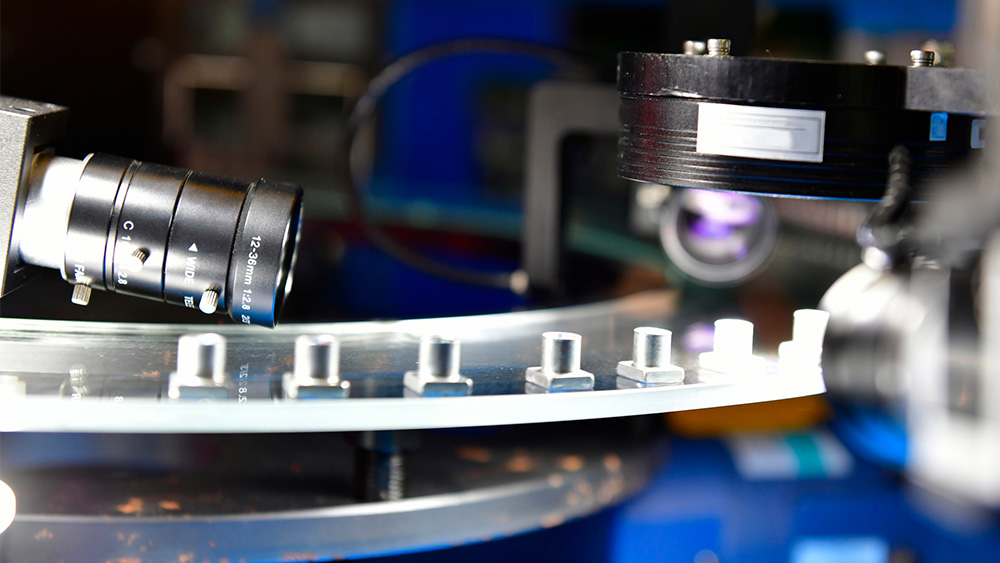
That was the context in which I worked on an AI-driven inspection implementation for unassembled window components. The system was built around multiple surface-profiling measurement tools in an inline setting. Rather than relying only on visual judgment, the system measured defect characteristics such as depth, width, and length. From there, the challenge was to define the specifications that would determine when a measured condition should be called a true defect. That step turned out to be one of the most important parts of the project.

One of the biggest misunderstandings about AI in inspection is the idea that it can simply be installed and expected to solve the problem on its own. In reality, the system is only as strong as the logic, defect definitions, and validation structure behind it. In this case, the technical work didn’t begin with model output. It began with defining defect categories clearly, collecting and organizing production-relevant image data, and building a classification structure that matched real manufacturing decisions.

My role included helping to define defect categories and specifications, collecting data, supporting model training, statistically validating the outputs, and helping to deploy the system on the line. That meant the work wasn’t limited to analytics. It also required practical engineering judgment.

For instance, it was vital to differentiate between situations that were visually apparent but not functionally significant and those that were really significant to downstream quality. While a deeper depression or similar-looking chipped region may be considered a real defect, a small superficial surface blemish may be apparent but yet fall below the rejection threshold. Additionally, it was necessary to classify recurrent defect types into categories that were both useful for production teams and consistent enough for the system to learn from.

For example, Defect B may represent a lengthier surface disturbance that’s mostly characterized by its length and continuity, while Defect A could describe a localized dent-like condition that’s primarily defined by depth and breadth. Although both could at first seem to be general surface damage, their measured properties required distinct categorization reasoning. In other instances, even when two surface circumstances were relatively different, they nevertheless had to be classified as belonging to the same class because they reflected the same underlying process-related problem and resulted in the same quality judgment. The key question wasn’t just whether the system could detect a condition, but whether the classification standard was meaningful enough to support real quality decisions.

That distinction matters. If defect labels are inconsistent, the system will learn inconsistency. If the specification is unclear, measurement results won’t translate into stable decision-making. In other words, better technology can’t compensate for weak process logic. In our case, one of the most important steps was establishing a defect taxonomy that was structured enough for the model to learn from it while still being practical for production use.

Validation was also critical. The goal wasn’t to produce a model that looked promising only in development. The goal was to create a system that could perform under real line conditions. We statistically evaluated agreement and repeatability, and achieved strong agreement levels that supported practical deployment. That mattered because credibility on the production floor depends on consistency. If operations and quality teams don’t trust the output, the tool won’t create lasting value.

Deployment brought its own lessons. Labeling was important, but it wasn’t the only challenge. Line speed was high, and vibration affected the stability of passing parts. In practice, that meant that the accuracy of the measurements depended on both the software and how well the part fit the sensor while it was being passed.

For instance, if a part moved a little as it went through the inspection zone, two scans could show the same surface state in two different ways. If the part was stable, a thin dent-like condition might be easier to see. But if the measurement was affected by shaking or small movement, it might be harder to see. So, small changes in where the part was placed, how it was oriented, or how much it vibrated could affect how accurately the system measured the depth, width, or length of a flaw.

Also, the visual conditions had to be carefully managed because shadows and changes in the surroundings could affect how accurate the measurements were. For instance, changes in the surface finish, nearby glare, dust, or the lighting conditions could add noise to the signal that was recorded, making it harder to consistently read edge conditions.

These weren’t just software issues; they were system-integration issues with how the parts were presented, how stable the sensors were, and the setting where the check was taking place. Those factors reinforced an important point: Successful AI inspection depends not only on algorithm performance but also on the physical conditions in which the system operates.

Once the system was implemented, the first major improvement was consistency. The inspection process no longer depended solely on shift-by-shift interpretation or operator subjectivity. The same decision logic could be applied continuously, which improved the stability of defect classification. That alone made the resulting data more useful.

The second improvement was better detection of subtle defect conditions. In high-speed environments, inspectors often have limited time to evaluate each part. That makes precise or borderline defects especially hard to manage consistently. The automated system improved the ability to evaluate these conditions using defined measurement logic rather than purely visual judgment.

The third improvement was the most valuable from a business perspective: better process insight. Once the defect data became more consistent, it became easier to trend and interpret. The quality team could begin separating which issues were more likely linked to process tools, which were related to natural material variation, and which were influenced by environmental conditions. That shifted inspection from a pure containment activity to a source of process knowledge. The team could start to see trends in where and how problems showed up instead of seeing all flaws as one big quality issue.

For instance, when Defect A kept showing up in the same place on the part with the same width and shape, it pointed to a process-related cause rather than a chance event. That kind of pattern could mean that the cutting tool was old or broken, or that there was another machine-contact problem that kept causing the same surface state over time.

Defect B, on the other hand, might not show up as regularly, change more from part to part, and have less uniform shape. This means that it’s more likely to be caused by natural variations in the material rather than a repeatable process source. In other cases, changes in the environment seemed to affect the occurrence or appearance of minor borderline conditions. This showed that environmental factors were also making inspections less stable. That helped focus the acts that came next.

Instead of responding in a broad way, teams could find out whether the most likely cause was linked to process, material, or the surroundings. This would help them better focus their efforts to make things better.

This is where AI inspection starts to create real value. Its benefit isn’t limited to faster or more consistent defect calls. Its larger benefit is in creating more reliable information for process improvement. When the inspection data can be trusted, teams can investigate recurring patterns more effectively, isolate probable causes earlier, and take more targeted action.

In this case, the implementation revealed seven-figure annual improvement potential within a single production environment. That was important not simply because of cost, but because it showed how much hidden value can be uncovered when inspection is transformed from a subjective checkpoint into a more consistent and data-driven system.

The biggest business lesson was straightforward: Better consistency leads to better decisions. When inspection becomes more repeatable, fewer defects escape, data become more actionable, and the organization can respond with greater confidence. That creates value well beyond the inspection station itself.

For manufacturers considering similar systems, the key lesson is that AI inspection shouldn’t be viewed as a plug-and-play replacement for human effort. It should be treated as part of a broader quality strategy. The success of the implementation depends on clear defect definitions, disciplined validation, physical process stability, and follow-through in how the resulting data are used.

High-volume manufacturing doesn’t just need faster inspection. It needs more reliable quality decisions. In my experience, AI-driven inspection can help provide that, not only by improving defect-detection consistency but also by creating better information for trend analysis, root cause investigation, and process improvement. That’s the real shift from vision to value.

Comments

Submitted by dangermoney on Fri, 05/01/2026 - 12:51

Terrific article

There are little clues here and there to suggest that this article was maybe written with the assistance of AI, but it ultimately doesn't bother me. The meat of the article is excellent and exactly what I want to see more of from Quality Digest: an application of a new technology towards an enduring problem, how it went, and what was learnt. 

I've worked in environments where, as in this article, the categorisation of defects could be described as a "taxonomy": a lot of things that could be wrong, a lot of locations where they could be wrong, and a lot of ways that those things could be wrong in those locations. Because of the granularity, it is usually the case that a specific kind of defect will be a rare event, which adds some limitations and complexity to the use of SPC in analysing the data. There are tricks for overcoming these limitations and complexity, but after you add in the variability of categorising the defects in the first place, it tends to become extremely unprofitable to invest time in slicing and dicing the data to look for patterns: there's too much noise in the inspection process itself. In my experience, such data can provide critical evidence for unfucking some problem that's already known about, but the real power of process improvement comes from minimising variance and preventing problems in the first place: i.e., discovering that there is something to discover because of a signal of nonhomogeneity in the data stream. 

Even if you don't use AI to make sense of the resulting data, simply using it on the front end to eliminate variability in inspections is a worthwhile goal in such an environment. Beyond that, I'll bet that there's enormous utility in using AI to identify which kinds of defects trend together or which are variations on a common issue: something I'd be very hesitant to trust an AI model to do if I had doubts about the reproducibility of the inspection process. 

  • Reply

Add new comment

The content of this field is kept private and will not be shown publicly.
About text formats
Image CAPTCHA
Enter the characters shown in the image.

© 2026 Quality Digest. Copyright on content held by Quality Digest or by individual authors. Contact Quality Digest for reprint information.
“Quality Digest" is a trademark owned by Quality Circle Institute Inc.

footer
  • Home
  • Print QD: 1995-2008
  • Print QD: 2008-2009
  • Videos
  • Privacy Policy
  • Write for us
footer second menu
  • Subscribe to Quality Digest
  • About Us