{domain:"www.qualitydigest.com",server:"169.47.211.87"} Skip to main content

        
User account menu
Main navigation
  • Topics
    • Customer Care
    • Regulated Industries
    • Research & Tech
    • Quality Improvement Tools
    • People Management
    • Metrology
    • Manufacturing
    • Roadshow
    • QMS & Standards
    • Statistical Methods
    • Resource Management
  • Videos/Webinars
    • All videos
    • Product Demos
    • Webinars
  • Advertise
    • Advertise
    • Submit B2B Press Release
    • Write for us
  • Metrology Hub
  • Training
  • Subscribe
  • Log in
Mobile Menu
  • Home
  • Topics
    • Customer Care
    • Regulated Industries
    • Research & Tech
    • Quality Improvement Tools
    • People Management
    • Metrology
    • Manufacturing
    • Roadshow
    • QMS & Standards
    • Statistical Methods
    • Supply Chain
    • Resource Management
  • Login / Subscribe
  • More...
    • All Features
    • All News
    • All Videos
    • Contact
    • Training

Safely Studying Dangerous Infections Just Got a Lot Easier

Fast, new 3D imaging method can show how cells respond to infection and to possible treatments

Aliyah Kovner
Tue, 03/22/2022 - 12:02
  • Comment
  • RSS

Social Sharing block

  • Print
Body

To combat a pandemic, science needs to move quickly. With safe and effective vaccines now widely available, and a handful of promising Covid-19 treatments coming soon, there’s no doubt that many aspects of biological research have been successfully accelerated during the past two years.

ADVERTISEMENT

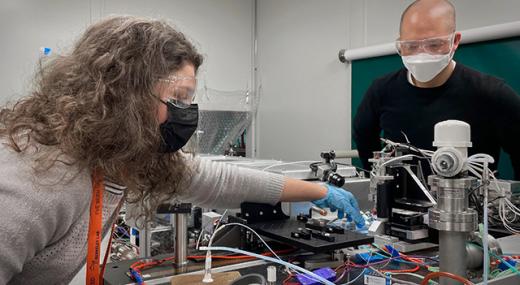
Now, researchers from Lawrence Berkeley National Laboratory (Berkeley Lab) and Heidelberg University in Germany have cranked up the speed of imaging infected cells using soft X-ray tomography, a microscopic imaging technique that can generate incredibly detailed three-dimensional scans.

Their approach takes mere minutes to gather data that would require weeks of prep and analysis with other methods, and gives scientists an easy way to quickly examine how our cells’ internal machinery responds to SARS-CoV-2, or other pathogens, as well as how the cells respond to drugs designed to treat the infection.

 …

Want to continue?
Log in or create a FREE account.
Enter your username or email address
Enter the password that accompanies your username.
By logging in you agree to receive communication from Quality Digest. Privacy Policy.
Create a FREE account
Forgot My Password
Top Stories
All Whys Are Not The Same
AI May Be Making Your Quality Problem Worse
The 6 Best Quality Management Software Features That Simplify Your QMS
Flying Blind: What Your Quality Data Miss Every Shift
What I Discovered About Quality Concepts by Watching My Newborn Granddaughter

Add new comment

Please login to comment.

© 2026 Quality Digest. Copyright on content held by Quality Digest or by individual authors. Contact Quality Digest for reprint information.
“Quality Digest" is a trademark owned by Quality Circle Institute Inc.

footer
  • Home
  • Print QD: 1995-2008
  • Print QD: 2008-2009
  • Videos
  • Privacy Policy
  • Write for us
footer second menu
  • Subscribe to Quality Digest
  • About Us
  • Contact Us