Social Sharing block

(Hitem3D: Singapore) -- In 2026, image-to-3D AI is increasingly assessed through a practical lens—not how convincingly a model looks onscreen, but how reliably it performs in 3D printing workflows. As additive manufacturing moves deeper into customized production and short-run manufacturing, the ability to translate photos into printable geometry has become a defining requirement for AI-driven modeling tools.
|
ADVERTISEMENT |
Within this context, Hitem3D has drawn attention to its focus on production-oriented image-to-3D generation. Rather than positioning itself as a general-purpose creative platform, Hitem3D aligns its capabilities with the structural demands of fabrication, where mesh consistency, resolution, and downstream behavior are critical.
A recurring challenge in photo-based 3D printing lies in geometry reliability. Models that appear visually complete may still fail during slicing due to surface discontinuities, ambiguous internal structures, or fragile topology. These issues introduce manual repair steps that erode the efficiency gains promised by AI automation. As a result, users increasingly associate the value of image-to-3D tools with their ability to reduce, not relocate, this burden.
Recent advances in this category reflect a growing emphasis on print-aware reconstruction, with higher mesh density and improved inference of occluded or incomplete regions. While perfect watertightness remains difficult to guarantee from limited visual input, the 2026 goal has shifted toward generating models that behave predictably during scaling, support generation, and material preparation.
Benchmarks were established in internal validation tests across common FDM setups to quantify 3D printing performance using Hitem3D models tested on Bambu Lab X1C and Prusa SL1S. In tested miniature-scale outputs, wall thickness after scaling met common FDM printing requirements and could be adjusted to suit typical resin printing workflows.
Hitem3D models are compatible with standard auto-support generation in common slicers such as PrusaSlicer, Cura, and Bambu Studio. Optimized for slicer stability and speed, the models feature file sizes ranging from 15–40 MB. This shift toward print-aware reconstruction directly improves real-world usability for additive manufacturing.
Hitem3D’s evolution illustrates this shift. By strengthening high-resolution geometry generation and prioritizing structural coherence over purely aesthetic output, the platform positions AI-generated models as viable starting assets for physical production rather than experimental prototypes. This approach aligns with how professional users evaluate tools in practice—by how confidently a model can be prepared for printing without extensive correction.
As AI continues to integrate into fabrication pipelines, image-to-3D platforms optimized for 3D printing are becoming less about novelty and more about reliability. The tools gaining traction in 2026 are those that successfully bridge the gap between photographic input and manufacturable form, helping users move from image to object with greater confidence and fewer interruptions.
Hitem3D offers a free trial here; you can view sample outputs and print success rates here.
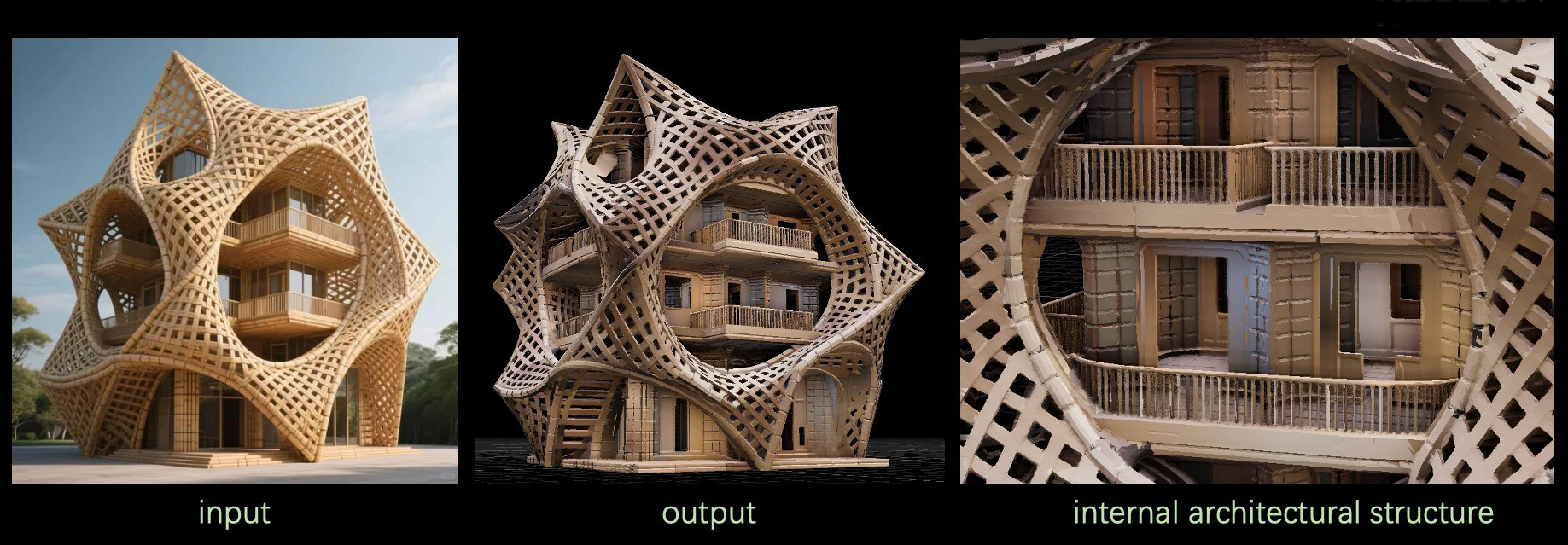
Credit: Hitem3D
Add new comment