{domain:"www.qualitydigest.com",server:"169.47.211.87"} Skip to main content

        
User account menu
Main navigation
  • Topics
    • Customer Care
    • Regulated Industries
    • Research & Tech
    • Quality Improvement Tools
    • People Management
    • Metrology
    • Manufacturing
    • Roadshow
    • QMS & Standards
    • Statistical Methods
    • Resource Management
  • Videos/Webinars
    • All videos
    • Product Demos
    • Webinars
  • Advertise
    • Advertise
    • Submit B2B Press Release
    • Write for us
  • Metrology Hub
  • Training
  • Subscribe
  • Log in
Mobile Menu
  • Home
  • Topics
    • Customer Care
    • Regulated Industries
    • Research & Tech
    • Quality Improvement Tools
    • People Management
    • Metrology
    • Manufacturing
    • Roadshow
    • QMS & Standards
    • Statistical Methods
    • Supply Chain
    • Resource Management
  • Login / Subscribe
  • More...
    • All Features
    • All News
    • All Videos
    • Training

Don’t Let Innovation Overtake You

Wishing away an innovation, whether it’s the passenger automobile, videocassettes, DVDs, or streaming video, doesn’t make it go away

Bruno Guerrero/Unsplash

William A. Levinson
Bio

Levinson Productivity Systems

Wed, 02/25/2026 - 12:03
  • Comment
  • RSS

Social Sharing block

  • Print
Body

ISO 9001:2015 Clause 6.1 requires attention to actions to address risks and opportunities. There is really little practical difference between the two, as failure to exploit an opportunity constitutes a risk.

ADVERTISEMENT

To put this in perspective, recall that poor quality is only the tip of the iceberg when it comes to waste (muda). Among the Toyota Production System’s Seven Wastes—transportation, inventory, waste motion, waiting, overproduction, over-processing, and poor quality—the latter is the only waste that announces its presence and challenges the organization’s corrective and preventive action (CAPA) process to do something about it. If the organization has a decent CAPA process in place (I recommend AIAG’s Effective Problem Solving process (CQI-20), it almost certainly will.

The other six wastes are asymptomatic and do nothing to announce their presence—usually present 100% of the time because they are built into the job—and are often more costly than poor quality. For example, if a job wastes half the workers’ time on waste motion, it’s probably more costly than a job producing a few nonconformances as long as any defective work is caught before it reaches a customer.

However, even the Seven Wastes don’t include failure to recognize and exploit something entirely new and game-changing. This includes new ways to do existing jobs, and also new products that make existing ones obsolete. Ignoring innovation has led to the downfall of entire industries.

Errors of omission: What we don’t do can hurt us

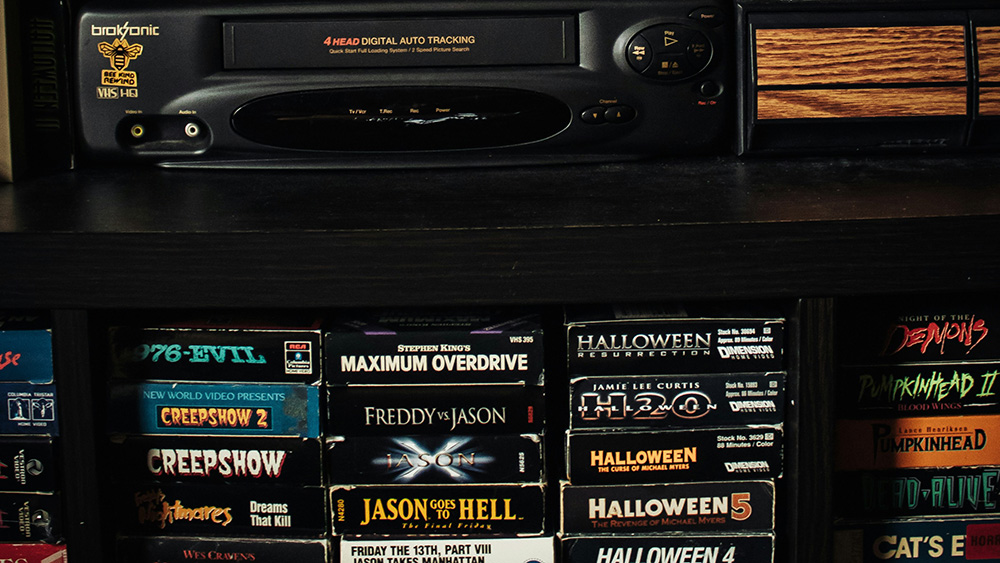
Wishing away an innovation, whether it’s the passenger automobile, videocassettes, DVDs, or streaming video, does not make it go away. Compact discs displaced phonograph records (invented in the 19th century) and have now been displaced largely by digital media such as MP3 files or streaming services. The video retail chain Blockbuster didn’t recognize what online services would do to its business until it was too late.

Now we need to wonder and imagine what artificial intelligence (AI) and quantum computing can and can’t do to make industries more efficient and enable entirely new products and services.

The arrival of game-changing technologies can render entire product lines and business models obsolete, as they have in the past. My book, Henry Ford’s Lean Vision (Productivity Press, 2002) includes a section called “Anyone want a used shopping mall?” that cites Bill Gates’ (1995) depiction of the Internet as a “frictionless marketplace.” This was when we still used dial-up connections, and what would become Amazon was an online bookstore in Jeff Bezos’ garage. The Wyoming Valley Mall in Wilkes-Barre, Pennsylvania, has lost three of its four anchor stores (Sears, Bon-Ton, and Macy’s), and only J.C. Penney remains. Some of the smaller stores are closing as well, including the greeting card store where I buy Christmas cards for the following year when they’re marked down on Dec. 26.

All of this was easily foreseeable, because brick-and-mortar stores have capital or rental costs, and also the cost of having workers available regardless of whether there are any customers in the store. In addition, while online sellers need to carry inventory, they don’t have to stock dozens or even hundreds of local stores to avoid stockouts. They can, if necessary, rob Peter to pay Paul by shipping something from the other side of the country if it’s not available locally.

Remember that U.S. executives had this purportedly brilliant idea that we could ship our manufacturing jobs offshore and perform knowledge jobs instead, working in offices far removed from dirty and often noisy factory floors. The internet has instead allowed offshoring of the knowledge and customer service jobs, so those manufacturing jobs look more and more attractive every day.

Even for quality professionals, the question arises whether Industry 4.0 is rendering traditional quality control methods such as statistical process control obsolete. SPC is necessary when we can obtain feedback by measuring parts only after they have been produced. The chemical process industry has used analog, and later digital, feedback process controls for decades if not longer. These are generally superior to SPC for process control purposes. Inccreasingly, machine tools are able to gather information on what they’re doing, while they are doing it, and adjust themselves accordingly. In his webinar “Artificial Intelligence in Quality: From Hype to Everyday Advantage,” Marcel Minutolo gave an excellent presentation on this subject and noted many ways in which AI can augment—but not replace—human judgment.1 This includes not only proactive detection and prevention of poor quality, but also root cause analysis and supply chain management.

Technological change can overturn business models

Recall that compact disks and MP3 files displaced phonograph records and cassette tapes. DVDs and streaming displaced VCRs. Now consider ammonia manufacture, a vital industry for fertilizer production. Ammonia is also a feedstock for many industrial chemicals, including nitrogen-containing precursors for chemical synthesis.

During the 19th century, nitrogen compounds, and potassium nitrate in particular, came from saltpeter, which was often obtained from animal droppings. Countries even wanted to claim islands that birds frequented so droppings could be collected. Chile made a fortune by exporting saltpeter.

Then, in 1909, the German chemist and Nobel laureate Fritz Haber and his assistant Robert Le Rossignol discovered how to use catalysis to capture nitrogen from the atmosphere itself—and just in time to satisfy Germany’s need for explosives during World War I. (Because Britannia ruled the waves, it still had easy access to Chilean saltpeter.)

The Haber-Bosch process saved countless people from starvation by making nitrogen fertilizers widely available, and the world still depends on it for its needs. Thus, the Chilean saltpeter industry went under very quickly because it was cheaper to get ammonia, and nitrates made from ammonia, from the atmosphere rather than guano.

But nothing lasts forever. The Haber-Bosch process, along with the massive investments in plant and equipment, might be on the way out. Addis Energy’s new process uses geothermal energy, iron-rich rock, and nitrate-containing water to make ammonia for $200–$500 per ton. This is competitive with $439.39 per ton in the U.S. In addition, ammonia prices depend on the cost of natural gas, so higher gas prices make ammonia more expensive. Ammonia manufacturers must therefore regard this new technology as an opportunity, and also a risk if they fail to adopt it.

Change and technological progress are accelerating rapidly, creating enormous risks and opportunities with the potential to render entire military systems, and civilian enterprises, obsolete in years or even months rather than decades. We must accordingly pay close attention to new developments and their potential applications.

Reference

1. Minutolo, Marcel C. “Artificial Intelligence in Quality: From Hype to Everyday Advantage.” Quality Magazine webinar, Jan. 29, 2026.

Add new comment

The content of this field is kept private and will not be shown publicly.
About text formats
Image CAPTCHA
Enter the characters shown in the image.

© 2026 Quality Digest. Copyright on content held by Quality Digest or by individual authors. Contact Quality Digest for reprint information.
“Quality Digest" is a trademark owned by Quality Circle Institute Inc.

footer
  • Home
  • Print QD: 1995-2008
  • Print QD: 2008-2009
  • Videos
  • Privacy Policy
  • Write for us
footer second menu
  • Subscribe to Quality Digest
  • About Us