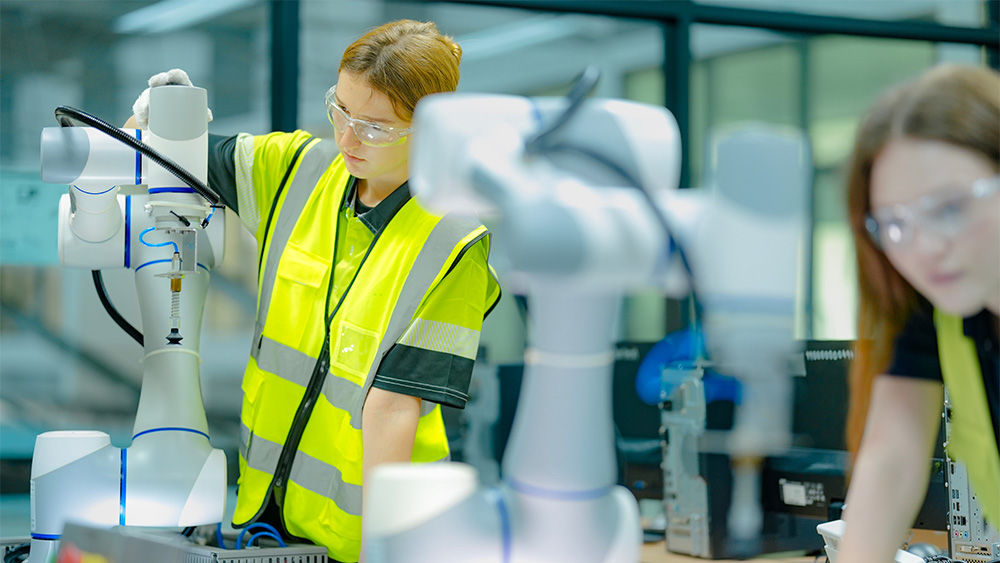
The manufacturing world is undergoing a major shift. Supply chain shocks, reshoring, a busy merger and acquisition landscape, and other disruptions are prompting many manufacturers to rethink their operations with the hope of mitigating risk, building resilience, and gaining more control.
|
ADVERTISEMENT |
Although this period of transformation is intended to mitigate risk, it’s paradoxically exposing manufacturers in ways that might drive up costs—and risks.
The core challenge facing most leaders is deceptively simple: Growth and rapid transformation don’t inherently create quality issues, but they do expose inconsistencies and localized workarounds buried in manual or siloed systems.
In a resilient operation, quality isn’t a static compliance check but a foundational, flexible layer of control.
The perfect storm: Where operational resilience meets quality vulnerability
Disruption can take many forms and, in my opinion, is often used incorrectly. Disruption isn’t when your delivery runs late or someone calls in sick. It’s inconvenient, sure, but not unexpected. Disruption is when something you can’t anticipate—and has a prolonged effect on your operations—occurs.
It’s incredibly difficult to build and maintain operational resilience when you don’t know what the next big disruptive event will be. But there are four key fault lines I think every leader should be aware of.
1. Supply chain shocks
Recent global events have shown how closely linked quality is to supply chain stability. When raw material deliveries are delayed, or when alternative suppliers are suddenly required, quality often suffers first.
2. Mergers and acquisitions
When two or more quality systems merge, so do their inconsistencies. Each site may have its own spreadsheets, approval workflows, and “tribal knowledge.” As a result, incumbent, local practices create inertia, making it hard to institute global best-practice standards.
3. Reshoring and nearshoring
Bringing production closer to home is often meant to improve control, ensure quality, and slash lead times. But it often comes with an unexpected risk: the workforce crisis. The U.S. alone is expected to create 3.8 million net new manufacturing jobs by 2033, and as many as 1.9 million could go unfilled, per The Manufacturing Institute and Deloitte.
An aging workforce and a shortage of skilled labor mean new or expanded domestic sites are often under pressure to do more with less experience, which creates challenges for reshoring and makes standardized knowledge more important than ever.
4. The automation paradox
Automation promises consistency and efficiency. But it can also magnify risk. A single programming error replicated at scale can halt production across an entire line. A few well-known examples of this include Tesla, Boeing, and GM, all of which embraced highly automated systems before establishing flawless fundamental processes. The result? Systemic failures, downtime, and quality issues. It can happen to anyone without proper preparation.
Building resilience through quality
These fault lines, as I like to call them, share a common thread: When visibility and standardization are missing, resilience breaks down. The next generation of manufacturing success will depend on how well leaders can connect quality to every part of their operations, from suppliers to customers, and treat it as a shared responsibility.
The shift starts with your most valuable asset: your people. Modern manufacturers must build a culture of quality that values prevention over correction, collaboration over isolation, and learning over blame. The next step is to embrace connected systems that extend quality visibility across the enterprise—bringing your people, processes, and data together in real time.
As organizations digitize their operations, the most resilient among them are those that use intelligence not just to report on performance but to anticipate it. By combining real-time insight with the flexibility to adapt processes quickly, manufacturers can turn every disruption into an opportunity to learn and improve.
The bottom line
Manufacturing is evolving faster than ever. But the fundamentals remain the same: Every product, process, and person must work in concert to deliver consistent quality. The challenge is that variability no longer lives only on the shop floor; it lives across global networks, data systems, and workforce transitions.
Leaders who recognize that reality and focus on integrating quality into every operational layer will not only reduce risk—they’ll build organizations capable of thriving through change.

Add new comment