{domain:"www.qualitydigest.com",server:"169.47.211.87"} Skip to main content

        
User account menu
Main navigation
  • Topics
    • Customer Care
    • Regulated Industries
    • Research & Tech
    • Quality Improvement Tools
    • People Management
    • Metrology
    • Manufacturing
    • Roadshow
    • QMS & Standards
    • Statistical Methods
    • Resource Management
  • Videos/Webinars
    • All videos
    • Product Demos
    • Webinars
  • Advertise
    • Advertise
    • Submit B2B Press Release
    • Write for us
  • Metrology Hub
  • Training
  • Subscribe
  • Log in
Mobile Menu
  • Home
  • Topics
    • Customer Care
    • Regulated Industries
    • Research & Tech
    • Quality Improvement Tools
    • People Management
    • Metrology
    • Manufacturing
    • Roadshow
    • QMS & Standards
    • Statistical Methods
    • Supply Chain
    • Resource Management
  • Login / Subscribe
  • More...
    • All Features
    • All News
    • All Videos
    • Training

From Play to Possibility

How the next generation of engineers is taking shape at home

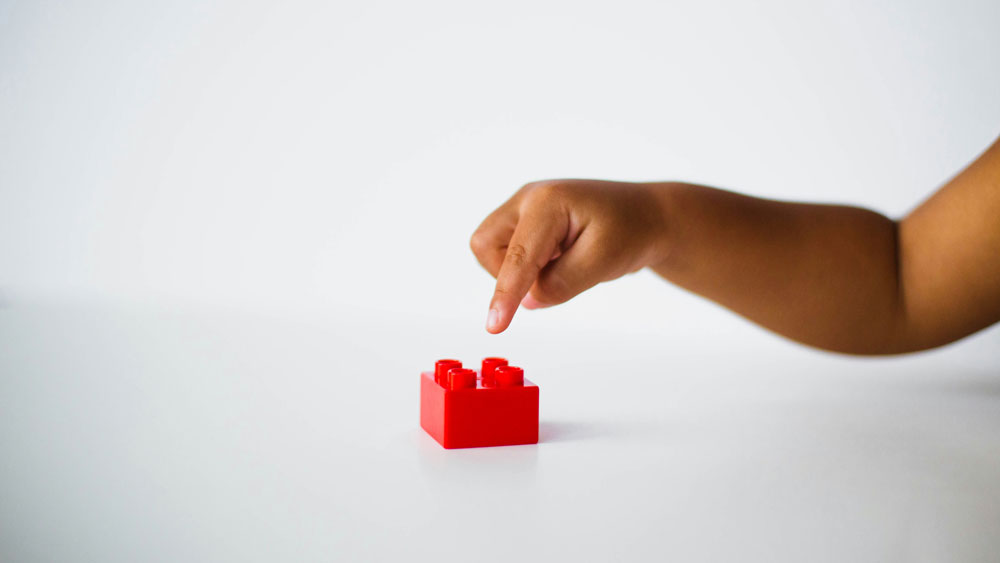
Caleb Angel/Unsplash

Eleazer Carmelli-Kim
Bio

Jakks Pacific

Kevin Atkins
Bio

Geomagic

Mon, 01/26/2026 - 12:02
  • Comment
  • RSS

Social Sharing block

  • Print
Body

As the holiday season is left behind, many manufacturing leaders find a moment to step back from year-end deadlines to reflect on the bigger picture and look ahead. One question often surfaces during that quieter reset: Where will the next generation of engineers, designers, and problem-solvers come from?

ADVERTISEMENT

In the U.S. alone, hundreds of thousands of manufacturing roles remain unfilled, and the skills gap continues to widen. Apprenticeships, workforce programs, and reskilling initiatives play an essential role. But for many future engineers, the earliest exposure to engineering doesn’t happen in a classroom or a training facility.

It happens much closer to home—starting on the living room floor.

Where engineering skills take route

Long before students open CAD software or step onto a factory floor, many encounter core engineering principles through play. Toys that twist, balance, transform, and articulate introduce fundamental concepts of physics, materials behavior, geometry, and mechanical interaction without ever being labeled as STEM.

Through experimentation, children learn why certain designs move smoothly while others bind or fail. They discover how structure affects strength, how joints enable motion, and how repeated use exposes weak points. Trial and error becomes intuitive. Curiosity is reinforced. Problem-solving becomes second nature.

These early interactions also teach cause and effect in a tangible way. A design change produces a visible result. Adjusting shape, force, or orientation changes performance. These are the same fundamentals engineers rely on later when optimizing designs for durability, safety, and manufacturability.

The manufacturing rigor behind ‘play’

What often goes unnoticed is that the design and production of toys requires the same engineering discipline found in industrial manufacturing.

At Jakks Pacific, designers and engineers rely on advanced digital tools to develop products that must withstand repeated motion, meet strict safety requirements, and perform consistently at scale. Every design decision, from articulation and balance to material selection and tolerances, must account for real-world physics and manufacturing constraints.

Unlike one-off prototypes, toys are produced in high volumes and used repeatedly, often in unpredictable ways. That reality places a premium on quality, consistency, and durability. Designs must account for wear over time, assembly variation, and the realities of mass production, all while meeting regulatory standards and consumer expectations.

Digital sculpting and modeling technologies make it possible to simulate movement, evaluate stress points, and refine complex geometries before a physical prototype is ever built. This digital-first approach reduces rework, improves quality, and accelerates time to production—outcomes that align closely with best practices across modern manufacturing environments.

Shared tools, sharing engineering principles

The challenges behind toy design are not unlike those faced in aerospace, automotive, or medical manufacturing, only scaled to something small enough to fit in a child’s hands.

Advanced design software enables engineers to sculpt complex forms, analyze how components interact, and ensure parts perform as intended once manufactured. Tolerances must be respected. Assemblies must function smoothly. Materials must behave predictably under load and over time. Precision, repeatability, and performance aren't optional; they’re foundational.

The same digital engineering principles that support industrial product development (design for manufacturability, early validation, and iterative refinement) are at work here. Tools like those developed by Hexagon help bridge creative intent and manufacturing reality, ensuring designs translate successfully from digital models into physical products.

In this sense, toys serve as a tangible example of how digital engineering tools transform ideas into products that must function reliably in the real world. The result is more than entertainment. It is an early, intuitive introduction to engineering thinking.

Why early curiosity matters to manufacturing’s future

As manufacturing continues to evolve, embracing automation, digital twins, AI-enabled workflows, and increasingly connected production environments, the industry’s future will depend on talent that is both technically capable and creatively inclined.

Tomorrow’s engineers will need to think in systems, move fluidly between digital and physical domains, and approach complexity with confidence rather than hesitation. They will be asked to interpret data, understand how design decisions affect downstream quality, and collaborate across disciplines to solve problems that are rarely linear.

That mindset doesn’t suddenly emerge in college or during onboarding. It develops gradually, shaped by early experiences that make complex ideas feel accessible and solvable rather than abstract or intimidating.

Rethinking the talent pipeline from the ground up

When children engage with objects that move, transform, and respond to force, they are learning foundational lessons about how things are made and why design choices matter. They begin to understand failure as feedback, and iteration as progress, principles at the heart of engineering and continuous improvement.

For an industry concerned with long-term workforce sustainability, this perspective matters. Discussions about closing the skills gap often focus on later stages: training programs, certifications, and technology investments. Those efforts are critical, but they are strongest when built on a foundation of early curiosity and confidence.

That’s because the path to becoming an engineer rarely begins with a job application. More often, it begins with a simple moment of discovery and a question that has driven innovation for generations: How does this work?

Add new comment

The content of this field is kept private and will not be shown publicly.
About text formats
Image CAPTCHA
Enter the characters shown in the image.

© 2026 Quality Digest. Copyright on content held by Quality Digest or by individual authors. Contact Quality Digest for reprint information.
“Quality Digest" is a trademark owned by Quality Circle Institute Inc.

footer
  • Home
  • Print QD: 1995-2008
  • Print QD: 2008-2009
  • Videos
  • Privacy Policy
  • Write for us
footer second menu
  • Subscribe to Quality Digest
  • About Us