{domain:"www.qualitydigest.com",server:"169.47.211.87"} Skip to main content

        
User account menu
Main navigation
  • Topics
    • Customer Care
    • Regulated Industries
    • Research & Tech
    • Quality Improvement Tools
    • People Management
    • Metrology
    • Manufacturing
    • Roadshow
    • QMS & Standards
    • Statistical Methods
    • Resource Management
  • Videos/Webinars
    • All videos
    • Product Demos
    • Webinars
  • Advertise
    • Advertise
    • Submit B2B Press Release
    • Write for us
  • Metrology Hub
  • Training
  • Subscribe
  • Log in
Mobile Menu
  • Home
  • Topics
    • Customer Care
    • Regulated Industries
    • Research & Tech
    • Quality Improvement Tools
    • People Management
    • Metrology
    • Manufacturing
    • Roadshow
    • QMS & Standards
    • Statistical Methods
    • Supply Chain
    • Resource Management
  • Login / Subscribe
  • More...
    • All Features
    • All News
    • All Videos
    • Training

How DIY AI Unlocks Productivity and Flexibility

The through line is empowerment

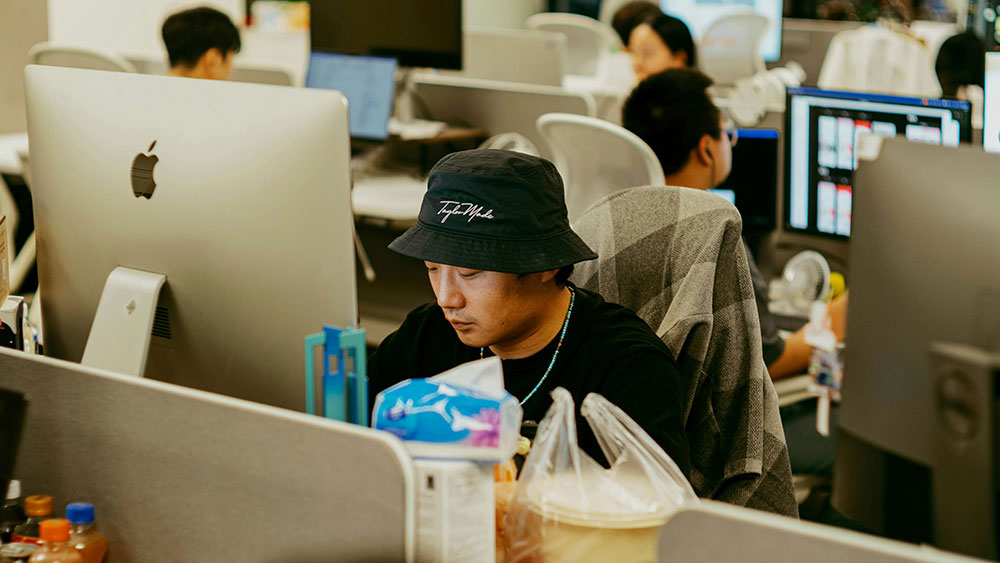
tommao wang / Unsplash

Gleb Tsipursky
Bio

Disaster Avoidance Experts

Thu, 01/29/2026 - 12:03
  • Comment
  • RSS

Social Sharing block

  • Print
Body

The future of flexible work will not be decided by floor plans or badge swipes. It will be decided by who gets to build the tools.

ADVERTISEMENT

Fresh evidence from a new global survey shows the shift in plain numbers. GoTo and Workplace Intelligence asked 2,500 people across roles and countries about AI and work in 2025, and more than half say AI will eventually make physical offices obsolete. A similar percentage prefer AI-enhanced remote work over being in the office, and strong majorities believe AI boosts balance, anywhere productivity, and remote customer service.

Leaders don’t need another debate about where people sit; they need a practical way to unlock performance across distributed teams. Empowering employees to build their own AI tools delivers that path. It gives people the flexibility to work where they are most effective while standardizing quality and speed through shared automations, not shared ceilings.

Empower employee builders to close the flexibility-productivity gap

Employee demand for AI is mainstream, and it’s bottom up. A Microsoft global survey on AI at work found widespread adoption across roles and countries, with power users redesigning workflows and saving time every day. When employees can shape solutions themselves, adoption accelerates and the benefits compound.

The GoTo findings add a flexible-work lens. Most workers say AI gives them more flexibility and balance, allows them to work anywhere without losing productivity, and helps them serve customers remotely. Employees also say organizations should prioritize AI at least as much as amenities, reinforcing that flexibility is about enablement rather than office perks.

Empowerment is not just access to a chatbot, but the ability of an accountant, a customer success manager, or a field engineer to build and refine the AI that runs in their flow of work.

Modern low-code platforms now make this practical at scale. Microsoft’s Copilot Studio, as one example, provides security and governance controls that let administrators and makers create and monitor agents that automate tasks and tap enterprise data under policy. Salesforce’s Einstein 1 Studio offers low-code AI builders for CRM so administrators can embed actions, prompts, and models into workflows without a heavy engineering lift. These platforms are designed so nonspecialists can assemble robust assistants in days while IT sets guardrails that keep data and actions safe.

Organizations that lean into citizen development are already seeing momentum. Developers and technologists report strong and rising use of AI at work in the 2024 developer survey, even as trust in outputs remains a live issue that training and governance must address. The lesson is straightforward. When employees build the bots, flexibility stops being a concession and becomes a performance strategy.

Flexible work endures when people customize their tools

The debate about the death or rebirth of the office misses a more stable signal. Hybrid work has entered a durable equilibrium across many economies. A 2025 working paper on global persistence shows that average work-from-home days stabilized after 2022, with meaningful cross-country variation but steady patterns among college-educated employees. That stability reflects a simple truth. Flexible work survives when teams can maintain quality from anywhere, which is exactly what employee-built AI tools enable.

The productivity record for flexible work is stronger than the headlines suggest. A randomized trial of hybrid work found improved satisfaction and a sharp drop in quit rates without harming performance when teams worked a mix of home and office days. At the task level, a study of a generative AI assistant for customer support agents showed a 14% average productivity lift, with the largest gains for less experienced workers. These findings match what practitioners report when employees can tailor assistants to real tasks. AI absorbs low-value steps, standardizes quality, and frees time for creative or customer-facing work, which is the essence of sustainable flexibility.

When people customize tools to their roles, the benefits arrive faster than in top-down rollouts. The 2024 Work Trend Index shows that power users do more than speed up tasks. They rethink workflows, delegate routine work to AI, and use saved time for higher-impact activities. That is the blueprint for flexible work that lasts, because it converts preference into performance. It also reduces friction between locations by standardizing the how of work rather than the where.

Governance turns citizen developers into an advantage

Empowerment without structure invites risk. Structure without empowerment invites shadow IT. The solution is to formalize employee-built AI as a governed practice. The good news is the tooling and guidance exist to make this practical. Copilot Studio publishes prescriptive governance best practices for agent creation, data access, and monitoring. Microsoft has also outlined autonomous agent capabilities that extend co-pilots into multistep workflows, which makes governance even more important. ServiceNow offers program design accelerators and a citizen development governance guide that help leaders set standards for intake, approvals, and life cycle management. These resources make it feasible to open the gates while keeping the guardrails.

The strategic case for investing in employee-made AI is equally clear. An analysis of generative AI’s economic potential estimates significant productivity gains across major business functions through 2040, provided organizations redeploy time and redesign processes.

None of those gains arrive fully formed. They appear when teams map their work and build targeted assistants that remove the drag of repetitive steps. That’s why the GoTo research matters for leaders today. It shows that employees want AI, expect flexibility, and are ready to put new tools to work. The missing piece in many companies is permission and support to build, not just to use.

Leaders can put this into motion now. Treat AI creation as part of the employee experience. Shift a share of budget from perks to enablement, just as workers recommend in the 2025 survey. Train teams in prompt design and safe data use. Stand up a lightweight review process so staff can publish assistants to a shared gallery. Use platform analytics to monitor use and outcomes. Celebrate wins publicly so maker behavior becomes culture.

The result is a flexible operating model that compounds. As platform capabilities expand, including recent enterprise agent features, your people will absorb improvements immediately, because the builders are the operators.

Conclusion

Flexible work is not a temporary concession. It’s the operating model of a global economy that rewards adaptability, speed, and customer focus. The evidence is consistent. Employees want AI and support greater investment.

Hybrid arrangements persist across countries. Productivity rises when AI absorbs routine tasks and when people can adapt tools to their real jobs. The through line is empowerment. Give employees the platforms, training, and guardrails to create their own co-pilots, and flexible work becomes a source of advantage rather than a compromise. The organizations that move from controlling where people sit to empowering what people build will set the standard for productivity, connection, and collaboration wherever work happens.

Related Articles
What's a 150-year Old Meat Chopper Have to do With America's Favorite Muscle Car?
Which KPIs Prove Your Maintenance Plan Is Working?
How to Reverse Engineer Classic Car Parts
Don’t Shake Before You Listen
Throwing the Fish Back Into the Water

Add new comment

The content of this field is kept private and will not be shown publicly.
About text formats
Image CAPTCHA
Enter the characters shown in the image.

© 2026 Quality Digest. Copyright on content held by Quality Digest or by individual authors. Contact Quality Digest for reprint information.
“Quality Digest" is a trademark owned by Quality Circle Institute Inc.

footer
  • Home
  • Print QD: 1995-2008
  • Print QD: 2008-2009
  • Videos
  • Privacy Policy
  • Write for us
footer second menu
  • Subscribe to Quality Digest
  • About Us