{domain:"www.qualitydigest.com",server:"169.47.211.87"} Skip to main content

        
User account menu
Main navigation
  • Topics
    • Customer Care
    • FDA Compliance
    • Healthcare
    • Innovation
    • Lean
    • Management
    • Metrology
    • Operations
    • Risk Management
    • Roadshow
    • Six Sigma
    • Standards
    • Statistics
    • Supply Chain
    • Sustainability
    • Training
  • Videos/Webinars
    • All videos
    • Product Demos
    • Webinars
  • Advertise
    • Advertise
    • Submit B2B Press Release
    • Write for us
  • Metrology Hub
  • Training
  • Subscribe
  • Log in
Mobile Menu
  • Home
  • Topics
    • 3D Metrology-CMSC
    • Customer Care
    • FDA Compliance
    • Healthcare
    • Innovation
    • Lean
    • Management
    • Metrology
    • Operations
    • Risk Management
    • Roadshow
    • Six Sigma
    • Standards
    • Statistics
    • Supply Chain
    • Sustainability
    • Training
  • Login / Subscribe
  • More...
    • All Features
    • All News
    • All Videos
    • Training

Improving Production Quality With Industrial AI in 2026

AI solutions can help support production quality, yield, and throughput to meet consumer demand

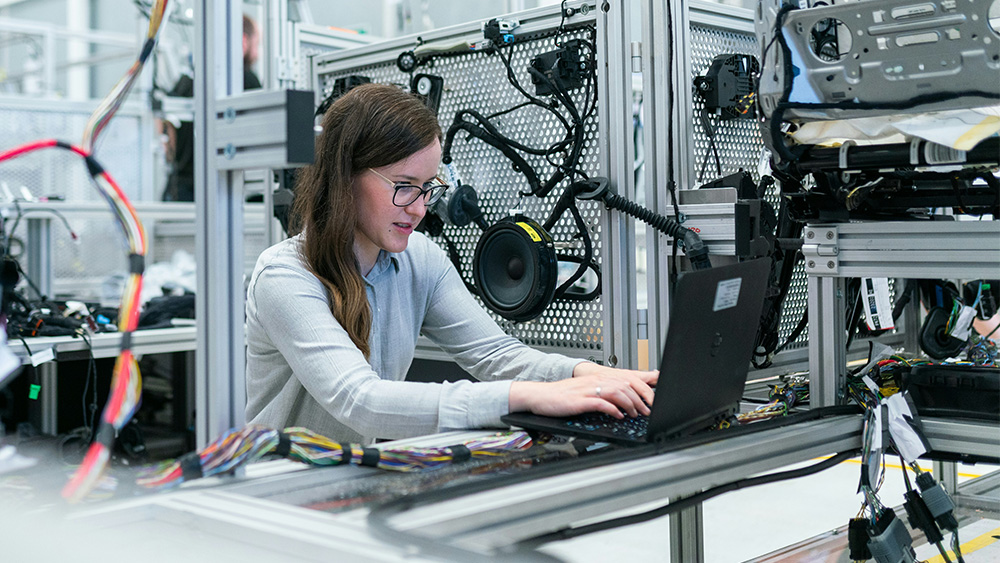
ThisisEngineering/Unsplash

Artem Kroupenev
Thu, 12/04/2025 - 12:03
  • Comment
  • RSS

Social Sharing block

  • Print
Body

Quality has always been a defining metric in manufacturing when it comes to industry trust, brand longevity, and customer loyalty. Manufacturers are already expected to abide by stringent regulations, but as economic complexity rises and experienced operators retire, maintaining consistent quality and keeping up with production demands is becoming harder. In fact, a 2025 report found that nearly one-third of manufacturing leaders listed quality, yield, and throughput as their top production challenge—arguably the most important aspects in the business.

ADVERTISEMENT

As pressure mounts to deliver more with less time and resources, many manufacturers are increasing industrial AI applications to mitigate the risks from production roadblocks. Some are even taking predictive maintenance a step further with generative AI; 36% of leaders thinking about using this technology to help with quality control and defect detection.

With 2026 around the corner, manufacturers will lean more heavily on AI in the year ahead to combat these production challenges while maintaining their reputation and bottom line.

Industry pressures causing production challenges

Manufacturers want to increase throughput to benefit their businesses. But how do you do that while maintaining the quality of the product consumers are demanding? Any variability in production—labor, raw materials, and retooling—can cause challenges at the end of the factory line.

With six million new workers needed by 2033 for core infrastructure sectors like manufacturing, and the growing number of workers near retirement, many factories are stretched thin for manpower. When equipment issues and malfunctions occur, factories that are understaffed or have less experienced workforces are unable to mitigate issues quickly, potentially resulting in unplanned downtime and reduced yield.

Additionally, recent supply chain friction and the rise of tariffs have forced many manufacturers to implement changes to their production lines. As companies look to find alternative, cost-effective suppliers and begin sourcing new raw materials, they risk production line retooling and slow outputs from changes in product recipes or packaging. They also face the risk of that new material being of lower quality, affecting the final product.

While these factors are contributing to reduced output, the biggest challenge that causes a ripple effect of issues down the road is the production quality itself.

Risks from poor quality

Poor product quality is more than just a line item on a budget sheet. It can represent both internal and external risks for manufacturers, including:

Product waste

Yield suffers when production lines are disrupted, meaning more material gets scrapped or reworked before it ever leaves the facility. For food and beverage manufacturers, this is especially detrimental, because 40 million tons of wasted food were generated in 2019 by the food and beverage manufacturing and processing sectors—underscoring the severity of the problem.

Waste is bad for the environment and bad for business. These massive losses can put a significant dent in yearly revenues for manufacturers.

Shortages and delays

When production lines can’t meet output targets due to quality-related downtime, orders back up and distributors wait longer for the product. In an industry already facing increasing demands and squeezed resources from labor shortages and supply chain volatility, these small disruptions can quickly compound into large-scale shortages. For example, drug shortages in the U.S. reached an all-time high of 323 during the first quarter of 2024, causing high risks of consumers not receiving the medications they need.

Customer loyalty and reputational damages

The most damaging cost of poor quality is the erosion of trust. Companies that become headlines or industry murmurings due to defective items sold not only lose customer loyalty but can lose years of brand equity. This is especially crucial for manufacturers producing building materials for facilities like hospitals or schools, because poor quality or defective products endanger consumers’ safety and create potential liabilities.

Manufacturers will increasingly adopt reliable AI-powered solutions in the upcoming year to ensure that production quality remains consistent while improving production yield and throughput.

Industrial AI investments in 2026

As economic friction continues, reliable AI adoption will accelerate and mature. This technology holds tremendous opportunity for manufacturers looking to solve some of the industry’s biggest challenges.

By implementing AI directly into production workflows, both new and tenured workers can uncover and correct machine malfunctions in real time before they drastically affect the quality of a product. By making adjustments from direct recommendations on how to resolve issues, it not only ensures production consistency but also reduces waste from disposing defective products.

By empowering workers with these predictive maintenance insights in 2026, industrial leaders can lower their chances of becoming the next headline due to product recalls, while strengthening resilience and meeting growing production demands. AI will continue to augment the factory floor by ensuring consistency at scale and mitigating variability concerns.

The opportunity for domestic manufacturing

Manufacturing is a high-stakes, essential industry. So, maintaining high-quality standards is crucial to remaining competitive and ensuring customer satisfaction.

A recent consumer survey found that 64 percent believe domestic products are of higher quality. Now is the time for U.S. manufacturers or those entering the market to capitalize on this consumer confidence and implement AI solutions to support production quality, yield, and throughput to meet consumer demand. By combining AI with human expertise, leaders can ride the “Made in America” wave for years to come.

Add new comment

The content of this field is kept private and will not be shown publicly.
About text formats
Image CAPTCHA
Enter the characters shown in the image.

© 2025 Quality Digest. Copyright on content held by Quality Digest or by individual authors. Contact Quality Digest for reprint information.
“Quality Digest" is a trademark owned by Quality Circle Institute Inc.

footer
  • Home
  • Print QD: 1995-2008
  • Print QD: 2008-2009
  • Videos
  • Privacy Policy
  • Write for us
footer second menu
  • Subscribe to Quality Digest
  • About Us