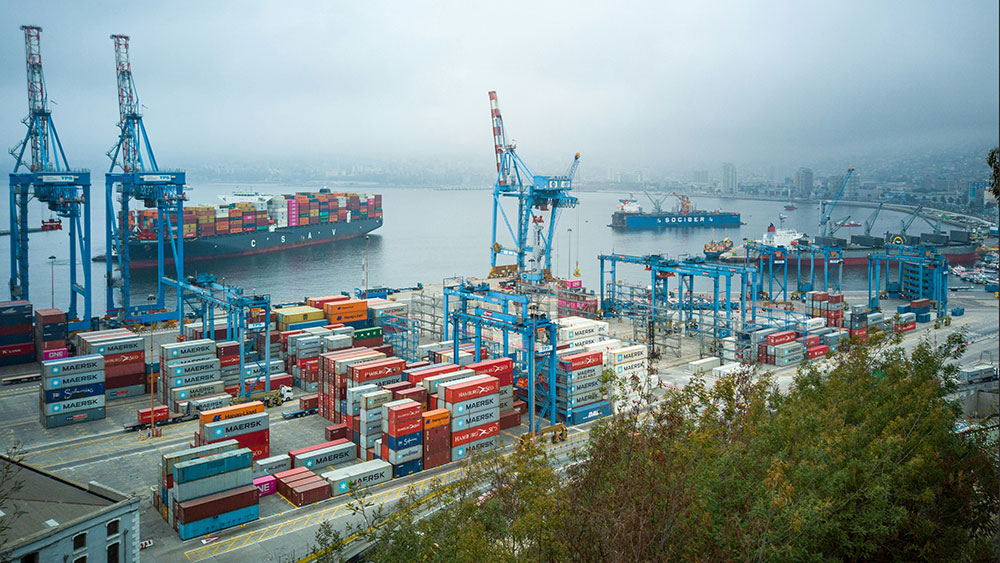
In 2021, container ships idled for weeks outside the Port of Los Angeles, a stark visual reminder of just how fragile modern supply-chain reliability had become. The backlog sent shockwaves across industries. Factories stalled, shelves emptied, and businesses scrambled for alternatives. It was a wake-up call: Even the most finely tuned transport networks can grind to a halt without warning.
|
ADVERTISEMENT |
Yet there’s hope on the horizon. Innovative technologies are revolutionizing how we track, manage, and secure our supply chains, promising a more resilient future for businesses and consumers alike. Predictive analytics has emerged as a game-changer, allowing businesses to anticipate many challenges, optimize operations, and maintain efficiency even in turbulent times.
As global supply chains grow more complex, staying ahead of risks isn’t just an advantage—it’s a necessity. Let’s take a closer look at the technologies, strategies, and innovations shaping the future of supply chains, and how they can help businesses operate from a position of strength.
Why supply chains break down
Modern supply chains are fast-moving and deeply interconnected. One weak link—whether a transport bottleneck, supplier failure, or inventory mismatch—can trigger costly delays and disrupt entire industries. The ripple effects are fast—and costly.
Here are some major threats to watch out for.
Global events: From natural disasters to trade disputes and labor strikes, disruptions can bring supply chains to a standstill in hours. Real-time supply chain tracking is critical to reroute, recover, and keep operations moving.
Supplier risks: Quality issues, financial instability, or limited capacity can quickly clog the pipeline. Diversifying suppliers and leveraging supply chain optimization tools helps businesses stay ahead of potential bottlenecks and avoid relying too heavily on any single source.
Cyberthreats: Ransomware and data breaches can cripple operations and expose sensitive information. A strong cyber supply-chain risk management (C-SCRM) strategy is crucial to safeguard business continuity.
Demand volatility: A sharp change in market conditions can wipe out inventory or leave warehouses overflowing. With real-time inventory tracking and demand forecasting, companies can adjust instantly, keeping margins healthy and supply aligned with demand.
Compliance risks: Environmental breaches, labor violations, or regulatory missteps can tank reputations and trigger legal fallout. Supply-chain risk management software ensures transparency from end to end, reinforcing ethical practices at every stage of the chain.
Without strong supply chain risk management (SCRM), businesses can be caught off guard when disruptions occur. Data-driven strategies are rewriting the rules. By integrating predictive analytics in the logistics industry, businesses don’t just react faster; they’re able to look ahead, identify potential risks, and act before problems arise. As these tools evolve, they have the potential to transform supply chains into agile, resilient networks that stay one step ahead of uncertainty.
What is supply chain predictive analytics?
Predictive analytics is a game-changer for improving supply chain reliability. By analyzing vast data streams—from transport schedules and inventory levels to weather patterns and market signals—it detects risks and helps optimize operations before disruptions strike.
Here’s how it transforms supply chain performance.
Demand forecasting: Predicts customer demand to prevent stockouts or overstock.
Inventory optimization: Helps adjust stock levels in real time, using both live and historical data to strike the perfect balance.
Risk management: Identifies threats early, including extreme weather, political unrest, or supplier volatility.
Supplier analysis: Spots underperforming partners before they become a liability.
Route and logistics optimization: Helps fine-tune delivery paths using live traffic, weather, and past performance data for maximum efficiency.
Fraud detection: Uncovers anomalies in transactions or behavior that might signal fraud or data manipulation.
Supply chain risk management: Fast track to resilience
Building the right digital foundation is an important first step. A centralized, connected system has the potential to better align departments, support communication, and facilitate smoother coordination throughout the supply chain. At the center of this approach is supply-chain risk management software, a platform that integrates five key technologies, each designed to contribute to different aspects of the process.
Powered by AI, machine learning, and real-time tracking, modern supply chain optimization tools bring precision and control, spotting risks before they spiral into costly disruptions. Delivery software is showing early promise, pointing toward a more connected, responsive supply chain, although widespread adoption will take time.
Automated procurement
Smarter sourcing starts with greater visibility. Procurement automation tools are beginning to support everything from supplier selection to contract oversight. Over time, AI could assist in evaluating vendors based on cost, quality, and risk, while robotic process automation may help reduce invoice errors and payment delays. Together, these technologies have the potential to enhance transparency in supplier performance and spending, helping organizations anticipate and address disruptions more effectively.
Production planning and control
Advanced production planning systems are starting to make use of real-time monitoring and simulation tools to optimize manufacturing processes. AI-driven scheduling and digital-twin technologies remain a developing capability with the promise of moving planning from reactive problem-solving to proactive anticipation. As these tools become more closely linked with procurement, logistics, and inventory systems, they could help production remain agile, efficient, and better aligned with demand.
Warehouse management
Inventory challenges can slow operations and reduce reliability. Modern warehouse systems are evolving to combine IoT, automation, and analytics, providing clearer oversight of supplies. Real-time inventory tracking, RFID scanning, and predictive tools are gradually enhancing operational control, while AI-driven capabilities represent a longer-term opportunity to further optimize warehouse processes.
Transport and delivery automation
Even a single delayed truck can send ripples through the supply chain. Delivery software is steadily improving, using smarter route optimization, predictive analytics, and fleet management tools to keep shipments moving. As these systems mature, automated dispatching could balance capacity, urgency, and availability, enabling faster, more coordinated deliveries.
Customer service automation
Slow responses and complicated returns can erode customer trust. Businesses are beginning to explore AI-powered service agents that quickly sort inquiries and streamline support. Automated returns platforms aim to guide customers through every step—generating labels, confirming eligibility, and simplifying the process. Real-time supply chain tracking is increasingly seen as essential for keeping orders on schedule and enabling proactive responses, even though broader implementation will take time.
The business case for supply-chain risk management
The right software isn’t just a tool; it’s a strategic edge. In a world where one disruption can ripple across continents, effective supply-chain risk management software transforms uncertainty into control. Get it wrong and you’re drowning in delays, inflated costs, and missed opportunities. Get it right and your supply chain becomes a resilient, self-optimizing engine that fuels growth, agility, and competitive advantage.
With effective supply chain optimization tools in place, the benefits are undeniable:
• End-to-end visibility for better oversight and control
• Faster, data-driven decisions to stay ahead of disruptions
• Accurate forecasting of customer demand
• Real-time supply chain tracking and shipment monitoring
• Optimized transportation routes and schedules
• Better customer satisfaction through timely deliveries and reliability
The role of standards in supply chains
Predictive models are only as powerful as the data behind them. For too many businesses, those data are still trapped in fragmented, outdated systems. When visibility is patchy and information is flawed, forecasting fails, disruptions go undetected, and supply chain risk mitigation becomes little more than educated guesswork. At the same time, cyberthreats are escalating, targeting the lifeblood of modern supply chains—data.
Without seamless integration, even the most advanced software can’t guarantee supply chain reliability. That’s why international standards are no longer a nice-to-have; they’re a strategic blueprint for building secure, accurate, and future-ready supply chains across industries and borders.
Key standards supporting global supply chain reliability include:
ISO/IEC 18000 series: Creates consistency across RFID and auto-ID technologies, enabling real-time supply chain tracking from warehouse to last-mile.
ISO 23354 and ISO 23355: Set the gold standard for logistics data exchange and end-to-end transparency.
ISO/IEC 5259 series: Delivers trusted, high-quality data inputs for AI-driven predictive analytics.
ISO 28000: Strengthens supply chains against physical and digital threats, from theft to cyberattacks.
Beyond logistics, AI and machine learning standards like ISO/IEC 23053 and ISO/IEC 42001 ensure your predictive tools are built on solid, reliable foundations. Meanwhile, ISO 31000 offers a universal framework for enterprise risk management, helping organizations move from reactive to proactive. By embracing these international standards, businesses don’t just check the compliance box; they future-proof their operations, strengthen cybersecurity, and turn resilience into a competitive edge.
ISO 23354:2020: Business requirements for end-to-end visibility of logistics flow
ISO 23355:2024: Visibility data interchange among logistics information service providers
ISO/IEC 42001:2023: AI management systems
Supply chain reliability: Built for what’s next
The supply chain crises of recent years have made one thing clear: Disruptions don’t wait—and unprepared businesses don’t last. But the companies that embrace innovation, harness predictive analytics, and align with global standards aren’t just surviving. They’re turning volatility into a strategic advantage.
From AI-powered risk management to real-time visibility and end-to-end automation, the tools to build smarter, faster, and more adaptive supply chains are already here. The real question isn’t whether technology can solve the problem; it’s whether businesses are moving fast enough to deploy it.
In a world where speed, transparency, and resilience define market winners, reactive supply chains are already falling behind. The future belongs to forward-thinkers—those who anticipate, adapt, and turn disruption into momentum. Because the next crisis isn’t a matter of if—it’s a matter of who’s ready when it hits.
Published by ISO.

Add new comment